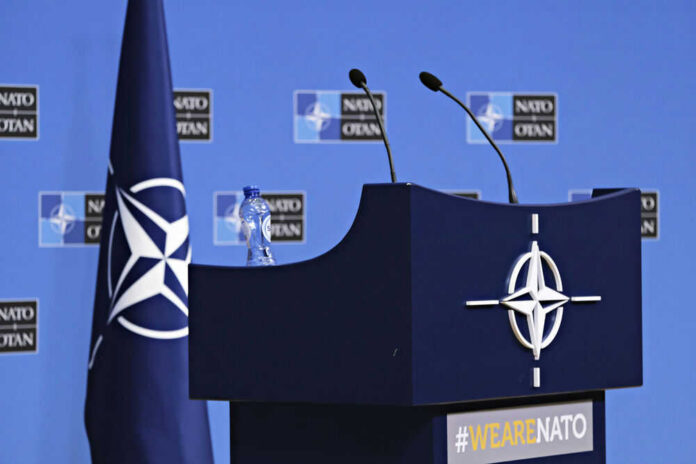
NATO’s 5% defense pledge is finally being tested, and President Trump is pushing hard to make sure America is no longer the only one paying the bill.
Story Snapshot
- NATO allies agreed to spend 5% of their economies on defense and security by 2035, after years of pressure from Trump.
- Trump arrives at the Ankara summit demanding proof that allies are keeping those promises, not just talking about them.
- New NATO data shows Europe’s defense spending jumping, but U.S. leaders still say the burden is unfair and one-sided.
- Legal limits on leaving NATO and mixed messages on arms sales make enforcement of Trump’s demands harder.
Trump’s “NATO 3.0” Push: From Promises to Proof
President Trump is heading into the Ankara NATO summit with one clear goal: turn past promises into hard numbers and real capabilities. At the 2025 Hague summit, allies formally agreed to a major pledge—spending about 5% of their national output on defense and security by 2035. That deal, hailed by Trump as a “big win,” set 3.5% for core military needs and up to 1.5% for things like infrastructure and cybersecurity. Ankara is where he wants to see who is serious and who is stalling.
For many conservatives, this fight goes straight to the heart of fairness and sovereignty. For decades, the United States has carried the lion’s share of NATO’s military burden, while many European capitals spent on social programs and green dreams instead of tanks and missiles. Analysts have found that most NATO members boost spending before they join, then cut back once they are under the U.S. security umbrella. Trump’s message now is simple: if allies enjoy American protection, they must pay their share instead of treating U.S. taxpayers as a permanent piggy bank.
Spending Gap: Europe Rises, America Still Dominates
New NATO and Atlantic Council data show that European allies and Canada are increasing defense spending faster than before. In 2025 alone, their budgets rose about 20% compared with the previous year, and every ally now clears the old 2% spending guideline. For the first time, one European country even passed the United States in defense spending per person. These numbers give NATO leaders a public argument against Trump’s charge that the alliance is hopelessly “one-sided,” and they are using it.
Still, raw numbers highlight why many Americans remain frustrated. As of 2024, NATO members together spent around $1.5 trillion on defense, but the United States provided roughly two-thirds of that total. Heritage Foundation data show that only the U.S. and seven other allies meet both the 2% spending benchmark and the 20% equipment benchmark that signal modern, combat-ready forces. Trump’s own posts have contrasted almost $1 trillion in U.S. spending with far smaller European budgets to argue that the current setup is unfair to American workers and families. That imbalance is the emotional core of his push at Ankara.
Enforcing the 5% Pledge: Leverage and Limits
The hard part now is enforcement. The Hague commitment clearly sets the 5% target for 2035, not tomorrow, and it does not create immediate fines or automatic penalties for countries that move slowly. European leaders describe the pledge as a “credible, incremental path” over a decade, with a review around 2029 to check progress. That language gives them political cover at home and makes it harder for Trump to claim they are breaking a binding contract today, even if he sees the slow pace as yet another case of allies dragging their feet.
Trump’s team is looking for other ways to apply pressure. Ahead of the summit, U.S. officials launched a six‑month review of the American troop posture in Europe, openly calling the current setup an “unhealthy co‑dependence” on U.S. forces. Supporters argue that hinting at reductions forces Europe to build its own strength instead of leaning forever on American soldiers. But NATO commanders counter that European allies have “largely filled the gaps” created by earlier U.S. cuts, and question whether more reductions would weaken deterrence against Russia rather than fix burden-sharing. That clash will surface in Ankara as Trump weighs using basing, exercises, and arms sales as tools to reward or punish specific countries.
Media Framing, Legal Roadblocks, and Conservative Concerns
Mainstream outlets and many NATO officials are trying to paint Trump’s stance as “harsh” or “unpredictable” rather than as a push for simple fairness. Reports stress his demand for “loyalty” and warn that it could hurt alliance unity, while playing up charts from NATO’s secretary general showing €135 billion in extra European spending. This framing risks turning a basic burden-sharing debate into a story where Trump is cast as the problem and European governments as victims, even though the United States still shoulders most of the real military load.
NATO chief manages Trump tensions before Ankara summithttps://t.co/p4JDIpNauz
— NriPage (@NRIPage) July 6, 2026
There are also legal and policy limits that complicate Trump’s leverage. Under U.S. law, a president cannot formally withdraw from NATO without Congress; any exit would need a two‑thirds Senate vote. That statute makes talk of leaving the alliance more of a political warning than an immediate option, and allies know it. At the same time, actions like canceling a planned Tomahawk missile sale to Germany while pushing Europe to buy more U.S. gear raise questions about mixed signals in Washington. For conservatives, the core question at Ankara is whether Trump can slice through this web of restraints and double‑talk and finally make NATO’s wealthy members carry their fair share—so American families are no longer stuck paying for both Europe’s defense and its social experiments.
Sources:
youtube.com, time.com, facebook.com, justsecurity.org, nato.int, bbc.com, apnews.com, atlanticcouncil.org, pmc.ncbi.nlm.nih.gov