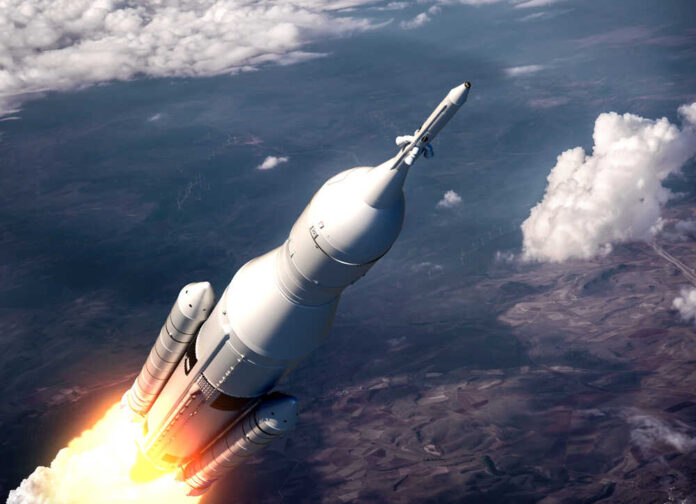
Russia just launched an Iranian satellite into space, and the implications for America’s security—and the utter cluelessness of Western leadership—are staggering.
At a Glance
- Russia launched Iran’s Nahid-2 communications satellite on July 25, 2025, deepening their strategic partnership.
- Western intelligence agencies warn the technology could boost Iran’s ballistic missile program.
- The launch follows a string of Russian-assisted Iranian space missions amid rising Middle East tensions.
- Russia and Iran’s alliance challenges Western influence and sanctions, signaling a new geopolitical reality.
Russia and Iran’s Space Alliance: A Direct Threat to Western Interests
Russia’s Soyuz rocket carried Iran’s Nahid-2 satellite into orbit from the Vostochny Cosmodrome, marking another milestone in the growing partnership between Moscow and Tehran. This wasn’t just a routine science mission; it’s a neon billboard flashing “The West is asleep at the wheel.” Iran’s space ambitions, supposedly about communications and research, are impossible to separate from its military aspirations. Western officials and experts have repeatedly warned that every new satellite launch gives Iran a leg up on ballistic missile technology. Yet, here we are—Russia and Iran toasting another victory while the so-called “international community” wrings its hands and issues meaningless press releases.
The timing couldn’t be worse. Just weeks ago, the Middle East was on the brink after a 12-day war between Israel and Iran. Now, instead of facing consequences, Iran is rewarded with Russian technology, further eroding whatever deterrence the West once had. This launch isn’t just a win for Iran’s scientists; it’s a PR coup for Tehran’s regime, a thumb in the eye to Washington, and a signal to every rogue regime on earth that Russia is open for business if you want to get around Western sanctions. The Nahid-2 satellite weighs 110 kilograms and is expected to operate for two years at 500 kilometers above earth. On paper, it’s about communications. In reality, it’s about strategic leverage—and the West is losing ground fast.
🚀 Iran launches Nahid-2 satellite using Russian rocket
On July 25, Iran successfully placed its Nahid-2 communications satellite into orbit using a Russian Soyuz launch vehicle.
The launch from Russian territory went smoothly — marking yet another instance of close space… pic.twitter.com/NW5gpTqhzI
— NEXTA (@nexta_tv) July 25, 2025
Western Warnings Ignored as Russia and Iran Tighten Their Grip
Iran’s space program kicked off back in the early 2000s with bold claims of peaceful objectives, but anyone with a lick of common sense can see the dual-use potential. Western intelligence has been warning for decades: every rocket Iran launches under the guise of “research” gets them one step closer to advanced missile capabilities. Yet, instead of pushing back, the West, especially under the Biden administration, was too busy lecturing Americans about pronouns and climate virtue-signaling to notice Russia and Iran cozying up in plain sight.
Earlier this year, Russia and Iran signed a Comprehensive Strategic Partnership, codifying their determination to outmaneuver U.S. influence and sanctions. The Nahid-2 launch is just the latest in a series of collaborations: Russia already lofted Iran’s Khayyam, Pars-1, Kowsar, and Hodhod satellites in the past three years. Each time, the response from the so-called “global leaders” was a shrug and another round of empty threats. Meanwhile, experts at the Foundation for Defense of Democracies point out the obvious: Russia is using Iran’s space program to poke the West in the eye—and getting away with it.
The Real-World Consequences for America and Our Allies
This isn’t just about technology or international cooperation; it’s about survival. Iran’s regime gets to parade its “scientific achievements” before the world, boosting its legitimacy at home and sending a not-so-subtle message to Israel and the Gulf states: their adversaries are getting stronger, not weaker. Meanwhile, American taxpayers get to watch as their own leaders squander diplomatic leverage, letting Moscow and Tehran set the rules of the game.
The regional consequences are obvious. Iran’s new communications capabilities could easily enable more effective command and control for its military, including its proxy networks across the Middle East. Israel and the Gulf states now face a more emboldened Iran, armed not just with missiles, but with real-time intelligence from above. Western governments, having failed to stop this technological leap, are left scrambling to impose new sanctions—sanctions that Russia and Iran have already figured out how to sidestep. Russia, for its part, gets a lucrative new client and a strategic partner willing to thumb its nose at the United States. The message to other sanctioned regimes—North Korea, anyone?—couldn’t be clearer: if you want to get ahead, just call Moscow.