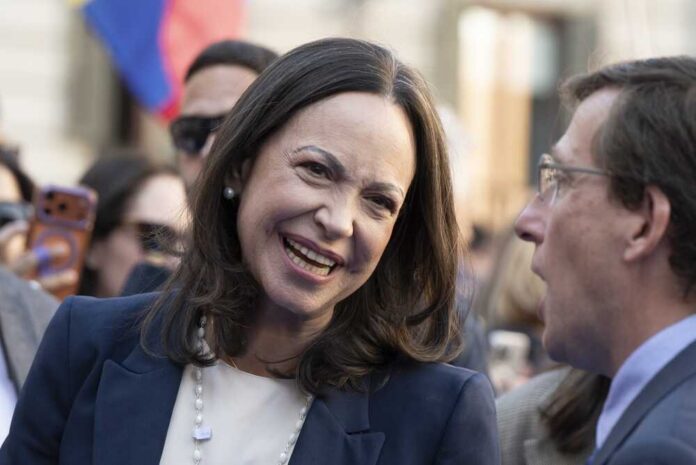
The Nobel Peace Prize has become entangled in a diplomatic firestorm after Venezuelan opposition leader María Corina Machado attempted to share her 2025 award with President Trump following a U.S. military intervention, sparking questions about whether international institutions have lost sight of their founding principles.
Story Snapshot
- Venezuelan activist María Corina Machado awarded 2025 Nobel Peace Prize, then offered to share it with Trump after U.S. military intervention in Venezuela
- Norwegian Nobel Committee rejected the sharing request, stating prizes cannot be transferred or shared, escalating diplomatic tensions
- Trump cited the Nobel “snub” as justification for aggressive foreign policy moves, including escalating efforts to acquire Greenland
- WikiLeaks founder Julian Assange filed lawsuit against Nobel Foundation to block Machado’s prize money, alleging it facilitates war crimes
Nobel Award Sparks Unprecedented Controversy
María Corina Machado received the 2025 Nobel Peace Prize on October 10, 2025, for her democracy activism against Venezuela’s Maduro regime. The Norwegian Nobel Committee recognized her courage in promoting democratic transition amid authoritarian rule. Her daughter accepted the award on her behalf at the December 10 ceremony in Oslo. The recognition appeared straightforward until U.S. military forces intervened in Venezuela on January 3, 2026, transforming the peace prize into a geopolitical flashpoint that exposed deep divisions about what constitutes peacemaking in modern international relations.
Trump’s Medal and the Committee’s Rejection
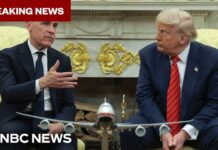
Machado offered to share her Nobel Prize with President Trump following the U.S. intervention, dedicating the award to him and physically giving him her medal. She praised Trump’s actions as “historic” and a “huge step towards democratic transition” in Venezuela. The Norwegian Nobel Committee swiftly rejected the sharing request, clarifying that Nobel Prizes cannot be revoked, shared, or transferred under any circumstances. This rejection maintains the institutional integrity of the award but raises uncomfortable questions about honoring democracy activists whose success depends on foreign military intervention rather than peaceful resistance.
Diplomatic Fallout and Greenland Escalation
President Trump responded to the Nobel Committee’s rejection on January 18, 2026, with a letter to Norwegian Prime Minister Jonas Gahr Støre. Trump cited the Nobel “snub” as justification for pursuing non-peaceful obligations in foreign policy, specifically escalating efforts to acquire Greenland, despite acknowledging that “peace predominant” remains his approach. Trump has repeatedly claimed he deserves Nobel recognition for “stopping 8 wars,” though these claims lack independent substantiation. The incident demonstrates how elite international institutions can inadvertently fuel rather than calm geopolitical tensions, particularly when their decisions appear disconnected from ground realities that ordinary citizens understand instinctively.
Legal Challenge and Institutional Credibility
Julian Assange filed a lawsuit against the Nobel Foundation on December 17, 2025, seeking to block Machado’s prize funds under Swedish law. Assange alleges that Machado’s U.S. support facilitates war crimes through regime change operations. The lawsuit remains unresolved as of early 2026. This legal challenge highlights growing skepticism about whether prestigious international awards have become tools of geopolitical maneuvering rather than genuine recognition of peace efforts. The Nobel Peace Prize, established by Alfred Nobel’s 1895 will to honor fraternity between nations and arms reduction, now faces scrutiny for potentially endorsing military interventions disguised as humanitarian missions.
Eroding Trust in Global Institutions
The controversy surrounding Machado’s Nobel Prize crystallizes broader frustrations with international institutions that many Americans, both conservative and liberal, increasingly view as disconnected from common sense principles. The award’s timing, followed by military intervention and attempted prize-sharing, blurs the line between recognizing peaceful democratic activism and rewarding outcomes achieved through force. Whether one supports Trump’s Venezuela policy or opposes it, the spectacle of a peace prize becoming leverage in diplomatic disputes and foreign policy decisions exposes how elite institutions often prioritize maintaining their own relevance over upholding the clear principles they were founded to represent. This erosion of institutional credibility affects all citizens who depend on trustworthy international frameworks for genuine conflict resolution.
Sources:
About the Nobel Peace Prize – Nobel Peace Prize
Nobel Peace Prize – NobelPrize.org
All Nobel Peace Prizes – NobelPrize.org