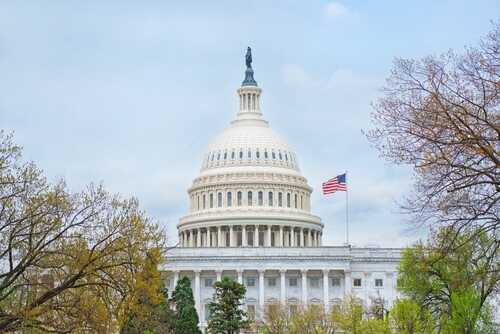
Senate Republicans successfully defended President Trump’s executive authority over Venezuela operations, with Vice President JD Vance casting the decisive tie-breaking vote to kill a Democrat-led war powers resolution that would have unconstitutionally constrained America’s commander-in-chief.
Story Highlights
- VP Vance delivers crucial tie-breaking vote to protect Trump’s Venezuela authority from congressional overreach
- Two Republican senators flip votes after receiving administration assurances about future military operations
- Democrats’ attempt to invoke 1973 War Powers Act fails despite initial bipartisan support
- Trump administration maintains naval presence while ruling out ground troops in Venezuela
Constitutional Victory Against Congressional Overreach
On January 15, 2026, Senate Republicans delivered a crucial victory for constitutional governance by blocking Senator Tim Kaine’s misguided war powers resolution. The 50-50 vote required Vice President JD Vance’s tie-breaking decision, which he cast firmly in defense of executive authority. This resolution would have severely hampered President Trump’s ability to protect American interests following the successful removal of Venezuelan dictator Nicolás Maduro through targeted military operations.
The Democrats’ attempt to invoke the 1973 War Powers Resolution represented a dangerous precedent that would have tied America’s hands in dealing with threats in our own hemisphere. Senator Kaine’s resolution specifically targeted ongoing U.S. naval operations in the Caribbean, falsely characterizing legitimate security measures as unauthorized “hostilities” requiring congressional micromanagement.
Strategic Republican Unity Emerges
Initially, five Republicans joined Democrats in advancing the resolution during a procedural vote, creating what Democrats hoped would be a rare bipartisan rebuke of Trump’s foreign policy. However, Senators Josh Hawley of Missouri and Todd Young of Indiana demonstrated principled leadership by reversing their positions after receiving crucial assurances from Secretary of State Marco Rubio and reviewing a detailed Justice Department memo.
These senators secured commitments that no ground troops would be deployed and that future major operations would involve congressional consultation “circumstances permitting.” Senator Hawley emphasized that “this is not another Iraq,” while Young pointed to Rubio’s written assurances about advance authorization for significant military actions. Their flip votes proved decisive in protecting presidential prerogatives from Democratic attempts at legislative interference.
Administration Provides Necessary Transparency
The Trump administration’s proactive engagement with concerned senators exemplified responsible governance. Secretary Rubio’s direct communications and the Justice Department’s comprehensive 22-page memo addressed legitimate concerns while maintaining operational security. The memo clarified that current operations do not constitute “war” under legal definitions and confirmed no contingency plans for substantial ground operations exist.
President Trump’s statement that America is “getting along very well with Venezuela” further demonstrated the success of targeted military action in achieving strategic objectives without the prolonged engagements Democrats incorrectly feared. The administration’s measured approach removed a dangerous dictator while avoiding the nation-building mistakes of previous decades.
Democrats’ Dangerous Precedent Defeated
Senator Chuck Schumer’s inflammatory rhetoric about “endless war” and accusations that Republicans were “beat into submission” revealed the true partisan nature of this resolution. Democrats sought to exploit legitimate constitutional concerns to score political points against Trump while potentially endangering American security interests. Their characterization of limited naval operations as grounds for invoking war powers demonstrates a fundamental misunderstanding of both military strategy and constitutional authority.
Senate Blocks War Powers Resolution on Venezuela https://t.co/8uJ5FHtuK8
— DMac (@ErinShaleah) January 15, 2026
Senate Majority Leader John Thune and Foreign Relations Committee leaders correctly identified this resolution as targeting “something not happening” – an attempt to create artificial constraints on operations that pose no risk of extensive ground engagement. The successful dismissal preserves necessary executive flexibility while Democrats’ “anti-Trump hysteria” was appropriately rejected by responsible Republican leadership.
Sources:
War Powers Resolution Fails in Senate
Vote to Curb Military Action in Venezuela Blocked in Senate
Vance Casts Tiebreaking Vote to Kill Venezuela War Powers