New York City Mayor Zohran Mamdani’s push to create an Office of Community Safety sidelines police in mental health crises, raising alarms for public safety under progressive overreach.
Story Snapshot
- NYC Mayor Mamdani establishes Office of Community Safety to oversee B-HEARD, aiming to reduce police involvement in mental health calls.
- B-HEARD program, launched in 2021, pairs EMTs with mental health professionals but covers only 73% of eligible calls amid major limitations.
- 2024 audit reveals insufficient care centers and widespread ineligibility, questioning effectiveness of defund-style alternatives.
- Move aligns with leftist agendas criticized for eroding law enforcement and prioritizing ideology over community protection.
Mamdani’s New Office Targets Police Role
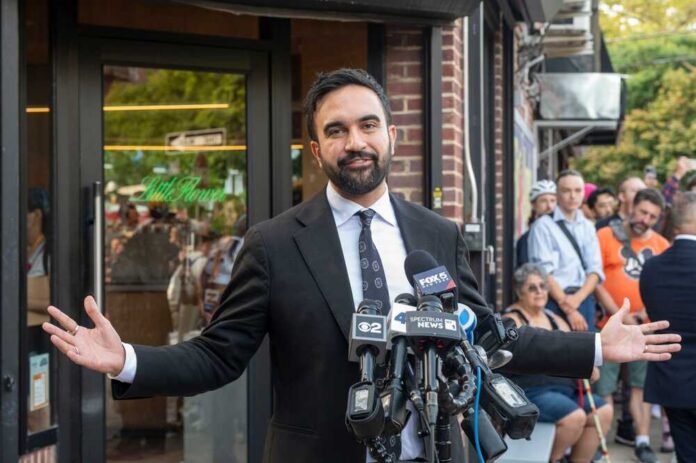
NYC Mayor Zohran Mamdani announced the creation of the Office of Community Safety in early 2026. This office will oversee B-HEARD and other programs responding to mental health emergencies. The initiative fulfills a campaign promise to shift crisis response away from traditional policing. B-HEARD teams, consisting of EMTs or paramedics paired with mental health professionals, handle 911 calls involving behavioral health issues. Progressive leaders view this as a step toward community-led safety, but critics argue it weakens police authority when force becomes necessary.
B-HEARD Program’s Limited Reach Exposed
Launched as a pilot in spring 2021, B-HEARD operates seven days a week for 16 hours daily across 31 precincts in four boroughs. In FY 2024, the program responded to 14,900 calls, capturing 73% of eligible mental health calls during operating hours. However, over 60% of total mental health calls proved ineligible due to criteria like active violence or medical needs. This gap highlights B-HEARD’s inability to cover all crises, leaving police as the default responders in high-risk situations. Conservative observers see this as evidence that alternatives fall short of ensuring public safety.
Audit Reveals Critical Shortcomings
A 2024 city audit identified key challenges in B-HEARD’s effectiveness. Only one Support and Connection Center remains operational after the Bronx facility closed in May 2024, limiting post-crisis care options. The report stressed insufficient community-based resources to handle discharges from crisis responses. These deficiencies underscore fiscal mismanagement in progressive safety models, mirroring national frustrations with policies that divert funds from proven law enforcement without delivering results. Families and patriots demand accountability for taxpayer dollars spent on unproven experiments.
In June 2024, NYC adjusted B-HEARD deployment to prioritize fully triaged calls, aiming to maximize response efficiency. Despite this tweak, core issues persist, fueling skepticism about expanding oversight under Mamdani’s new office.
Implications for NYC Families and Conservative Values
Mamdani’s overhaul promotes a vision of safety detached from police presence, echoing defund-the-police failures that spiked crime under prior leftist leadership. With President Trump securing borders and prioritizing law-and-order nationwide, NYC’s divergence risks resident safety and family security. Traditional values emphasize strong policing to protect communities from mental health crises that turn violent. This office could erode response times and effectiveness, burdening taxpayers while globalist-style overreach ignores common-sense enforcement. Vigilant citizens must watch how it impacts Second City freedoms and constitutional protections for self-defense.
President Trump’s 2026 successes—negative net migration, mass deportations, and zero releases—contrast sharply with NYC’s experiments, reminding Americans of limited government’s triumphs over bureaucratic bloat.
Sources:
Audit of B-HEARD Effectiveness
Mayor Adams B-HEARD Milestones Press Release