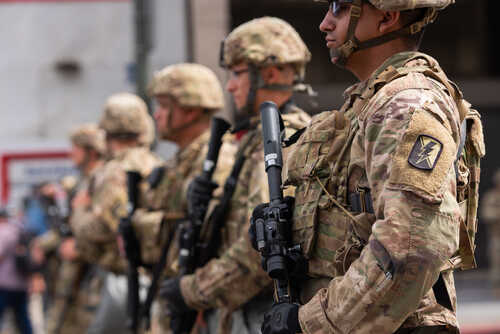
A new federal push to deploy the National Guard in major cities raises constitutional questions and sparks fierce debate among local leaders.
Story Highlights
- President Trump deploys National Guard to Washington, D.C. amidst civil unrest.
- Trump threatens to extend deployment to cities like New York.
- Local leaders strongly oppose federal intervention.
- Debate over federal authority and states’ rights intensifies.
Federal Deployment Sparks Debate
President Donald Trump recently ordered the National Guard to patrol Washington, D.C., following widespread protests. Legal experts, such as Professor Stephen Vladeck of the University of Texas School of Law, noted that the move raised concerns about the balance of power between federal and local authorities. While Washington, D.C. falls under federal jurisdiction, Trump’s threats to extend military presence to cities like New York have stirred anxiety. Local leaders are pushing back, claiming such actions could escalate tensions and infringe upon state rights.
The response to Trump’s threats has been swift and critical. New York officials, for instance, have expressed strong opposition, emphasizing their ability to manage local law enforcement without federal interference. Political scientist Erica Chenoweth from Harvard University noted that the threats sparked a broader national debate on the use of military force in domestic unrest and its implications for democratic governance.
Legal and Historical Context
The use of the National Guard in domestic situations is not new; however, federal deployment without state consent is rare and controversial. Historical precedents, such as the 1992 Los Angeles riots, saw National Guard units deployed with state approval. Legal scholars, such as William Banks from Syracuse University College of Law, argued that Trump’s threats tested the limits of federal authority under statutes like the Posse Comitatus Act, which restricts military involvement in civilian law enforcement unless the Insurrection Act is invoked.
In the current scenario, the pushback from state and local leaders is rooted in a desire to maintain autonomy and avoid escalation. The tension between federal and state power is palpable, with local leaders asserting their legal standing to refuse federal troops. This ongoing debate highlights the broader implications of federal overreach and its potential erosion of local control.
Broader Implications and Future Outlook
In the short term, the presence of federal troops in cities could increase tensions, potentially leading to more unrest. Long-term implications include setting a precedent for federal intervention in local policing. Critics argue this could lead to a gradual erosion of local autonomy over law enforcement decisions, a concern that resonates deeply with conservative values of limited government and states’ rights.
The economic and social impacts are also significant, with potential disruptions to city operations and heightened polarization within communities. As this situation unfolds, it will be crucial to watch how these dynamics affect the political landscape and the balance of power between federal and state authorities.
The debate over Trump’s deployment strategy continues to evolve, with its outcomes likely influencing future federal and local government relations. As cities grapple with these challenges, the need for clear legal frameworks and dialogue between federal and state leaders becomes even more essential.
Sources:
American Immigration Council: Local Opposition to Troop Deployments