
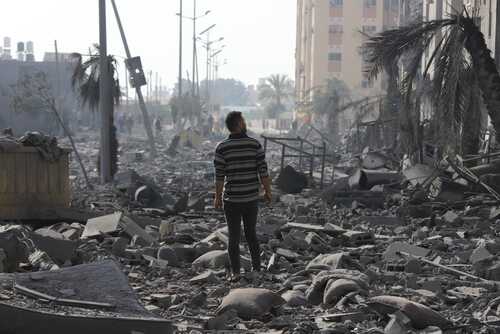
Two years vanished behind prison bars—no trial, no charge—only for freedom to reveal a home reduced to rubble and a family wiped from existence.
Story Snapshot
- Palestinian detainees describe returning from Israeli prisons to find their families killed and homes destroyed.
- Many were held under administrative detention, meaning no formal charge or trial.
- Released prisoners allege abuse and harsh treatment by Israeli Defense Forces.
- The psychological and social aftermath of detention extends far beyond prison walls.
Return to Ashes: The Homecoming No One Wants
Hundreds of Palestinians have been released from Israeli prisons in recent months, but for many, freedom is a word hollowed out by grief. Men and women who vanished into administrative detention—imprisoned without trial—crossed back into Gaza only to discover their families gone, homes flattened, and neighborhoods unrecognizable. The journey from captivity to an empty lot, from hope to heartbreak, is a reality few outside the conflict can fathom.
For these former detainees, the notion of “release” is bittersweet. One man recounted stepping off the bus to silence, expecting a mother’s embrace and finding only the echo of loss. Families that once gathered for noisy meals had been erased by airstrikes or forced displacement. The psychological whiplash of enduring years behind bars, only to reenter a life unspooled by war, is a trauma that reverberates through every memory and plan for the future.
Imprisonment Without Charge: The Machinery of Administrative Detention
Israeli authorities have long employed administrative detention, a policy that allows for imprisonment without formal charge or trial. This legal limbo enables indefinite renewals of detention orders, often based on secret evidence. Human rights organizations have criticized the process as lacking transparency and violating fundamental principles of justice. For detainees, the experience means years of uncertainty, isolation from family, and absence from critical life events—weddings, births, even funerals they never knew to mourn.
The lack of due process leaves detainees—and their families—trapped in a cycle of anxiety and fear. Parents worry endlessly about sons and daughters detained without explanation, while children grow up with only vague stories and faded photographs of loved ones who may never return. The absence of closure gnaws at entire communities, compounding the trauma of war with the agonies of the unknown.
Allegations of Abuse and the Lingering Scars
Palestinians released from Israeli custody consistently report mistreatment at the hands of guards and soldiers. Allegations range from physical abuse and sleep deprivation to denial of medical care. Detainees describe crowded cells, relentless interrogations, and a deliberate campaign to break their spirits. These stories are difficult to verify independently, but the consistency and detail of the accounts have drawn condemnation from international observers and human rights groups.
For survivors, the scars are not just physical. Many speak of nightmares, panic attacks, and emotional numbness. The transition from the regimented brutality of prison to the chaos and devastation of post-war Gaza creates a psychological gulf that few support systems are equipped to bridge. Every aspect of daily life becomes a reminder of what’s been lost: the mother absent at the breakfast table, the laughter of children silenced, the home now a pile of twisted concrete.
Rebuilding Lives in the Shadow of Loss
Survivors face the daunting task of rebuilding not just homes, but entire lives. The social fabric of Gaza is frayed, stitched together by shared grief and resilience. Former detainees often become community leaders or advocates, channeling their pain into activism or mutual support. Yet the wounds—both visible and hidden—remain raw. The question lingers: how does a society heal when freedom itself is delivered hand-in-hand with tragedy?