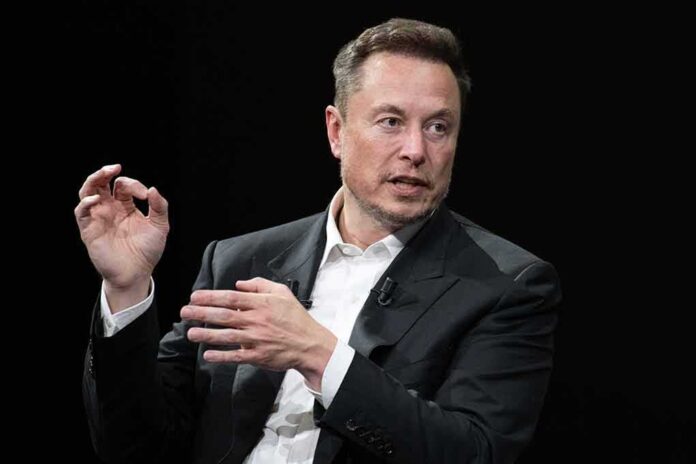
Elon Musk admitted he spent hundreds of millions backing Republicans in 2026 and said he feels “pretty foolish” about it.
Story Highlights
- Musk said Republicans were “routed” in 2026 and regretted his massive spend.
- Reports place his support between about $442 million and nearly $500 million.
- Musk said he is “not MAGA” and called himself ideologically moderate.
- Independent spending can be huge yet still miss the mark on results.
Musk’s Admission And The Scale Of His 2026 Spend
Elon Musk told the New York Times DealBook Summit that he felt “pretty foolish” after pouring hundreds of millions into the 2026 midterms to boost Republicans. He said the party was “routed” and the results did not match the investment. News reports put his spending between about $442 million and nearly $500 million. The outlets describe money aimed at Republican campaigns and allies of President Trump, even as final totals vary by method.
Coverage from major outlets tied the funds to efforts opposing Democrats and backing high-profile conservative races. The range in reported dollars reflects different counts of direct gifts, independent expenditures, and allied-group activity. While the exact accounting remains mixed, the key point is clear: Musk acknowledged the extraordinary spend and the disappointing return in the midterms. He framed the outcome as a lesson about political money’s limits when voters move the other way.
“Not MAGA” And A Claim Of Moderation
Musk said he is “not MAGA,” adding that if the term means blind loyalty to a party line, he does not share that view. He also described himself as ideologically moderate and said he dislikes extreme positions. Those comments came after months of reports linking his money to Republicans and Trump allies, which fuels debate over how to define his politics. The self-description stands, but media also note his public ties to Trump-world in recent years.
That tension does not change what Musk stated on stage. He rejected tribal politics and positioned his 2026 spending as issue-driven rather than party-bound. Still, his admission that the money did not deliver wins landed in a cycle where Democrats outperformed. His remarks show a donor recalibrating after a costly bet. Voters, not checkbooks, decided the margins, even with major outside help from one of the world’s richest men.
Why Big Checks Do Not Guarantee Wins
Federal election rules allow unlimited independent spending as long as it is not coordinated with a campaign. The Federal Election Commission explains that independent expenditures are messages that expressly back or oppose a named candidate and must be disclosed under set thresholds. These rules let wealthy donors try to shape races, but they do not change the core fact that turnout, candidates, and local issues set outcomes more than any single spender.
Elon Musk said he felt “pretty foolish” about spending more than $400 million trying to help Republicans in the midterm elections and struck a much more moderate tone, saying he thought divided government might actually be in the best interest of the U.S. https://t.co/a2FV3C8sNI
— The Wall Street Journal (@WSJ) November 19, 2026
Musk’s 2026 experience fits a known pattern. Outside money can amplify a message, but it cannot force voters to agree. Campaigns matter. Candidate quality matters. Ground game matters. When a political wave forms, late ad buys and national narratives often fail to reverse it. Musk’s onstage regret highlights that reality. For conservatives, the lesson is discipline: fund smart, recruit strong candidates, fight ballot harvesting where legal, and never assume ads alone can save a weak map.
Sources:
cbsnews.com, politico.com, nbcnews.com, wsj.com