
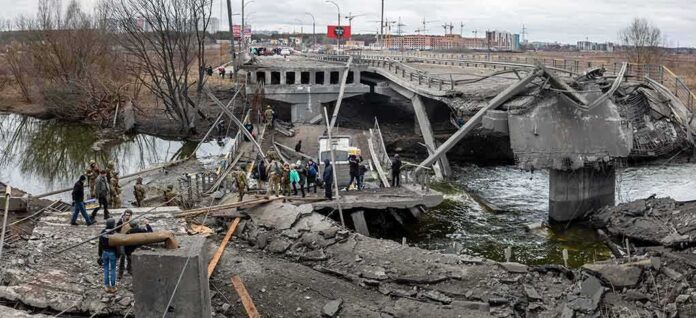
A Russian drone strike slammed into Kyiv’s Northern Bridge, injuring civilians and halting traffic on a vital crossing as Moscow intensifies attacks on the city’s infrastructure.
Story Snapshot
- Kyiv’s mayor reported the Northern Bridge was hit, injuring two and damaging the roadway and trolleybus lines.
- Russia’s Defense Ministry said it targeted the bridge as a route for troops and military cargo.
- Repeated strikes on Kyiv’s bridges have disrupted daily life and travel across the Dnipro River.
- Analysts say the pattern aims to split the city and strain civilian logistics.
Bridge Strike Halts Traffic And Injures Civilians
Kyiv Mayor Vitali Klitschko said a Russian air attack hit the Northern Bridge across the Dnipro River, injuring two people and damaging the road surface and overhead trolleybus cables. City officials suspended traffic as emergency crews moved in, adding another day of disruption for families trying to get to work, school, and medical care. The strike hit a key artery that connects neighborhoods and supplies. The attack followed days of pressure on Kyiv’s crossings, keeping commuters stuck and services delayed.
Russia’s Defense Ministry later said it struck the Northern Bridge because it serves as a route for moving troops and military cargo. Moscow framed the crossing as a military objective in a broader campaign against logistics. That claim underscores how both sides view bridges as strategic links for mobility and supplies during wartime. The ministry’s statement matches the on-the-ground impact reported by Kyiv: traffic stopped, repairs needed, and public transport lines cut until crews can restore power and safety checks.
Pattern Of Strikes Targets Kyiv’s Lifelines
Reporters and local officials have documented multiple hits on Kyiv’s bridges over several days. These repeated strikes forced partial or full closures, compounding delays and creating long backups as people searched for alternate routes across the wide Dnipro River. The disruptions pushed more cars onto fewer crossings. That raised the odds of accidents, slowed ambulance routes, and strained fuel and delivery schedules. Families felt it in longer commutes, missed appointments, and higher stress on already thin city services.
The Institute for the Study of War assessed that Russian forces have struck Kyiv’s Southern and Northern bridges multiple times since October 1. The think tank said the effort appears aimed at physically splitting the city and making life harder for its residents by choking daily movement and supplies. That view aligns with open reporting that shows damage, closures, and recurring air alerts. The method looks designed to disable key parts without total collapse, keeping fear and friction high while repairs drag on.
Civilian Costs And Strategic Aims
Local updates showed injuries and direct hits to transport infrastructure, not only to roads but also to trolleybus power lines that support low-cost travel for workers and seniors. Attacks that cut public transit push more people to cars, which increases gridlock and adds fuel costs. Over time, that kind of pressure wears down basic services, from trash collection to hospital staffing, because crews cannot move freely. When a bridge closes, deliveries slow, shelves thin, and costs rise. That is exactly what families dread.
Russia’s stated reason focuses on military logistics. Independent reporting describes a wider push against infrastructure like bridges, depots, and rail hubs far from front lines, pointing to a campaign that blends battlefield goals with pressure on city life. Hitting a vital crossing can be legal if it is used for war. But when strikes injure civilians and halt public transit, the human toll becomes clear. Leaders in Kyiv have warned that these attacks aim to break morale by making normal routines impossible.
Why This Matters To Americans
Attacks on bridges show how fragile modern life can be when key links fail. Americans who sat in miles-long backups after a single interstate closure know the stakes. When enemies target infrastructure, they do not just hit concrete. They hit families, paychecks, and emergency care. That is why strong borders, secure supply chains, reliable energy, and hardened transport matter at home. The lesson is simple: keep critical systems strong, redundant, and ready, so daily life does not grind to a halt after one strike.
Ukraine also belongs in this morning’s picture. Russia has spent several days repeatedly targeting Kyiv’s bridges across the Dnipro with drones, including another strike Sunday on the Northern Bridge while vehicles were crossing it. Two people were injured, and Russia says it is…
— Supersonic Redhead🛫 (@Supersonic_Red) October 5, 2026
President Trump’s team has argued that peace comes through strength and clarity. The pattern in Kyiv reminds us that weak deterrence invites attacks on everyday life, not just on tanks. America must back secure infrastructure, energy independence, and a military that can deter aggression. We also must reject globalist habits that leave our roads, grids, and data centers exposed. Families deserve safe commutes and steady work. That starts with secure borders, controlled spending, and a government that protects core systems first.
Sources:
feedpress.me, cnn.com, voennoedelo.com, euromaidanpress.com