
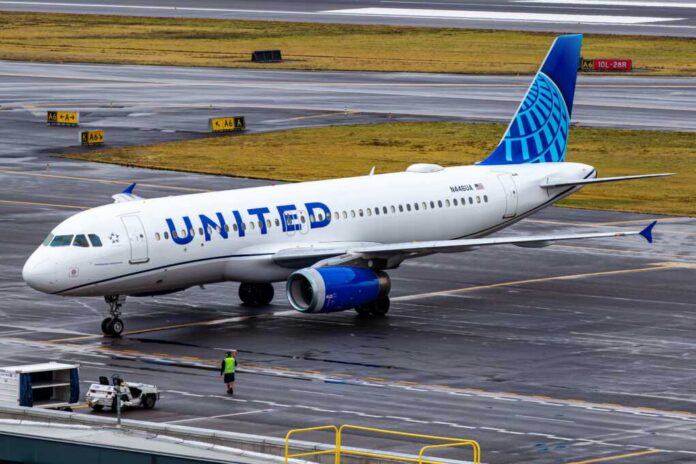
A packed United flight had to drop out of the sky into Madison after a passenger repeatedly pushed toward the cockpit, raising fresh questions about who is really keeping Americans safe in the air.
Story Snapshot
- A Chicago–Minneapolis United flight made an emergency landing in Madison after a passenger allegedly tried multiple times to breach the cockpit.[1][2]
- Five off-duty law enforcement officers on board helped restrain the man until the plane landed and deputies took him into custody.[1][2]
- Federal Bureau of Investigation (FBI) officials confirmed the diversion and detention but have not publicly detailed charges or a clear motive.[2]
- Local reports frame the suspect as a confused 75‑year‑old in a mental health crisis, raising concerns about accountability and transparency.
Emergency Diversion After Reported Cockpit Breach Attempts
United Airlines Flight 2005 left Chicago O’Hare for Minneapolis with 147 passengers and six crew members before trouble in the cabin forced an emergency landing in Madison, Wisconsin.[1] Officials say the crew reported a disturbance after a male passenger allegedly tried multiple times to breach the cockpit door, a direct challenge to the hard‑won security protocols put in place after past hijackings.[1][2] United later called it a “security concern with an unruly passenger,” a careful phrase that tells Americans very little about how serious the threat truly was.[1][2]
Air traffic control audio obtained by local media captures just how tense the situation became as controllers were told about repeated cockpit‑breach attempts and a possible hijacking scare.[2] One crew member said they eventually got the man under control after several tries, emphasizing he had made “multiple attempts to try to breach the cockpit,” and was then seated with law enforcement officers on both sides.[1] Those details make clear this was not a simple argument over legroom; the focus of the behavior was the flight deck, the last place any American wants to see chaos at 30,000 feet.[1][2]
Law Enforcement Response and Federal Investigation
Reports indicate that five off‑duty law enforcement officers happened to be on the flight, and they moved quickly to help restrain the passenger once his behavior escalated toward the cockpit.[2] After the Boeing 737‑900 landed safely at Dane County Regional Airport around 9:10 p.m., deputies from the Dane County Sheriff’s Office boarded the plane and removed the man from the aircraft.[1][2] The FBI’s Milwaukee office later confirmed it had been notified of the diversion, that the subject was detained by the sheriff’s office, and that passengers were allowed to continue to Minneapolis the same night.[2]
While the operational response was decisive, the public explanation has been far less clear. Multiple outlets report that it is “unclear” whether the passenger will face criminal charges, even though cockpit‑breach attempts typically trigger aggressive prosecution after September 11.[1][2] That lack of charging information leaves everyday travelers wondering whether serious in‑flight threats are being quietly downgraded once the immediate danger passes. When federal and local authorities hold back details, it creates a vacuum where speculation replaces confidence, especially for Americans who already distrust how federal institutions handle security and accountability.[1][2]
Mental Health Framing, Media Spin, and Passenger Safety
Coverage from national broadcast networks adds another twist by describing the man as a 75‑year‑old who appeared “confused” and in a “mental health crisis,” citing local Wisconsin authorities. CBS reported that police were not filing charges because of those mental health concerns, even as other reporting continues to reference multiple attempts to reach the cockpit door. This split framing—operational security on one hand, medical episode on the other—illustrates how quickly a near‑hijack narrative can be softened once cameras are off and lawyers get involved.[1][2]
United Airlines Flight 2005, Chicago to Minneapolis, was safely diverted after an attempt to breach the cockpit by a 75-year old man, who according to law enforcement, was experiencing mental health issues. pic.twitter.com/zxfqI2pDAe
— CommandEleven Intelligence® (@commandeleven) May 31, 2026
For conservative travelers, the pattern is hard to ignore: airlines and federal agencies act decisively in the moment, but the public record later turns vague, with key facts shielded behind generic statements and mental‑health language.[1][2] No one disputes that genuine mental illness should be handled with compassion, yet that compassion cannot replace transparency when a planeload of Americans is put at risk. Until authorities release the full air traffic control recordings, incident reports, and a clear charging decision, citizens are left to wonder whether the system is prioritizing political optics over the basic duty to keep the cockpit secure.[1][2]
Sources:
[1] Web – Commercial Flight from Chicago Makes Emergency Landing at Wisconsin …
[2] Web – United Flight Diverted After Passenger Allegedly Attempts Cockpit …