President Trump’s move to freeze his own intel chief’s confirmation has thrown Washington into chaos while he battles over voter ID, personnel control, and a rogue Senate.
Story Snapshot
- Trump halted Jay Clayton’s Senate confirmation as intelligence chief just hours before the hearing.
- He is keeping loyal acting Director Bill Pulte in place while demanding action on voter ID and key nominees.
- Senate leaders from both parties were racing to confirm Clayton quickly to bypass Pulte and restore a lapsed spy tool.
- The standoff exposes deep fights over election integrity, surveillance powers, and who really runs the intelligence state.
Trump Hits Pause on His Own Intel Nominee
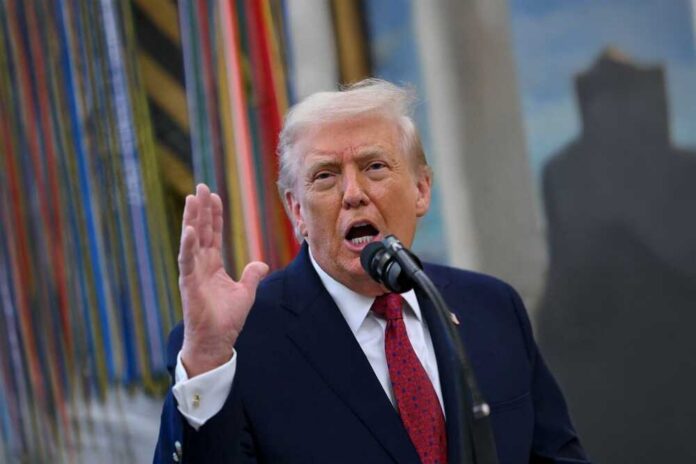
Just before sunrise in France, President Donald Trump stunned Washington by announcing on Truth Social that he was suspending the Senate hearing for his own pick to lead U.S. intelligence, Jay Clayton.[1] The hearing was set for Wednesday and had been rushed onto the calendar so senators could confirm Clayton as director of national intelligence in a matter of days.[6] Trump’s post said the hearing was “cancelled” and that the process would not move until his conditions were met.[1]
Trump does not formally control Senate hearings, but his announcement was clear: the White House no longer backed the fast-track deal that Capitol Hill thought it had.[2] Senate leaders had hoped to move Clayton through the Intelligence Committee Wednesday, vote him out of committee Thursday, and possibly confirm him on the floor the same day if every senator agreed.[9] That plan would have sharply limited the time that acting intelligence chief Bill Pulte held the powerful post.[9]
Why Trump Is Holding the Nomination Hostage
Trump’s own explanation has several layers – all of them about leverage. In a social media post, he said Clayton’s confirmation would be delayed to pressure Congress to pass a strong voter identification law that still lacks the votes to advance.[3] He also said he wants Clayton to stay in his current job as United States Attorney in Manhattan until the Senate confirms Trump’s chosen replacement, Jamie McDonald, who previously worked on Trump’s legal team.[7] Trump warned that he did not want to lose Clayton from that post until “extraordinary” Jamie is in place.[7]
Reporting from multiple outlets lines up on the basic facts. Trump told supporters he is keeping housing official Bill Pulte in the acting director role while this plays out, even though Pulte has little national security experience and has been blasted as a political loyalist.[8][9] Earlier, Trump had reassured the public that Pulte would serve only “for a little while” while the Senate secured the “very talented” Clayton as permanent director.[1] Now, by freezing Clayton’s hearing, Trump is doing the opposite of what Senate negotiators expected and extending Pulte’s tenure.
The Senate, Surveillance Powers, and a President Who Won’t Budge
Clayton’s nomination is not happening in a vacuum. Congress let a key surveillance authority, Section 702 of the Foreign Intelligence Surveillance Act, lapse after Democrats said they would not approve an extension while Pulte remained the acting intelligence chief.[4][5] Senate leaders from both parties were trying to use Clayton’s rapid confirmation as a way out of the stalemate: confirm a respected, Senate-vetted nominee and then restart the spy tool.[4][9] Trump’s sudden reversal put that plan at risk and deepened the standstill.
Conservatives who worry about unchecked spying face a mixed picture here. Section 702 has been used to scoop up Americans’ data without warrants, and many patriots want strict reforms or an end to that program. At the same time, Trump’s delay is not about limiting government surveillance on its own; it is about forcing the Senate’s hand on voter ID laws and on his choice of prosecutors.[3][8] That gives Democrats and the media an opening to claim he is playing politics with national security, even though they have used similar tactics for years when blocking Republican nominees.[13]
Control of the Intelligence Community and the Deep-State Fight
Since returning to office, Trump has pushed hard to reshape the intelligence community, which many conservative voters saw as part of the “deep state” that fought his first term.[14] Director of National Intelligence Tulsi Gabbard has slashed staff, shut down offices, and moved key functions under tighter White House control.[14] Internal watchdogs and critics say these moves reduce “analytic independence” and make intelligence more political, but Trump’s backers argue he is finally holding unaccountable agencies to account.[14]
Anti-terrorism tool lapse deepens as Trump temporarily sidelines DNI nominee Clayton nomination and pushes for SAVE Act passage
President Trump is demanding that the Senate Intelligence Committee today postpone the confirmation for DNI nominee Jay Clayton. The President now…
— Chad Pergram (@ChadPergram) June 17, 2026
Trump’s decision to keep Bill Pulte in charge, for now, fits that broader pattern of choosing loyal outsiders over career insiders. Opponents warn that Pulte lacks the background to manage complex spy programs and fear he will follow Trump’s direction on hot-button issues like election fraud.[2][9] Many in the conservative base, however, are tired of so-called experts who pushed “Russia collusion” stories, hid intelligence on border failures, or backed endless foreign wars. They may welcome a shake-up, even if it upsets Washington.
What This Means for Voters, Elections, and the Constitution
The heart of the showdown is elections and who writes the rules. Trump is tying Clayton’s future to a national voter ID bill and to securing his preferred federal prosecutor in New York.[3][6][7] Voter ID is popular with conservatives who want honest elections and are sick of ballot harvesting, loose mail voting, and urban machines. Yet many in Congress, including some Republicans, drag their feet whenever real reforms reach the floor.[9] By using a high-profile intelligence post as leverage, Trump is forcing the issue into the spotlight.
Critics argue that this tactic abuses the appointments process and undermines independent oversight of intelligence.[9] But the bigger truth is that Washington has long treated top posts as bargaining chips. Nonpartisan studies show that critical positions often sit vacant for months, not because there is no qualified person, but because the Senate slows or blocks confirmations for political reasons.[13] Trump is now turning that same pressure back on Congress, betting that his voters care more about secure elections and loyal appointees than about pleasing the intelligence establishment or speeding up a spy program many Americans do not trust.
Sources:
[1] Web – Trump suspends US intel chief Senate confirmation
[2] Web – Trump to nominate Jay Clayton for national intelligence director after …
[3] YouTube – Trump nominating Clayton for DNI to “undermine elections”: Rohde
[4] Web – Trump picks Jay Clayton as national intelligence director – CNBC
[5] Web – Senate tees up Clayton DNI nomination as FISA talks stall – The Hill
[6] YouTube – Trump nominates Jay Clayton as DNI amid FISA deadlock
[7] Web – WATCH LIVE: Jay Clayton testifies at confirmation hearing for … – …
[8] YouTube – BREAKING: Trump nominates Jay Clayton as DNI
[9] Web – Trump to nominate Jay Clayton for director of national intelligence
[13] Web – What to know about Jay Clayton, Trump’s nominee for director … – PBS
[14] Web – Persistently Vacant: Critical federal leadership positions go unfilled …