Amid a fragile ceasefire, Israeli strikes in Lebanon’s Nabatiyeh hit alleged Hezbollah sites as reports of civilian deaths fuel a new propaganda war.
Story Snapshot
- Israel says it targeted Hezbollah facilities and logistics nodes in Nabatiyeh [3][6].
- Lebanese reports say civilians, including families, were killed in the strikes [11].
- Conflicting claims persist; no independent proof of the specific site’s military use is public [3][6][7].
- Ceasefire pressure grows as both sides trade fire and narratives [6][19].
What Israel Says It Hit And Why It Matters
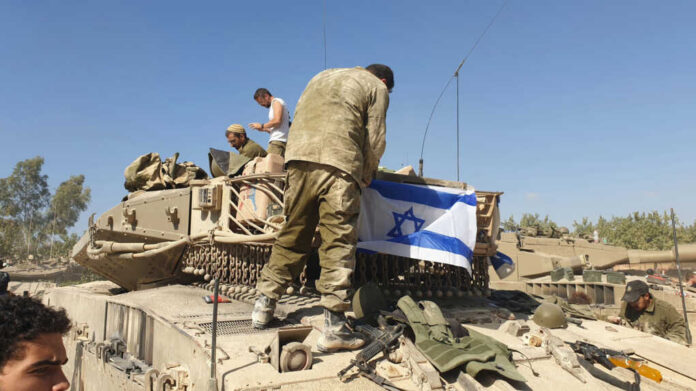
Israeli military statements said aircraft struck several Hezbollah facilities in and around Nabatiyeh. Officials described targets as military sites, including weapons storage facilities, military structures, and Hezbollah infrastructure. Israeli leaders framed the action as a response to more than 50 projectiles fired from Lebanon and part of a wider campaign that hit dozens of Hezbollah sites across the country. The public claim signals a focus on logistics and command nodes, not random buildings, if the target identification proves accurate [3][6].
Israeli communications also cast the strikes as enforcement under a tense truce. They argue Hezbollah used the pause to rearm and stage new rocket and drone attacks from populated areas near the border. Reports from established outlets said Israel hit over 70 sites linked to Hezbollah during broader operations. The stated goal is to degrade rocket launch capacity and supply lines that threaten Israeli communities, while pressing the group back from the frontier in line with past United Nations demands [6].
What Lebanon Reports From The Ground
Lebanese outlets and international wire partners reported heavy damage in Nabatiyeh and nearby towns. They said the strikes collapsed parts of buildings and killed civilians, including members of one family and children. Civil defense figures cited by media placed deaths in the double digits across the district during the same attack wave. These accounts stress harm to non-combatants and frame the action as a breach of the ceasefire, deepening public anger and amplifying pressure on Beirut to respond [11].
This picture mirrors a pattern seen through the conflict: Israel labels targets as Hezbollah sites, while local officials and aid groups describe civilian destruction. That split is common in urban fighting where militants blend into neighborhoods. It also grows when evidence is not shared quickly. When cameras capture rubble and loss, but governments hold intelligence files close, the public story tilts toward tragedy first and verification later. That lag can harden views before facts are confirmed [19].
Evidence Gaps And Why Verification Is Stalled
Public records about the specific Nabatiyeh site are thin. Reports cite Israeli claims about weapons storage and militant infrastructure, but do not include satellite coordinates, aerial stills, or legal review memos for this strike. No Hezbollah or Lebanese military source in the set confirms a military use of the exact building. Rights groups challenge the logic of hitting civilian-linked institutions, warning that labels alone do not make a lawful target. These gaps keep the core dispute unsettled [3][6][7].
Numerous Israeli airstrikes killed many people in Lebanon despite an agreed ceasefire, with the Lebanese civil defence authorities saying they had recovered 16 bodies in the southern city of Nabatiyeh alonehttps://t.co/Pm15bySYLR
— dpa news agency (@dpa_intl) June 20, 2026
Independent verification would need pre- and post-strike imagery, ground checks, and target files. It would also need incident reports from local hospitals, civil defense logs, and property records. If Israel’s intelligence shows active storage, command, or launch functions, it would bolster the military-objective claim. If records show a home or non-military site, the civilian-harm case grows stronger. Until that data is public, both narratives will compete for global attention and shape policy reactions [7].
Why This Matters For U.S. Interests And Security
American readers care because Hezbollah is an Iran-backed force that fires on an ally and destabilizes the region. The United States benefits when terror groups lose the ability to launch rockets at civilians. But the United States also benefits when partners follow the laws of war and show evidence fast. Clear proof narrows room for propaganda, reduces anti-American backlash, and supports lawful self-defense. Transparent targeting helps keep conflicts limited and protects civilians where possible [6][7][19].
Bottom Line For Conservative Readers
Hezbollah’s rockets and drones invite a hard response, and Israel says it hit real military sites. Lebanese reports point to civilian deaths and a shaky truce. The facts we can confirm do not yet settle what the exact Nabatiyeh target was. Demand evidence. Support allies who fight terror, but insist on proof that separates militants from families. That approach defends both security and moral authority—two pillars America’s friends should uphold if they want lasting peace and stable borders [3][6][11][7].
Sources:
[3] Web – Air strikes hit Nabatieh in southern Lebanon on Saturday … – …
[6] Web – sraeli strikes on Nabatieh in south Lebanon have killed at least 16 …
[7] Web – Israel’s military says it’s striking Hezbollah sites as Netanyahu vows …
[11] Web – First responders inspect the sites of Israeli strikes on the southern …
[19] Web – #BREAKING: #Lebanon says 16 killed in #Israeli airstrikes on the …