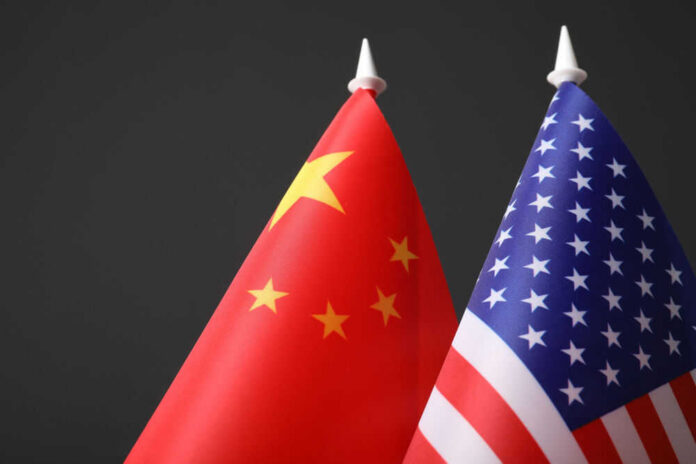
Beijing just told its companies to defy U.S. sanctions—an open challenge that tests whether Washington can still enforce “maximum pressure” when China decides the rules don’t apply.
Quick Take
- China’s Commerce Ministry issued an injunction ordering Chinese firms not to comply with U.S. sanctions targeting five independent “teapot” refineries accused of buying Iranian oil.
- The move lands just weeks before a planned Trump-Xi summit, raising the stakes for trade and security talks.
- The U.S. sanctions rely on Executive Orders 13846 and 13902, which enable asset freezes and transaction bans tied to Iran’s oil revenue.
- Teapot refineries account for roughly a quarter of China’s refining capacity and depend heavily on discounted crude, including sanctioned supplies.
China’s injunction turns sanctions into a direct U.S.-China test
China’s Ministry of Commerce announced May 2, 2026, that Chinese entities must not recognize, implement, or comply with U.S. sanctions imposed on five Chinese “teapot” refineries linked to purchases of Iranian oil. The named firms include Hengli Petrochemical in Dalian and four Shandong/Hebei-based refiners. Beijing framed the U.S. measures as a violation of international law and basic norms of international relations, and said the injunction took effect immediately.
U.S. sanctions policy toward Iran is designed to cut off revenue streams tied to Tehran’s nuclear and missile programs, including by targeting third-country buyers through secondary sanctions. In this case, the affected refineries face restrictions linked to Executive Orders 13846 and 13902, which can include freezing assets under U.S. jurisdiction and banning certain transactions. China’s injunction effectively dares companies inside its borders to treat U.S. enforcement as optional—at least domestically.
Why “teapots” matter: energy economics, not just geopolitics
Independent refiners play an outsized role in China’s fuel market. Research cited in coverage estimates teapots make up about 25% of China’s refining capacity, and many rely on discounted barrels to survive thin margins and soft domestic demand. Reports also describe negative refining economics in parts of the sector and utilization around 80%, conditions that increase the temptation to buy cheaper sanctioned crude. For Beijing, protecting teapots can function as energy-price management at home.
The dispute also highlights how sanctions collide with real-world workarounds. Coverage describes China as a top customer for Iranian oil, with purchases often routed through indirect methods that complicate tracking and enforcement. When sanctions escalate, traders and refiners can adapt by shifting shipping and payment channels, renaming products, or leaning on intermediaries. None of that eliminates risk, but it can reduce the practical impact of a U.S. listing unless Washington expands pressure to banks, insurers, or logistics hubs.
Timing before the Trump-Xi summit signals hard bargaining
The injunction’s timing—immediately ahead of a planned Trump-Xi summit later in May—reads like strategic positioning. Beijing is signaling that it views U.S. “long-arm jurisdiction” as a sovereignty issue and is willing to formalize resistance rather than merely protest. That matters because summit diplomacy often hinges on leverage: tariffs, export controls, security commitments, and financial restrictions. By moving first, China raises the cost to Washington of relying on sanctions as a stand-alone tool.
What comes next: enforcement limits and escalation options
China’s order reportedly applies only to the five specified refineries and does not cover the Qingdao Haiye Oil Terminal, which was sanctioned May 1. That narrow scope suggests Beijing may be calibrating its response rather than issuing blanket immunity for all entities tied to Iranian crude. As of May 3, reports indicated no public U.S. response, leaving unanswered questions about whether Treasury will add more Chinese firms, tighten financial restrictions, or seek concessions at the summit.
Ahead Of Trump-Xi Summit, Beijing Tells Chinese Firms To Ignore U.S. Sanctions On "Teapot" Refineries https://t.co/kwrxxKPBkF
— zerohedge (@zerohedge) May 2, 2026
For Americans frustrated by a federal government that often looks powerful on paper but constrained in practice, this episode is a reminder that enforcement depends on cooperation—and rivals can refuse. If China can shield key industries from compliance, sanctions risk becoming less predictable and less effective without broader diplomatic alignment. The summit will likely test whether Washington can convert sanctions pressure into measurable outcomes on Iran oil flows, or whether Beijing’s defiance becomes the new normal.
Sources:
China’s Commerce Ministry blocks US sanctions against five refineries
China rejects US sanctions on refineries over Iran oil links
China rejects US sanctions on refineries over Iran oil links
China rejects US sanctions on refineries over Iran oil links