
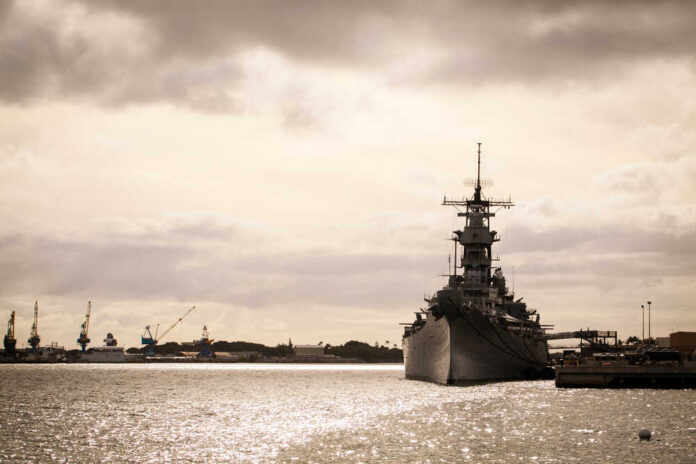
America has already paid for a new wave of submarines, but without 250,000 more skilled shipbuilders, those boats may never reach the fleet on time.
Story Snapshot
- The Navy says it needs about 250,000 additional shipyard workers over the next decade to meet current submarine and shipbuilding plans.
- About one-quarter of today’s shipyard workers could retire within five years, threatening a major loss of skills and experience.
- Congress and President Trump have directed billions toward shipbuilding and workforce programs, but the industrial base is still short on people.
- Big shipbuilders are shifting to higher pay and experienced hires, proving the labor gap can be closed if work beats welfare and desk jobs.
A Navy Fleet Stuck Behind a Worker Shortage
Secretary of the Navy John Phelan has warned that American shipyards need about 250,000 more skilled workers over the next ten years to build and maintain the submarines and warships already funded by taxpayers. This includes welders, electricians, pipefitters, and front-line managers who can turn steel and advanced systems into real combat power. Today’s shipbuilding workforce is under 250,000 people, so the Navy is asking for a labor surge nearly equal to the entire existing workforce. That shortfall directly threatens the pace of building key programs like Virginia-class attack submarines and Columbia-class ballistic missile submarines, which are vital for deterring China and other adversaries.
Independent analysis backs up the Navy’s alarm. McKinsey, using U.S. Department of Labor data, estimates the maritime industry will need about 200,000 to 250,000 extra workers in critical trades to meet demand over the next decade. A War on the Rocks workforce study notes that current ship and boat building employment is around 146,500 and will need to more than double to keep pace with strategic requirements. The Government Accountability Office has told Congress there is “broad agreement” that shipbuilding goals cannot be met without a stronger industrial base and more skilled tradespeople. In other words, this is not just Pentagon spin; multiple nonpartisan sources say manpower is now one of the main limits on American sea power.
An Aging Workforce and Vanishing Skills
The Navy’s warning is sharpened by a simple demographic fact: the shipyard workforce is old and getting older. McKinsey reports that 27 percent of U.S. maritime workers are 55 or older, and many are close to retirement. Other research puts the average age of skilled shipyard workers around 55, with turnover among younger workers above 20 percent in some yards. When these veterans retire, they take hard-earned skills with them, like complex welding on nuclear submarines and troubleshooting combat systems, which can’t be replaced overnight. Training a new welder or electrician to Navy standards often takes years. If one-quarter of the workforce walks out in five years while too few young workers walk in, the Navy’s schedule for new ships will slip further, no matter how much money Congress spends.
Younger Americans are also less likely to choose skilled trades. McKinsey finds that many young workers prefer big cities and office jobs and see trades like welding or pipefitting as “dirty” or second-class work. That stigma hurts shipyards, which tend to be in smaller industrial towns and require tough, hands-on labor. Add in security clearances and nuclear qualifications for submarine work, and the hiring pool shrinks even more. For a conservative audience, this is a clear symptom of a culture that has devalued honest manual work while pushing college debt and “woke” office careers. The result is fewer young patriots learning the skills that actually keep the country safe.
Trump’s Push to Rebuild Maritime Power
Under President Trump’s second term, the White House has moved to attack this problem head-on. His April 2025 executive order “Restoring America’s Maritime Dominance” called for a Maritime Action Plan and directed multiple cabinet departments to deliver workforce solutions for shipbuilding. Congress followed with the “One Big Beautiful Bill Act,” sending $29 billion to strengthen the shipbuilding and maritime industrial base. That law includes hundreds of millions for accelerated defense manufacturing training, maritime workforce programs, and new collaborative shipbuilding campuses so workers can learn faster and closer to home. These steps reflect a core Trump message: use federal power to rebuild the tools of national defense, not to enforce climate schemes or social experiments.
The Navy’s submarine industrial base program is also pushing new outreach and training. Officials describe plans to hire more than 140,000 workers over the next decade just to support submarine construction goals, including the “1+2” objective of building one Columbia-class and two Virginia-class submarines per year. Programs like Accelerated Training in Defense Manufacturing and the “We Build Giants” campaign aim to recruit and train Americans into these high-demand trades quickly. Together with Trump’s skills-based hiring push for the federal government, these moves try to open doors for veterans, working-class Americans, and people in inland states who want to serve but do not wear a uniform.
Industry Shows Money and Respect Can Fix the Shortage
Major private shipbuilders are starting to prove that the labor gap is not destiny; it is a policy choice. Huntington Ingalls Industries, which runs Newport News Shipbuilding, has begun “stepping away” from hiring large numbers of inexperienced “green” workers because half or more were quitting in the first year. Instead, the company is paying more for experienced workers and investing in better support and training, which has raised retention and stabilized the workforce. By late 2025, Huntington Ingalls Industries reported hiring over 4,600 shipbuilders that year with stronger retention at both its Virginia and Mississippi yards after boosting wages and modernizing technology. That is exactly what free-market conservatives expect: when skilled labor is paid like it matters, people stay.
Apprenticeship programs also offer hope. The Newport News Shipbuilding Apprentice School has graduated more than 11,000 skilled workers since 1919, showing that the pipeline for new talent exists and can grow. Defense advocates argue that more veterans should move into shipyards, where their sense of duty and discipline can help close the gap. Think tanks like the Heritage Foundation urge the government to stop outsourcing workforce planning to consulting giants and instead send clear, steady demand signals so shipbuilders can justify hiring and training more welders and pipefitters. For readers who believe in work over welfare and in peace through strength, the message is simple: America does not lack money or patriotic workers; it lacks serious leadership from the permanent bureaucracy. Trump’s team is trying to change that, but success now depends on whether industry, schools, and communities answer the call and help build the fleet this country has already paid for.
Sources:
19fortyfive.com, navalnews.com, linkedin.com, facebook.com, x.com, youtube.com, news.usni.org, nationaldefensemagazine.org, reddit.com, warontherocks.com, armedservices.house.gov