The Federal Aviation Administration lifted the nationwide ground stop at 8:15 p.m. Eastern, but thousands of delays and cancellations kept travelers stuck as the slow restart rolled on.
Story Snapshot
- Flights resumed after the Federal Aviation Administration ended the ground stop at 8:15 p.m. Eastern.
- Officials blamed a temporary telecommunications outage and said safety drove the halt and restart.
- Delays and cancellations stayed high after reopening, with recovery expected to be gradual.
- The Federal Aviation Administration said systems tested stable, but did not publish a root-cause breakdown yet.
Ground Stop Lifted, Slow Restart Underway
Transportation Secretary Sean Duffy said the nation’s airspace reopened at 8:15 p.m. Eastern. He warned that not every flight would go right away and told travelers to check with their airlines for updates. The Federal Aviation Administration stated it lifted the ground stop and some departures were resuming. The agency said it tested systems to ensure they were stable and that operations remained reliable before authorizing departures to begin. Airlines then worked through backlogs airport by airport.
The Federal Aviation Administration described a temporary telecommunications outage that led officials to halt flights out of caution. The agency said every flight had been accounted for and that international flights would be handled case by case. That safety-first approach paused takeoffs nationwide, a rare step reserved for serious system issues. Once systems checked out, the agency eased restrictions so crews could begin to move aircraft, passengers, and baggage again.
Delays And Cancellations Remain High
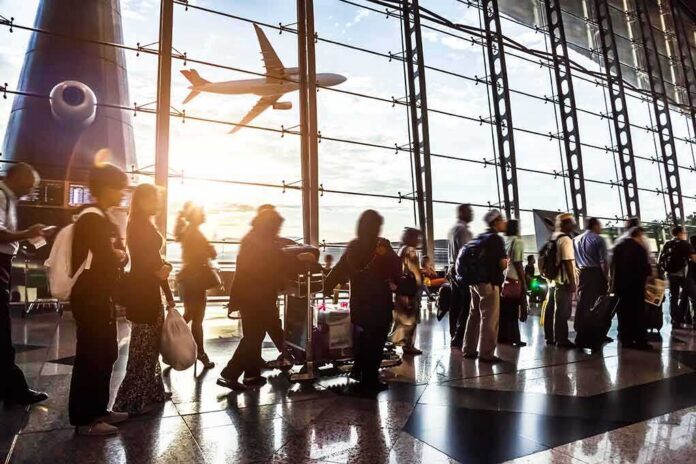
Flight tracking services showed the scale of the mess as airports restarted. Reports cited more than 9,000 delays and nearly 6,000 cancellations around the time the ground stop ended. That gap between “airspace open” and “trip back on track” is common after nationwide halts. Planes and crews end up in the wrong places. Gates and baggage clog. Missed connections stack up. Duffy’s warning about a slow ramp matched what passengers saw on departure boards across the country.
Lawmakers and reporters called the disruption a major breakdown. Coverage noted the unusual national scope and raised attention to aging systems inside air traffic control, echoing past warnings from federal watchdogs. The Government Accountability Office has urged faster modernization of air traffic control systems after earlier outages, which shows why a telecom failure can ripple so widely. Those reviews also track cost and schedule risks if upgrades drag out.
Why “Open Airspace” Is Not “Back To Normal”
A ground stop is a safety tool. It freezes departures so controllers are not managing traffic with unreliable data. Lifting the stop means the regulator judges the system safe to flow traffic again. It does not mean airlines instantly return to normal schedules. The restart takes hours or longer because aircraft, crews, and bags are out of position. That is why officials paired the reopening call with a caution to expect a gradual recovery.
7 AM Top-of-the-Hour News
There are thousands of people waking up this morning – on the floor of an airport.
It's after that nearly 5 hour long ground stop yesterday – halted every single flight in the U-S.: “So right now anything departing the ground anywhere in the US, so no… pic.twitter.com/LmXFZepOj4— Worldwide News Network (@WorldwideNNX) November 14, 2026
The Federal Aviation Administration said it thoroughly tested systems before reopening but has not released a detailed technical report on the outage cause in the cited material. In past events, the agency has published statements while deeper reviews followed later. For today’s traveler, the bottom line is practical: confirm flight status early, build extra time for connections, and expect airlines to re-sequence operations as crews time out and aircraft rotate back into place.
Sources:
facebook.com, nbcchicago.com, nbcnews.com, transportation.gov, cbsnews.com, theverge.com, gao.gov