A descendant of enslaved people says the Smithsonian’s history displays cross the line from education into political indoctrination, and he says that makes him angry.
Quick Take
- The White House accused the Smithsonian’s National Museum of American History of ideological capture and political activism.
- Bishop Earl Walker Jackson, a descendant of enslaved ancestors, said the museum’s messaging felt anti-American and deeply wrong.
- House Republicans repeated the charge at a hearing, saying woke ideology had seeped into public displays and teaching materials.
- The Smithsonian denied partisan intent and said it preserves evidence so the public can draw its own conclusions.
Jackson Says the Museum Offends the Truth of American History
Bishop Earl Walker Jackson told Fox News Digital that the Smithsonian’s latest fight over American history angered him because he sees it as a smear on the United States. Jackson, who is described as a descendant of enslaved ancestors, said the museum’s tone goes beyond honest history and turns into anti-American indoctrination. His comments gave the broader Smithsonian fight a personal and moral edge that fits the frustration many conservatives feel when public institutions spotlight grievance over national pride.
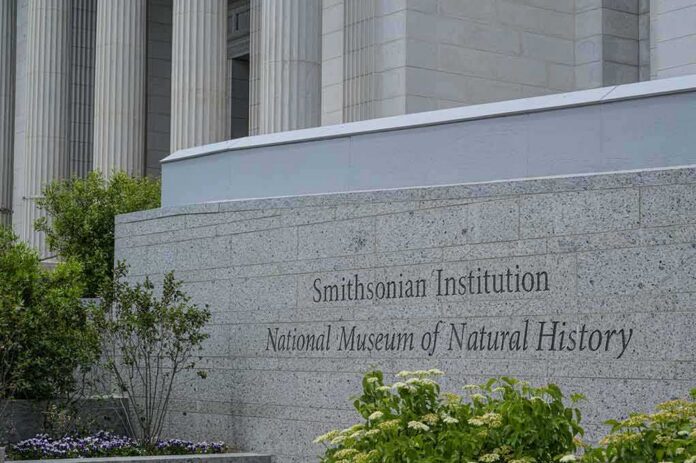
Jackson’s criticism landed inside a much larger political battle over the National Museum of American History. The White House Domestic Policy Council released a 162-page report on July 4, 2026, saying the museum had moved away from scholarship and toward “extreme political activism.” The report said the museum underplayed the Founding Fathers and early American history while giving too much attention to themes like gender fluidity, whiteness, and immigration. For many readers, that is not a small curatorial dispute. It is a fight over whether national memory will be guided by facts or fashionable ideology.
White House and House Republicans Escalate the Fight
The dispute widened when House Republicans pressed Smithsonian National Museum of American History Director Anthea Hartig at a July hearing. Representative Tim Burchett said the museum had become “infected by a woke ideology” that had seeped into public displays, educational materials, and planning documents. Other lawmakers echoed the same theme, arguing that the museum had leaned too hard on oppression and identity politics while neglecting the country’s founding story. The hearing showed that this was no lone complaint from a television clip. It had become a formal congressional fight.
Critics also pointed to specific examples in the White House review and related reporting. Those included a Benjamin Franklin exhibit that linked his scientific work to slavery, material on drag ball culture, and an image of the Statue of Liberty holding tomatoes. Supporters of the White House position say those choices prove the museum is teaching politics first and history second. That claim is strong as an argument about emphasis. It is weaker as proof of actual indoctrination, because the available record shows disagreement over framing, not forced belief.
Museum Leaders Push Back on the Charge
The Smithsonian has answered the criticism by denying that its mission is partisan. Smithsonian Secretary Lonnie Bunch and Director Anthea Hartig have said the institution does not take sides in political debates and instead documents American life in all of its breadth. Hartig also said the museum’s work reflects a complex country with both flaws and triumphs. That response matters because it shows the institution is not denying hard history. It is defending the idea that slavery, race, and conflict belong in the national story, even when they make some Americans uncomfortable.
Descendant of slaves shames Smithsonian’s woke ‘indoctrination’ against the ‘greatest nation on earth’
He's right!
History needs to be portrayed factually, not skewed by woke leftists.He confronted the Smithsonian back in 2015 about issues he had with how they portrayed US… pic.twitter.com/isjYKT2emN
— NWRain-Judi (@RYboating) August 10, 2026
Still, the record available here leaves one big gap. The White House and Republican critics have made detailed claims about exhibits and teaching materials, but the public counter-response is broad, not line-by-line. That leaves room for both sides to talk past each other. Conservatives see a trusted museum leaning into ideology. Smithsonian defenders see a public institution refusing to sanitize history. With taxpayer money and national heritage on the line, that is not a trivial argument. It is a battle over who gets to define America’s past.
Sources:
thegatewaypundit.com, cnn.com, axios.com, theguardian.com, bbc.com, youtube.com, reuters.com