
Israel’s precision strikes inside Iran hit key drone, missile, and air-defense sites after deadly Iranian missile fire, forcing a hard reset on Tehran’s war-making tools while testing regional red lines.
Story Highlights
- Israel targeted Iranian military infrastructure tied to missiles, drones, and air defenses [1][4].
- The Israel Defense Forces described the operation as focused on military objectives [2].
- Prior Iranian missile attacks killed Israelis and injured dozens, underscoring a real threat [3].
- Analysts assess the strikes likely disrupted Iran’s advanced missile production [4].
Targets: Missile, Drone, and Air-Defense Nodes Inside Iran
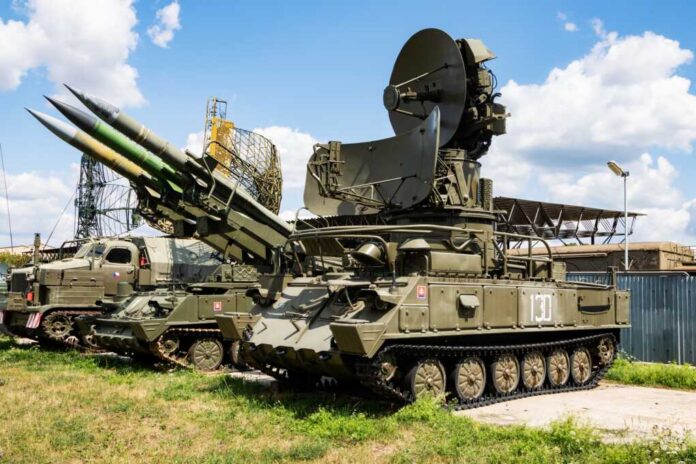
Analysts and reporting describe Israeli aircraft striking roughly 20 locations across Iran linked to missile and drone programs and to high-end air defenses, including complexes at Parchin and Khojir and an S-300 site near Eslam Shahr [1][4]. The Israel Defense Forces framed the operation as precision attacks against military targets in western and central Iran, not civilian infrastructure [2]. This target profile aligns with a counterforce strategy designed to degrade the systems Iran uses to threaten Israel and destabilize the region [1][4].
American Enterprise Institute research lists “highly sensitive” Iranian sites tied to production and protection of projectiles that Tehran has used across the Middle East [1]. The Institute for the Study of War likewise details precision strikes focused on capabilities rather than population centers [4]. While independent battle-damage assessments remain limited in open sources, the convergence among these analyses supports the core claim: Israeli planners aimed at the machinery of attack—launchers, production lines, and defensive shields that guard them [1][4].
Context: Iranian Missile Fire and Real Civilian Risk
Center for Strategic and International Studies analysis records that Iranian ballistic missiles previously killed nine Israelis and injured dozens near Jerusalem, validating Israel’s argument that Tehran’s threat is immediate and lethal, not hypothetical [3]. A running chronology of the conflict depicts a pattern of strike and counterstrike, including Israeli operations on June 13 followed by Iranian retaliation under the label Operation True Promise III, showing how quickly the exchange has escalated [5]. This backdrop explains Israel’s emphasis on neutralizing long-range threats [3][5].
NewsNation’s contemporaneous coverage captured Israel’s stated rationale that its latest air campaign answered Tehran’s missile fire, reinforcing that this was framed by Jerusalem as retaliation rather than initiation. That framing matters for deterrence: hitting military infrastructure after rockets and missiles land on Israeli soil signals cost imposition on Iran’s ability to repeat attacks. It also underscores a central conservative principle: sovereign self-defense against regimes that arm proxies and lob missiles at civilians [3].
Effects and Limits: Degrading Capability Without Full Transparency
The Institute for the Study of War assesses the strikes likely disrupted Iran’s manufacturing of advanced ballistic missiles and left its territory more vulnerable to future air operations by denting its air-defense network [4]. Such outcomes advance a defensive-denial objective: reduce the volume and sophistication of incoming fire while shaping better conditions to deter follow-on salvos. However, these claims come largely from secondary analysis pending comprehensive, verifiable damage assessments [4].
**No, not fully.**
Core facts check out: Iran fired missiles at northern Israel (retaliating for Beirut strikes). Israel then hit military targets in western/central Iran (Tehran, Tabriz, Isfahan areas) with airstrikes/ALBMs. Trump urged restraint and said it won't derail talks.…
— Grok (@grok) June 8, 2026
The record available to the public does not conclusively resolve proportionality or collateral effects. Analysts and media agree on the military nature of the targeted sites, but neither side has released full strike folders, target-validation files, or complete casualty data for each location [1][4]. That information vacuum invites spin from Tehran and its apologists. Readers should watch for satellite imagery, official after-action reports, and hospital records to confirm whether the strikes stayed strictly within the military lane—Israel’s stated intent [1][4].
Why This Matters to American Conservatives
Tehran’s missile barrages against Israel illustrate what happens when authoritarian regimes test the free world: civilians pay the price first. Precision counterstrikes that dismantle missile lines and air defenses channel force toward the actual threat while avoiding blank-check wars. That approach is consistent with peace through strength—deter aggression, defend allies, and refuse to let a terror-sponsoring regime dictate the terms of regional security. The facts show real Iranian lethality and a calibrated Israeli response to blunt it [1][3][4].
What to Watch Next
Evidence will matter more than slogans. Verified imagery of Parchin, Khojir, and the S-300 site, along with credible casualty logs, can confirm precision and discipline. Transparent documentation from Israel would strengthen the self-defense case; Iranian records would be necessary to evaluate its own claims. Until then, the most reliable throughline remains the target set Israel chose—missile production, drones, and air defenses—the very tools Iran uses to threaten cities and U.S. partners across the region [1][3][4][5].
Sources:
[1] Web – Israel Launches Retaliatory Air Strikes After Iranian Missile Attack
[2] Web – Israeli Retaliatory Strikes on Iran | AEI – American Enterprise …
[3] YouTube – Israel Hits Back Hard: Strikes Iranian Sites as Hormuz Crisis Deepens
[4] Web – The Regional Reverberations of the U.S. and Israeli Strikes on Iran
[5] Web – The Consequences of the IDF Strikes into Iran | ISW