
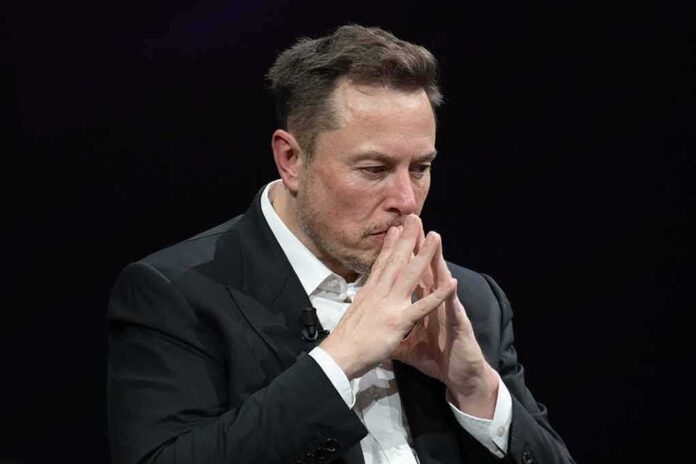
Elon Musk said he refused to expand Starlink coverage for a Ukrainian strike near Crimea and defended it as a responsible, nonpartisan decision based on clear limits of a commercial system.
Story Highlights
- Musk said Starlink’s Crimea coverage was not active and he declined a request to enable it for an attack.
- Biographer Walter Isaacson clarified his initial account, echoing that coverage was never turned on there.
- Musk distinguishes Starlink, a commercial product, from Starshield, a military service with different rules.
- Lawmakers pressed the Pentagon on guardrails as private networks shape wartime operations.
Musk Defends Limits on Starlink Use in Ukraine Conflict
Elon Musk stated that Starlink did not have active service over Crimea and that he declined a request to extend coverage for a Ukrainian operation aimed at the Russian fleet. He framed the choice as avoiding direct involvement in a major act of war while maintaining Starlink’s original commercial purpose. His account matches a later clarification from biographer Walter Isaacson, who said Ukrainian officials believed coverage reached Crimea, but it did not, and Musk chose not to enable it.
Musk also drew a line between Starlink and Starshield. He described Starlink as a consumer and commercial network with defined terms, while Starshield is a separate offering that can be contracted for military use with government oversight. He said Ukraine sought to use Starlink for offensive military actions, which exceeded Starlink’s scope and rules. That distinction explains why activation decisions carried strategic weight without a defense contract setting conditions.
Clarifications After Early Reports Sparked Confusion
Initial reporting and commentary suggested Musk “turned off” service to thwart a strike. After those claims spread, Isaacson publicly corrected the record, saying the service in that area had not been on in the first place. He noted that Ukrainians asked Musk to enable the coverage during the mission, and Musk declined to do so. That clarification aligns with Musk’s own description of events and narrows a heated debate to a specific technical and policy choice.
The British Broadcasting Corporation summarized Musk’s reasoning at the time: enabling coverage for a naval drone attack could draw his commercial network into direct warfare. Fact-checkers likewise traced the dispute to whether coverage was newly requested rather than switched off mid-operation, underscoring the same core point about activation boundaries. The thread through each account is that technical settings and service rules determined what Starlink would and would not support.
Private Networks Now Shape Battlefields and Policy
Academic and policy research shows how a private system like Starlink became crucial once Russia damaged ground networks. Ukraine used Starlink for command links, drones, and secure communications, which raised the stakes for any change in coverage or access. This shift creates a new challenge for national defense: private executives can face direct pressure to expand service into combat roles without a formal defense contract or clear legal framework.
Members of Congress asked the Department of Defense to clarify guardrails for private space and communications firms that become de facto infrastructure in war. Their inquiry followed reporting about Musk’s decisions and underscored the need for defined terms, accountability, and procurement paths when military use is at issue. The thrust is simple: when a private network turns into strategic gear, the rules should be set by elected government and formal contracts, not ad hoc pleas.
Why This Matters to American Taxpayers and Security
Clear lines protect both national interest and private property rights. A commercial service should not be conscripted for war by social media pressure or foreign demands. If the United States wants capabilities for offensive or covert missions, the right path is a defense contract, oversight, and payment terms that respect taxpayers and the Constitution. Musk’s stance, as clarified, fits that view: keep Starlink commercial unless the government lawfully contracts for more defined military use.
For conservatives who value limited government and strong defense, the lesson is twofold. First, do not let foreign wars commandeer U.S. private assets without proper authority. Second, build the right tools the right way. President Trump’s administration can insist that any battlefield use of private networks run through formal agreements, not back channels. That approach guards free enterprise, sets clear rules, and keeps America in charge of America’s technology.
Sources:
thenews.com.pk, reuters.com, cnn.com, nbcnews.com, teslarati.com