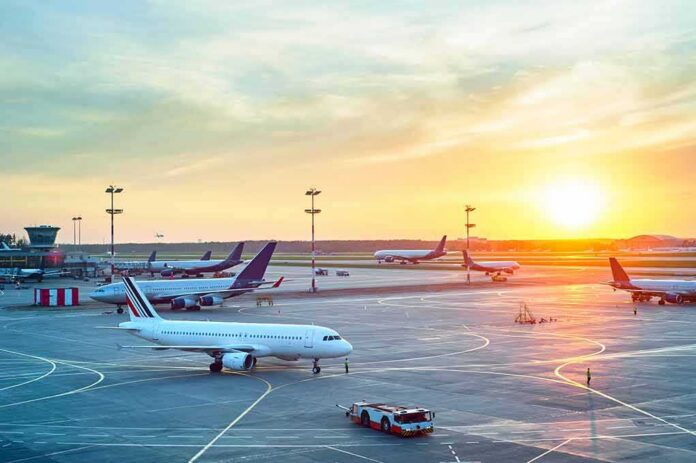
A fast-moving Thanksgiving storm forced a Federal Aviation Administration ground stop at Reagan National and left close to a million Americans without power.
Story Highlights
- The Federal Aviation Administration halted flights at Reagan National because of thunderstorms.
- Flight trackers logged thousands of delays and hundreds of cancellations on Thanksgiving Day.
- Outages neared one million customers across several East Coast states as winds hit 70 miles per hour.
- Federal forecasters warned days earlier of heavy rain, strong winds, and flooding along the East Coast.
Storm Forces Reagan National Ground Stop and Disrupts Holiday Travel
The Federal Aviation Administration temporarily ordered a ground stop at Ronald Reagan Washington National Airport on Thanksgiving because of thunderstorms, pausing departures until conditions improved. Flight-tracking data showed widespread ripple effects across the country as the storm moved up the coast. By evening, outlets reported hundreds of cancellations and more than two thousand delays tied to the holiday system. Travelers faced packed terminals, shifting gate times, and longer taxi lines as crews worked through the weather backlog.
Airline operations slow quickly when storms hit the Washington to New York air corridor. Controllers must space planes farther apart and sometimes hold traffic on the ground. That keeps skies safe but stacks up delays fast. Federal forecasts had called for rough air, low clouds, and bands of heavy rain on Thanksgiving. Those conditions make arrival flows hard to manage and can shut down ramp work for safety. The result was a bottleneck that lasted through much of the day.
High Winds Knock Out Power for Hundreds of Thousands
Strong winds toppled trees and power lines from the Mid-Atlantic into New England, cutting service to large areas. Reports Thursday evening put outages at about 961,000 customers nationwide as the storm peaked, with gusts measured near 70 miles per hour in spots. PowerOutage-based tallies showed heavy hits in Pennsylvania, Maryland, and Virginia, each with well over one hundred thousand customers in the dark as crews began damage patrols and line repairs. Restoration timelines varied as access and safety checks slowed work.
Officials linked the blackouts to wind-driven damage rather than grid-level faults. Wet soils, saturated by steady rain, made trees more likely to fall and rip down spans of wire. Flooded streets and live lines added hazards for first responders. Utilities prioritized hospitals, emergency services, and critical care customers. Many homes were cold and dark at dinnertime, complicating family plans and food safety. Numbers shifted during the evening as crews rerouted power, so snapshot totals differed by hour and outlet.
What Forecasters Expected and How It Played Out
The National Oceanic and Atmospheric Administration warned two days before Thanksgiving that a potent storm would bring heavy rain, strong winds, flooding, and travel problems from the Ohio Valley to the Eastern Seaboard. The National Weather Service added that the same storm would drive coastal flooding and push into the Northeast by Friday, keeping hazards active after the holiday. Those alerts matched what unfolded: grounded flights, rough driving, blocked rails, and widespread power failures across the Mid-Atlantic and Northeast.
Thanksgiving travel always tests airports and roads, but this system hit at a peak moment. Airlines built extra slack into schedules, yet the ground stop at Reagan National and flow limits elsewhere still produced queues. Highway crews cleared downed limbs while police handled spinouts and flooded underpasses. Coastal towns watched for surge on top of lunar tides. By late day, rain bands weakened and winds shifted behind the cold front. That allowed flight operations to recover, though some late routes remained delayed into the night.
Why This Matters for Families and Infrastructure
Holiday storms are not political, but the fallout is personal. Families missed flights, sat on tarmacs, and threw out thawing food. Many readers know the drill: prepare, check alerts, and hope the grid and airports hold. This week, federal forecasts were timely, and frontline workers responded fast. The clear lesson is simple. Strong, focused planning protects communities. Real maintenance, smart tree trimming, and hardened lines reduce outages when winds whip and the rain pours.
🚨 BREAKING 🇺🇸 THANKSGIVING SUPERSTORM: 900,000+ Without Power as Floods and Fierce Winds Pound the East Coast and Midwest!
A powerful Thanksgiving storm left more than 900,000 customers in the dark Thursday evening across the Midwest and Northeast, according to tracking site…
— Eyeworldnewsdigital (@eyeworldnews444) November 27, 2026
Air safety rules also worked as designed. Controllers used ground stops and spacing to keep passengers safe. That meant longer waits, but it prevented risk in crowded skies. The path forward is practical: keep investing in weather forecasting, upgrade aging power lines, and clear rights-of-way before storms hit. Families can also build simple resilience with backup lights, charged phones, and clear travel plans. When nature swings hard, preparation and common sense make the difference.
Sources:
thegatewaypundit.com, axios.com, weather.com, thehill.com, freep.com, noaa.gov