
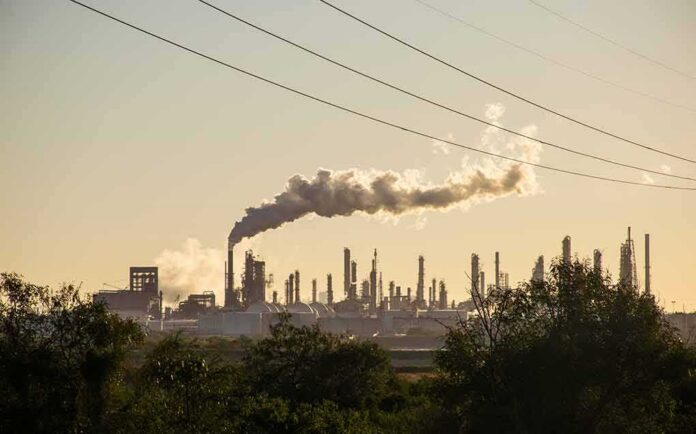
Ukraine’s latest deep strikes reportedly knocked out five more Russian warplanes on the ground, widening damage to refineries and rear bases far from the front.
Story Highlights
- Ukrainian attacks hit Russian airfields and energy sites, with reports of additional aircraft destroyed.
- Strikes have disrupted Russian oil refining, with facilities hit repeatedly across 2026.
- Operations reached deep into Russia, including targets over 600 miles from Ukrainian lines.
- Russia’s refining output saw notable, temporary reductions after clustered attacks.
Deep-Strike Results: Aircraft Losses On The Ground
Ukrainian forces have expanded their reach to Russian airfields, where parked aircraft are vulnerable. Reporting in October documented attacks against the Borisoglebsk and Marinovka airfields and a related strike on the Kamensky Chemical Plant, with at least eight combat jets destroyed and two damaged across those events. New strikes consistent with that campaign reportedly eliminated five more warplanes. Hitting aircraft at their bases forces Russia to disperse assets, harden shelters, and commit more air defenses to the rear.
Targeting airfields also pressures Russia’s ability to launch strike sorties and train pilots. When jets burn on the ramp or sustain shrapnel damage, the loss is immediate and the repair paths are long. Ukraine’s pattern of timing, distance, and repeated hits points to maturing long-range drone and missile tactics. The same reporting ties October operations to attacks on a rocket propellant facility, showing a focus on the supply chain that feeds Russia’s missiles as well as its aviation.
Refinery Damage: Repeated Hits Break Through Repairs
The International Energy Agency reported that Russian refineries were struck on average once every three days during the first eight months of 2026, with major damage at several sites. It noted the 250,000-barrel-per-day Moscow refinery was expected to remain offline until early 2027 after a June attack. Repeated hits strain maintenance teams, spare parts, and safety systems. Each outage disrupts fuel flows that support ground logistics, aviation operations, and export revenue streams.
Operational effects showed up during a heavy strike week in November. Reporting summarized by the Institute for the Study of War, citing Reuters, said nine of Russia’s 35 largest refineries saw disruptions, and oil processing fell by about 30 percent to 200,000 tons per day in that window. That scale does not prove national collapse, but it does reveal how clustered attacks produce short-term stress on fuel availability and pricing. These shocks complicate planning for the Russian military and industry.
Range And Target Set: Strategic Depth Under Pressure
Ukraine has shown it can reach deep into Russia. The Institute for the Study of War tracked strikes on the TAIF-NK refinery and the Nizhnekamskneftekhim complex in Tatarstan, about 1,120 kilometers from Ukraine’s border, and on the Akhtubinsk airfield about 615 kilometers from the frontline. Those distances force Russia to defend wide rear areas, move air defenses away from the front, and invest in better early warning. That spread also raises the cost of protecting every critical plant and runway.
Associated Press reporting tied Ukrainian claims to specific infrastructure, including storage tanks at the Ilsky refinery and a processing unit at the Afipsky refinery in Krasnodar Krai. These are not random fires. They hit primary and secondary processing units that are hard to replace under sanctions. While Russia can reroute and repair, each long outage or forced slowdown narrows options. The result is a running battle of strike, patch, and defend that bleeds time and resources.
Why This Matters For American Readers
American families know what energy shocks mean for prices and security. Disrupting Russia’s refining and air power blunts a hostile regime that leans on oil money and long-range strikes. The data shows real effects: repeated refinery damage, clustered output drops, and aircraft losses on protected bases. The goal is not endless spending or globalist adventures. It is deterrence built on results, backed by clear limits, transparency, and pressure on an aggressor that threatens allies and stability.
What To Watch Next: From Disruption To Enduring Impact
Analysts caution that disruption is easier to prove than lasting strategic collapse. Russia can repair, disperse, and reroute to cushion some losses. The key tests are duration of outages, proven aircraft attrition at specific airfields, and whether fuel stress slows Russian operations over time. Ukraine’s growing reach and repeat hits show momentum. The next phase is measuring how often those shocks translate into fewer sorties, tighter fuel supplies, and reduced strike intensity where it counts.
Sources:
defence24.com, iea.org, militarnyi.com, re-russia.net