President Trump rejected Iran’s seven-day, strings-attached “cease-fire” that delayed real concessions until later, putting security and energy freedom first.
Story Highlights
- Iran’s offer tied reopening the Strait of Hormuz to U.S. concessions and a phased timetable.
- Reports say Trump rejected the plan and doubted Tehran would meet firm conditions.
- Trump said he was “not satisfied” with Iran’s proposal amid ongoing talks.
- Negotiators remain far apart and no breakthrough has been reached.
What Tehran Offered And Why It Raised Red Flags
Iran’s foreign minister outlined a seven-day plan that would reopen the Strait of Hormuz and restart nuclear talks only after the United States took early steps that favored Tehran. Reports say the package required U.S. moves during the first days, while Iran would reopen the waterway at the end of day seven and return to talks later. That structure delayed Iran’s concrete concessions. It also linked vital shipping to U.S. relief, which raised security and leverage concerns in Washington.
Iranian officials further tied the Strait’s reopening to satisfaction of their conditions. A senior Iranian figure said there would be no return to normal transit until those demands were met. That stance reinforced doubts that Tehran was prepared to act first or in parallel. Coverage described the offer as conditional and phased, not an immediate or unconditional halt. Analysts noted that without firm, verifiable steps, Iran could bank early relief and still stall on day seven.
Trump’s Response And The State Of The Talks
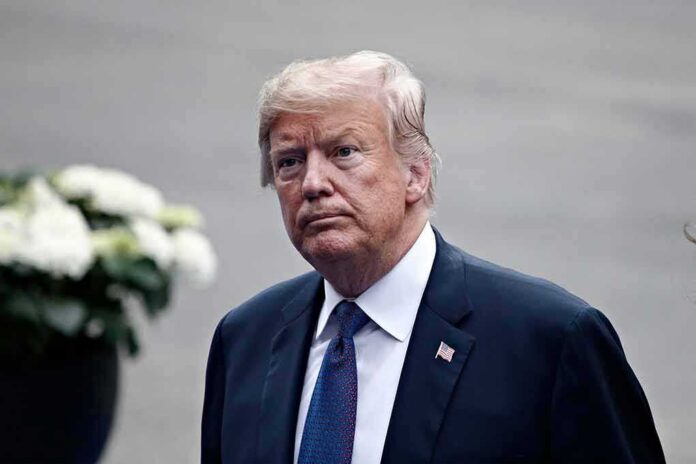
Reports summarized by major outlets said President Trump rejected the seven-day proposal and told aides he was skeptical Iran would fulfill U.S. conditions. Trump publicly stated he was “not satisfied” with Iran’s proposal as talks continued on the sidelines of the United Nations meetings. Reuters and other outlets reported the sides remained far apart and had not achieved a breakthrough, underscoring that the framework was still under debate and unresolved rather than a near-final deal.
The most provocative detail in some coverage is an expectation of renewed U.S. airstrikes after the midterm elections. That claim rests on unnamed officials cited in media reports, not on-record orders or a published directive. The White House did not release a formal memo spelling out objections or any counteroffer in public view. Given that gap, the strongest public record remains Trump’s on-camera skepticism and third-party descriptions of a conditional, back-loaded Iranian plan.
What This Means For U.S. Security, Energy, And Leverage
Securing free passage through the Strait of Hormuz is a core U.S. and global interest. A deal that reopens the Strait only after front-loaded U.S. relief would flip leverage toward Tehran. Accepting such terms could invite repeat brinkmanship, endanger energy markets, and reward coercion over compliance. Trump’s refusal tracks a basic conservative view: do not trade real benefits up front for delayed promises later, especially from a regime with a record of hedging on nuclear transparency and regional militias.
Diplomacy can still work, but it must be simple, verifiable, and fast. Any arrangement should make the reopening of the Strait immediate, monitored, and tied to snap-back penalties if Iran backslides. Nuclear talks should begin on day one, not day seven. Sanctions relief must come only after verified actions, not as prepayment for future talks. Current reporting shows talks continue but remain far apart, which reflects the administration’s insistence on hard checkpoints over hopeful timelines.
Sources:
iranintl.com, nytimes.com, nypost.com, apnews.com, independent.co.uk, cbs12.com