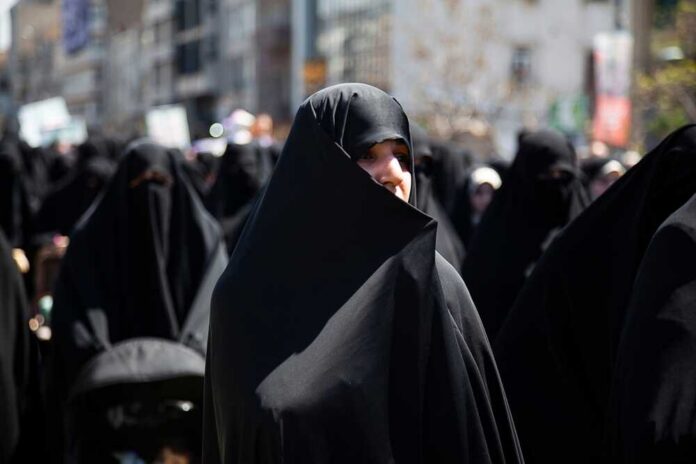
Iraq just staged a massive funeral for Iran’s slain supreme leader in its holiest cities, turning grief into a show of power that should worry every American watching the Middle East.
Story Snapshot
- Iraq hosted huge funeral processions for Iran’s Ayatollah Ali Khamenei in Najaf and Karbala, drawing thousands of mourners.
- Reports describe the ceremonies as a political pageant that projects Iranian power across Iraq, not just a religious event.
- Iraqi security forces and Iran‑linked militias heavily guarded the route, signaling deep military and clerical ties between Baghdad and Tehran.
- The body moved through key shrines in Iraq before returning to Iran, sending a message to Washington and its allies about Iran’s reach.
Iraq’s Role in Khamenei’s Funeral Shows Iran’s Reach
Iran’s late Supreme Leader Ayatollah Ali Khamenei was assassinated in late February in strikes blamed on Israel and the United States, during a brutal war that shook the region. His state funeral was delayed for months by fighting and religious calendar limits, then launched as a week‑long operation starting July 3. Iranian media and foreign outlets reported that processions would not only pass through Tehran and Qom, but also through the Iraqi cities of Najaf and Karbala before final burial in Mashhad. This cross‑border plan made Iraq an essential stage for Iran’s last farewell to its leader.
On July 8, Khamenei’s coffin was flown into Iraq after days of ceremonies in Tehran and Qom. Crowds gathered in Najaf to march behind the casket through the city’s streets and toward the shrine of Imam Ali, one of Shiite Islam’s most important sites. Reuters live footage and other video showed thousands of mourners walking in tight, emotional processions as clerics waited to receive the coffin at the shrine complex. Later that same day, the body moved on to Karbala, home to the shrine of Imam Hussein, where more ceremonies took place before the coffin returned to Iran for final burial.
Security Control and Iran‑Backed Forces on Iraqi Streets
Iraqi media and international outlets reported heavy security around the funeral route in Najaf and Karbala, with streets closed and checkpoints in place. Members of Iraq’s Popular Mobilization Forces, a coalition of Shiite militias with close ties to Iran, were seen standing guard along the procession path and near shrine entrances. One report described “figures from Iraq’s Popular Mobilization Forces” taking part around the coffin convoy, highlighting the blend of mourning and militia presence. While one YouTube outlet claimed that 20,000 Popular Mobilization Forces personnel were assigned to secure Najaf, that specific number has not been confirmed by official Iraqi state media. The visible role of Iran‑aligned fighters still sends a clear signal that Iran’s military network can operate openly during major public events on Iraqi soil.
Foreign analysis has framed the Iraq leg of the funeral as part of a larger pattern in which Shiite state funerals double as geopolitical operations. Reports note that over the past two decades, cross‑border processions for top Shiite leaders often include coordinated security and religious events in both Iran and Iraq. In this case, writers at Amwaj Media and other outlets say Khamenei’s funeral “represents the convergence of Iran’s ideological, religious, military and political influence,” especially visible once the coffin crosses into Iraq. For American readers, that means these crowds are not just grief in the streets; they are also a stage where Iran shows that its reach does not stop at its own borders.
Pageant of Power and Anti‑Western Messaging
Major Western outlets from Washington Post to Time described the wider funeral as an elaborate pageant that mixes religious mourning with hard political signaling. Photo and video coverage showed caskets draped in red flags linked to the Imam Hussein shrine in Karbala, a symbol in Shiite tradition that calls for vengeance after an unjust death. Analysts argue that flying Khamenei’s body into Iraq’s holy cities is a deliberate message to Washington and Jerusalem that, despite the war and sanctions, Iran still commands loyalty and physical space across the Shiite world. This narrative turns a funeral into a kind of victory march, meant to rally supporters and intimidate rivals.
At the same time, some Western broadcasts focused on ugly anti‑American and anti‑Trump imagery seen earlier in the Iran‑based processions, including effigies and hostile chants. Those scenes fuel a hostile environment that is deeply at odds with American values and interests, even as the Biden‑era foreign policy that helped set the stage for this conflict has ended and the Trump administration now faces the fallout. For conservative readers, it is important to see how these funerals can be used to stir anger against the United States and to justify more aggression, all under the cover of religious ceremony.
What This Means for American Security and Policy
The Iraq segment of Khamenei’s funeral underscores how Iran leverages religious networks to lock in political and military influence next door. By moving the coffin through Najaf and Karbala, Iran signals that it can mobilize huge crowds, friendly clerics, and loyal militias inside Iraq whenever it chooses. That reality matters for American troops, diplomats, and allies who still rely on Iraq to contain terror threats and limit Iranian expansion. A funeral that looks like simple mourning on television also doubles as a live test of Iran’s ability to coordinate security, media coverage, and public messaging across borders.
Mourners marched through Iraq’s holy city of Najaf on Wednesday, following the coffin of slain Iranian leader Ayatollah Ali Khamenei as his six-day funeral procession pressed on across the border.https://t.co/aHvxZWgT25#Iran #Najaf #MiddleEast #Iraq #brecordernews
— Business Recorder (@brecorder_com) July 8, 2026
For the Trump administration, which is now responsible for protecting American interests in this environment, the lesson is clear. Any future policy toward Iraq has to account for the deep clerical and militia ties that Iran displayed so openly during this funeral. Strong support for American energy independence, secure borders, and a robust military is not just about domestic politics; it is also about making sure hostile regimes cannot use events like this to tighten their grip on key countries. When Iran’s leaders can turn a funeral into a regional power show that marches through Iraq’s holiest ground, Americans who care about national security, constitutional government, and the fight against terrorism should pay close attention.
Sources:
youtube.com, washingtonpost.com, time.com, bbc.com, cnn.com, nbcnews.com, nytimes.com, apnews.com, amwaj.media, aljazeera.com, instagram.com, facebook.com, reutersconnect.com, wanaen.com