
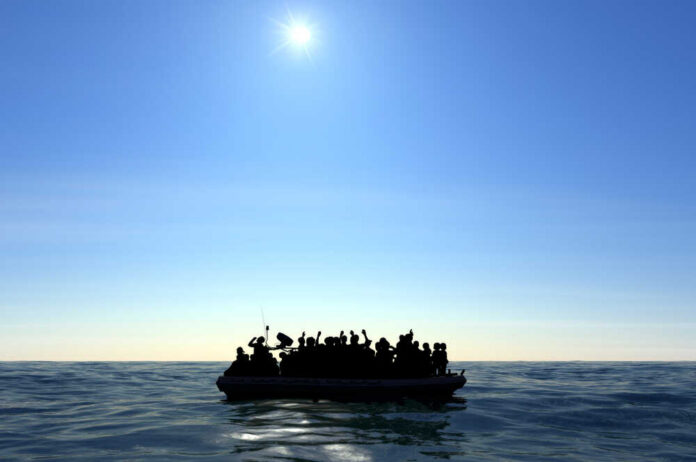
A fresh surge of more than 10,000 illegal Channel crossings in 2026 shows Britain’s borders are still wide open and UK taxpayers are footing the bill.
Story Snapshot
- Over 10,000 people have already crossed the English Channel in small boats in 2026, with a record day of about 710 arrivals.
- Since 2018, roughly 200,000 people have entered the UK this way, turning small boats into the main route for illegal entry.
- Channel migrants now make up a large share of new asylum claims, piling costs onto housing, welfare, and legal systems.
- Despite pricey deals with France and new laws, British voters still see a crisis of sovereignty, control, and basic fairness.
Record 2026 crossings show a border crisis, not a blip
Official figures from the United Kingdom Home Office show that by mid‑June 2026, about 9,852 people had already reached Britain in small boats, with commentators now reporting the 10,000 mark has been passed for the year.[1] A single day saw around 710 people arrive in just 11 vessels, the highest daily total so far in 2026 and a clear sign that smugglers feel confident and organised.[1] These are not a few isolated cases; they reveal a steady flow that looks more like a conveyor belt than an emergency.
Since records began in 2018, the Home Office has detected more than 200,000 people crossing the English Channel in small boats, the rough equivalent of adding a city the size of York in only a few years.[2] Research from the Migration Observatory at Oxford puts arrivals between 2018 and 2025 at about 193,000, with numbers still high into 2026.[7] While there was a small fall early this year, the summer surge is pushing totals back up again, and the route has become the primary doorway for illegal entry.[4]
Costs, strain, and who is really coming across the Channel
Serious studies show that small‑boat migrants are not mainly families with children but mostly men of working age.[5] In 2025, about 76 percent of those arriving this way were adult men, while only around 12 percent were children under 18.[5] Many come from countries such as Iran, Afghanistan, Iraq, Syria, Eritrea, Vietnam, Sudan, and Turkey, and most then claim asylum once safely on British soil, turning an illegal crossing into a drawn‑out legal case that can take years to resolve.[4]
Migration research estimates that small‑boat arrivals made up roughly 41 percent of all asylum claims in 2025, showing how this one route is now driving much of the wider system.[5] A National Audit Office‑cited look at costs suggested that the small‑boats crisis alone could run to about £3.5 billion a year when housing, support, legal aid, and back‑office work are counted.[4] Over the seven years from 2018 to 2025, that implies a bill of more than £24 billion, with ordinary taxpayers on the hook while local services struggle to cope.[4]
Why tougher laws and French deals have not stopped the boats
The British government has tried to get ahead of the problem with new laws and big‑money deals, but the boats keep coming. A Channel tracker notes that in 2025 there were 41,472 crossings, the second‑highest annual figure on record and 13 percent higher than 2024, despite repeated promises to “stop the boats.”[4] That same year, the 10,000 mark was hit before the end of April, faster than in 2024 or 2023, showing that enforcement has not yet broken the smugglers’ business model.[4][5]
Ministers have struck a £662 million‑plus package with France, funding patrols, drones, helicopters, and cameras on French beaches to disrupt launches.[1] British officials say this joint work has prevented tens of thousands of attempted crossings and led to many arrests and removals.[8] Yet video and on‑the‑ground reporting continue to show heavily loaded dinghies leaving French shores and being escorted or monitored rather than blocked, feeding a public sense that Britain is “paying to facilitate” rather than to stop the illegal trade.
Is this a true crisis or just a “manageable” migration problem?
Some analysts argue that Channel crossings in 2026 are a “management challenge” rather than a full‑blown crisis because total arrivals in the year ending 31 May 2026, around 36,000 people, were about 13 percent lower than the year before.[7] They point out that roughly 9,000 people crossed in the first five months of 2026, which was 38 percent fewer than in the same period of 2025, and note that bad winter weather can sharply reduce the number of boats able to make the trip.[7] On paper, that lets officials claim progress.
'We just had a new arrangement with the French… a task force with drones doing much more surveillance on the beaches.'
Prime Minister Keir Starmer celebrates new measures being taken by the Labour government to tackle small boat migrant crossings in the English Channel. pic.twitter.com/mpdY8dROfs
— GB News (@GBNEWS) June 17, 2026
For many British and American conservatives, though, the real issue is sovereignty and the rule of law, not just yearly totals. Crossing the Channel without permission is a criminal offence, yet tens of thousands do it and are then housed, fed, and given legal support at public expense while claims are processed.[2] That looks like a reward for breaking the rules, even as veterans, pensioners, and working families at home face high taxes, tight budgets, and long waits for services. Until the flow is clearly under control, voters will keep calling this what it is: a crisis at the border.
Sources:
[1] Web – 10,000 migrants surge across English Channel in 2026 as UK sees RECORD …
[2] Web – More than 700 people cross Channel in small boats – BBC
[4] YouTube – Nearly 1000 migrant small-boat arrivals in just 48 hours …
[5] Web – Channel Crossing Tracker | Migration Watch UK
[7] Web – As many as 317 people crossed the English Channel in five small …
[8] Web – Small boat arrivals: last 7 days – GOV.UK