
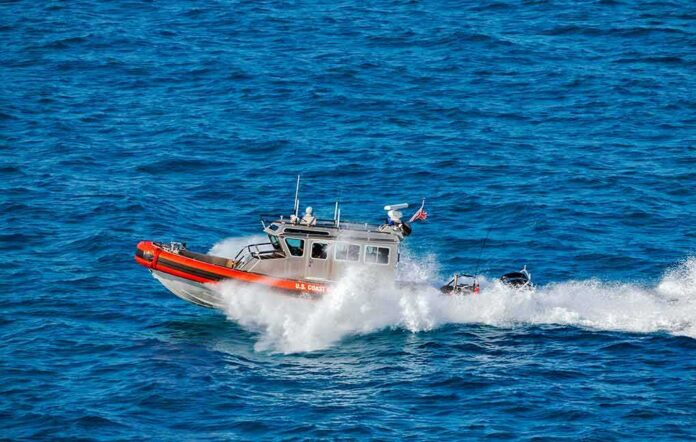
As the death toll from U.S. strikes on alleged cartel boats tops 200, critics push a legality narrative while the administration insists it is dismantling the fentanyl pipeline at sea.
Story Highlights
- U.S. military says months of strikes targeted suspected trafficking boats in the Caribbean and eastern Pacific [1].
- Reported deaths have climbed above 199 amid an ongoing maritime campaign [1][2].
- Released videos show real-time strikes on fast-moving vessels [1].
- Public evidence of drugs aboard the destroyed boats remains limited, fueling scrutiny [1][2].
What The Military Says The Mission Is Doing At Sea
United States Southern Command and the armed forces describe a sustained counter-narcotics campaign that struck suspected drug-trafficking vessels across the Caribbean Sea and the eastern Pacific Ocean beginning in September, with operations continuing into this month [1]. Officials framed the effort as targeting cartel logistics before deadly cargo reaches American shores, citing routes, behaviors, and stateless vessels common to trafficking. Publicly released strike videos depict boats hit and engulfed in flames, underscoring the kinetic nature of the interdictions [1].
The White House positioned early actions as part of a broader push to weaken cartels feeding the fentanyl crisis, with statements that initial strikes destroyed illegal narcotics bound for the United States and killed members of the Tren de Aragua network [2]. Open-source tallies reference Operation Southern Spear, outlining dozens of engagements across both maritime zones. Supporters argue that taking out mother ships and go-fast craft at range protects U.S. communities by breaking supply chains before they ever get near our borders [2].
The Numbers: A Lethal Campaign With Incomplete Public Proof
Associated Press reporting places the cumulative death toll at least at 199 and rising, reflecting a months-long tempo rather than isolated incidents [1]. One report catalogues at least 60 strikes on 61 vessels across the two maritime theaters as of early May, with deaths then approaching 192 before increasing further, a reminder that live operations produce evolving counts [2]. The military has noted survivors in some cases, with the United States Coast Guard recovering at least one person and transferring the survivor to Costa Rican authorities this spring [1].
Despite the scope, the public record shows gaps that critics seize upon. Reports repeatedly label targets as “suspected” or “alleged” drug boats, and available material does not present cargo seizures or chain-of-custody records from destroyed hulls to confirm drugs were aboard at the moment of strike [1][2]. Identities of most of the deceased have not been publicly established, leaving outside observers unable to tie every casualty to a cartel network on the open record. Those transparency limits keep pressure on the administration’s evidentiary narrative [2].
The Legal And Oversight Questions Now Taking Shape
Outlets have highlighted accusations that these are extrajudicial killings, and coverage notes that a Pentagon inspector general review has been scoped to evaluate targeting processes without adjudicating legality, a choice that critics argue leaves the central dispute unresolved in official channels [1][2]. Congressional Democrats and some legal analysts say the government should release the legal rationale and intelligence thresholds. The administration counters that operational security and active interdiction realities constrain what can be disclosed while the mission continues [1][2].
For constitutional conservatives, two principles matter at once: secure the border and stop poison at the source, while also keeping the state inside lawful lines. The factual record supports that real boats on known smuggling lanes were struck and that videos document those engagements [1]. It also shows the government has not publicly produced case-by-case drug evidence from the destroyed vessels, leaving the burden of persuasion unmet for skeptics who want courtroom-quality proof in the open record [1][2].
What Accountability Should Look Like Without Handcuffing The Mission
Congress can demand classified briefings that detail target development, surveillance timelines, and rules of engagement for each strike, paired with releasable summaries that protect sources yet answer core questions about identification standards [1][2]. Lawmakers can also require preserved debris logs, survivor handling records, and transfers to partner nations, creating an auditable trail that validates counter-narcotics outcomes without exposing operational methods. Done right, those steps reinforce legitimacy while sustaining pressure on cartels exploiting maritime gaps.
🇺🇸
The First Order Consequence: The U. S. strikes on alleged drug boats, with the death toll climbing above 200 after a latest attack, can drive intensified operational tempo and expanded intelligence targeting by U. S. forces, strengthening their ability to disrupt trafficking… https://t.co/k8kPow8RSD
— U.S.A.I. 🇺🇸 (@researchUSAI) May 30, 2026
The administration can further strengthen public trust by publishing redacted video packages that show pre-strike observation windows, vessel behavior, and post-strike assessments, beyond the brief clips now circulating [1]. That measured transparency would undercut narratives that this is lawless or indiscriminate while keeping America on offense against the networks pushing fentanyl precursors and hard drugs into our towns. Conservatives expect both strength and stewardship: decisive action at sea and verifiable adherence to constitutional and statutory authority.
Sources:
[1] Web – Death toll from U.S. strikes on alleged drug boats climbs above 200
[2] Web – Recent survivors of US boat strikes haven’t been found, bringing …