A White House push to “win” the drug war and crack down on city crime is reigniting an old American fear: a permanent security state aimed inward.
Story Snapshot
- The Trump administration has shifted focus from overseas “forever wars” to sustained domestic and near-shore security operations, including anti-cartel actions in the Caribbean and expanded city deployments.
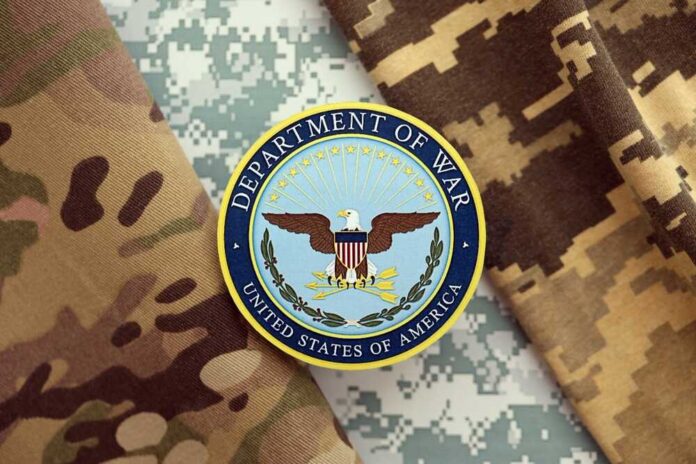
- An executive order renaming the Department of Defense to the “Department of War” is being read by critics as a signal of more aggressive, open-ended posture.
- National Guard deployments tied to crime prevention raise questions about civil liberties, mission creep, and what “success” looks like in an operation with no clear end-state.
- Analysts warning about China’s Taiwan timeline argue domestic operational demands could compete with Indo-Pacific readiness and strategic focus.
A “Forever War” Rebranded for the Home Front
President Trump returned to office promising to avoid open-ended conflicts abroad, but the latest debate centers on whether the country is drifting into a different kind of “forever war” inside U.S. borders. A Los Angeles Times opinion analysis describes a summer 2025 escalation: a more militarized campaign against drug trafficking in the Caribbean paired with a highly visible, city-focused “war on crime.” Supporters see deterrence; critics see an indefinite mission by design.
The Next Forever War Will Be In The U.S. https://t.co/X7mOPzOI3K via @YouTube
— The truth is out there (@MadelainaE) May 2, 2026
The distinction matters because “forever war” is not only about geography; it’s about objectives, duration, and accountability. The Middle East era showed how difficult it is to define victory when the mission expands from defeating an enemy to managing instability. In this case, the targets—drug trafficking networks and urban violence—are persistent problems that rarely yield clean endpoints, making it hard to measure progress beyond headlines, arrests, or short-term dips in crime.
From “Department of Defense” to “Department of War”
The administration’s executive move to rename the Department of Defense to the “Department of War” has become a flashpoint because names signal doctrine. Critics interpret it as a rhetorical shift toward force-first solutions and a public expectation of sustained campaigns rather than limited, time-bound operations. Supporters may view the language as honesty—calling conflict what it is—and as a rebuttal to what they consider years of elite hesitation that left communities exposed to fentanyl and violent crime.
Still, the practical question is how such framing influences policy choices. Militarized language can widen the set of tools considered “normal,” even for problems historically handled by civilian agencies and local policing. The LA Times piece argues the administration is using “the ax instead of the scalpel,” warning that blunt instruments can create recurring deployments without durable solutions. That critique cannot be proven in advance, but it points to a real governance challenge: defining limits before an operation becomes permanent.
National Guard in Cities: Security Gains vs. Civil Liberties Risk
National Guard deployments discussed for cities including Los Angeles and Washington, D.C., and the suggestion that Chicago could be next, put federal power and local life on a collision course. Many conservatives want order restored after years of permissive prosecution and political hesitation about policing. Many liberals, and some constitutional conservatives as well, worry that using uniformed forces for domestic security can normalize extraordinary measures and blur lines between military readiness and civilian law enforcement.
Key details remain unclear in the available reporting: the rules of engagement, the legal authorities relied upon, how long deployments last, and what benchmarks trigger an exit. Without explicit metrics, the public is left to judge success by optics—troops on streets, press conferences, and selective statistics. That dynamic fuels the broader distrust now common on both right and left: citizens suspect leadership is optimizing for politics and institutional power rather than transparent, limited government with measurable outcomes.
The Strategic Tradeoff: Domestic Campaigns and China’s Timeline
The same analysis that criticizes open-ended domestic operations also flags a separate strategic risk: attention and resources diverted from China. Xi Jinping has directed his military to be ready to take Taiwan by 2027, a timeline that has shaped U.S. defense planning and allied coordination. If planners are forced to balance Indo-Pacific readiness with recurring domestic deployments and Caribbean operations, critics argue the United States could dilute focus during a period when clarity and deterrence matter most.
That argument resonates beyond partisan lines because it returns to first principles: the federal government exists to secure the nation, not to run indefinite internal campaigns that can be handled closer to the community level whenever possible. Conservatives will ask whether federalized “war” language invites mission creep. Liberals will ask whether it threatens civil liberties. Both camps, increasingly, ask the same question about Washington’s competence: if the government couldn’t end the old forever wars cleanly, why trust it to start new ones with clearer limits?
The Next Forever War Will Be In The U.S. https://t.co/m0LVr8UDBJ via @YouTube pic.twitter.com/iBViUrW9UZ
— Joanne Marie Momoa (@jmmomoa1967) May 2, 2026
For now, the strongest confirmed facts are structural: the reported operational shift toward near-shore interdiction and city deployments, and the administration’s decision to adopt more openly martial language. Whether this becomes an entrenched “forever war” is still an interpretation, not a settled outcome. The public’s most important leverage point is insistence on constraints—legal clarity, local consent, defined success metrics, and an off-ramp—before any domestic security mission becomes the new normal.
Sources:
Trump, Chicago, cartels and the military
The Biden presidency and the future of America’s forever wars