Trump just tied America’s energy prices—and the risk of another Middle East war—to a Tuesday deadline that could drag the U.S. deeper into a fight many voters never signed up for.
Quick Take
- President Trump warned Iran that U.S. forces would strike Iranian power plants and bridges starting Tuesday, April 7, unless Iran reopens the Strait of Hormuz.
- The ultimatum followed Iran shooting down a U.S. F-15E on April 3 and the U.S. rescue of the downed airman after more than a day.
- The Strait of Hormuz remains the pressure point because disruptions there can spike global oil prices and ripple into U.S. inflation.
- Trump says current operations are not about “regime change,” but his rhetoric signals escalation while negotiations appear unstable.
Trump’s Tuesday Ultimatum Raises Stakes for U.S. Involvement
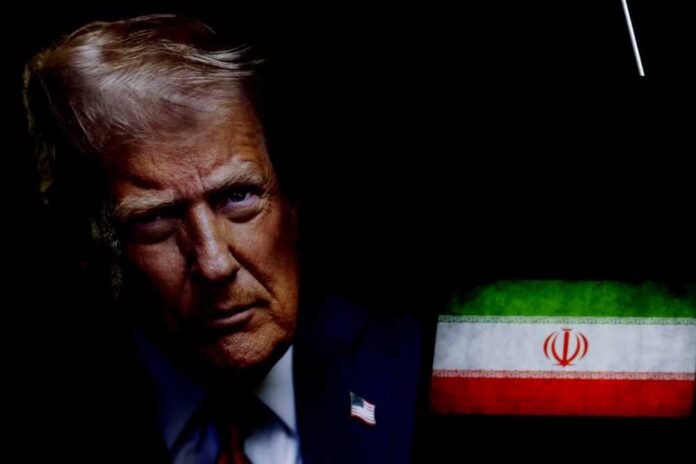
President Donald Trump used a Truth Social post on Easter Sunday, April 5, to issue a blunt ultimatum to Iran: reopen the Strait of Hormuz or face U.S. strikes on Iranian power plants and bridges beginning Tuesday, April 7. The message branded the coming action with “Power Plant Day” and “Bridge Day,” an unusually specific public timeline for military pressure. The post landed as U.S.-Iran hostilities intensified and Americans watched energy markets nervously.
Trump’s threat came immediately after a rescue operation that brought home a U.S. airman whose F-15E Strike Eagle was shot down by Iran on Friday, April 3. Reports describe the pilot as “seriously wounded” and missing for more than a day before the U.S. recovered him over the weekend. The rescue removed one immediate crisis—an American held or killed—but it also became the trigger for a harder public warning aimed at Iran’s leadership and its control of the shipping choke point.
Why the Strait of Hormuz Is the Real Pressure Point
Iran’s closure of the Strait of Hormuz matters far beyond the region because it is a critical corridor for global oil shipments. When that chokepoint is threatened, energy costs can jump quickly, and higher fuel prices tend to filter into the cost of groceries, shipping, and household basics. That is the political reality facing the administration now: voters who already feel squeezed by high prices can read any new conflict through one immediate lens—what it does to their paychecks and their energy bills.
Trump has framed the demand as a matter of forcing the Strait back open and punishing Iran for attacking U.S. forces, not as a nation-building project. At the same time, he has acknowledged a pattern of negotiations breaking down, describing a cycle where the U.S. negotiates and then returns to bombing. That blunt assessment matches the uneasy moment: diplomacy is described as ongoing, but the deadline-style threats suggest Washington is relying on coercion to change Iranian behavior quickly.
War Aims: “Not Regime Change,” But Rhetoric Signals Escalation
Trump stated that U.S. military operations in Iran began a “short time ago” and claimed the campaign’s purpose is to eliminate threats from what he called a “vicious” regime. He has said the goal is not “regime change,” and he indicated an intent to hit hard over a two-to-three week window to reach objectives “very shortly.” Those statements set expectations for a concentrated campaign, but they also leave key questions unanswered about what “success” looks like beyond reopening the Strait.
Because the threatened targets include power plants and bridges, the stakes extend beyond military sites. Striking infrastructure can impair communications, transport, and daily life, raising concerns about civilian hardship even when the strategic goal is pressure on leadership. The available reporting confirms Trump’s threat and the timetable, but it does not independently confirm what specific target sets have been approved or whether strikes will occur if Iran partially reopens shipping lanes. That uncertainty is exactly what makes the deadline so combustible.
MAGA Tensions: Defending Americans vs. Another Open-Ended Commitment
The political fault line inside the broader Trump coalition is now visible: many supporters back strong retaliation for a downed U.S. jet and threats to American shipping, while others are wary of sliding into another long, expensive conflict. The frustration is not abstract. Voters who fought against globalism and overspending are also tired of wars with unclear endpoints, especially when Washington’s decisions can raise domestic energy costs. With Trump in a second term, supporters who expected fewer foreign entanglements are watching whether this escalation becomes a limited push—or a new chapter of “forever war.”
For now, the verified facts are straightforward: an American aircraft was shot down, the airman was rescued, Iran’s Strait closure remains central, and Trump has set a public deadline paired with threats on infrastructure. What is not yet confirmed is what Iran will do before Tuesday and whether Washington will follow through as stated. Americans should watch for concrete signals—shipping movement through the Strait, official Pentagon briefings, and clear congressional consultation—because decisions made in days can shape costs, risks, and U.S. priorities for months.
Sources:
Trump escalates threats to bomb Iran’s power plants after rescue
Trump vows US will strike Iran’s power plants, bridges if Strait of Hormuz not reopened