
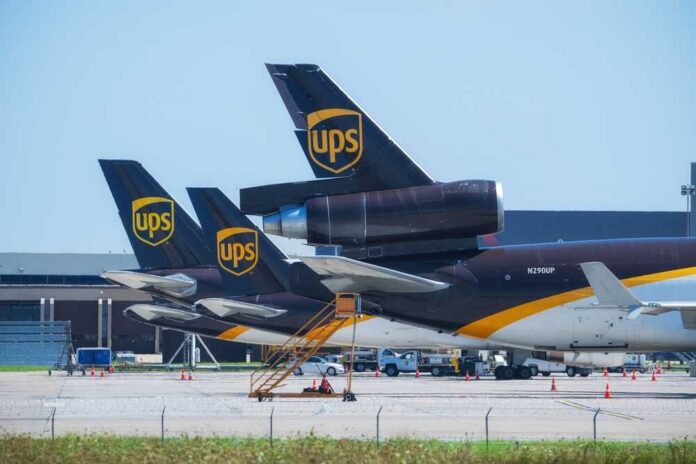
The rushed push for answers after the UPS Flight 2976 tragedy is colliding with a hard truth many Americans forget: the most important evidence exists, but it won’t be public on anyone’s political timeline.
Story Snapshot
- NTSB investigators recovered the cockpit voice recorder and flight data recorder from the UPS Flight 2976 crash near Louisville on Nov. 4, 2025, where at least 12 people died.
- Despite severe charring from a post-crash fire, the agency extracted more than two hours of cockpit audio and about 63 hours of flight data spanning 24 flights.
- Investigators reported a repeating bell alarm about 37 seconds after takeoff thrust, with the crew attempting to control the aircraft until impact roughly 25 seconds later.
- The CVR transcript process is underway, but public release typically comes much later through formal docketing, not social-media pressure.
What investigators say they recovered—and why it matters
NTSB teams recovered both “black boxes” from the wreckage of UPS Airlines Flight 2976, an MD-11 freighter that crashed near Louisville Muhammad Ali International Airport on Nov. 4, 2025. Early reporting put the death toll at at least 12, including three UPS crew members and victims on the ground, including a child. Investigators say the recorders were heavily fire-damaged, yet still yielded usable audio and data—often the difference between facts and rumors.
The NTSB reported extracting about 2 hours and 4 minutes of cockpit voice recorder audio, including the final 25 seconds, along with about 63 hours of flight data recorder information across 24 flights. That combination is significant: audio can capture callouts, alarms, and checklist discipline, while flight data can show exactly what the aircraft did second-by-second. Together they help investigators reconstruct the sequence without relying on politically convenient narratives.
The bell alarm detail raises questions—but not answers yet
Briefings cited in reporting describe a repeating bell heard about 37 seconds after takeoff thrust, continuing until the end of the recording. The crew reportedly completed checklists and then worked to control the aircraft through the final moments. Those details are attention-grabbing, and they will fuel online speculation. But they still do not establish a cause. A bell can indicate different conditions depending on aircraft systems and configuration, and the NTSB has not released a final determination.
The timeline in coverage shows how fast the evidence pipeline moved behind the scenes: recorders were recovered in the days immediately after the crash and taken to the NTSB lab in Washington, D.C., where specialists disassembled the units and extracted what they could from the crash-survivable memory. Public-facing culture often demands instant conclusions, but aviation investigations work the opposite way—methodical, documented, and slow—because safety findings and future mandates must survive scrutiny, not headlines.
Why the process is slow—and why that protects the public
Federal rules treat cockpit voice recordings as sensitive, and the NTSB’s process emphasizes preservation of original evidence, controlled access, and careful transcription by qualified groups. That frustrates Americans who have watched government agencies hide the ball in other contexts. Still, this particular restraint exists for a reason: selective leaks can mislead families, juries, regulators, and the flying public. The agency’s stated mission focuses on prevention rather than assigning blame, and the docketed record is designed to be reviewable.
What comes next for UPS, regulators, and public confidence
With 63 hours of flight data in hand, investigators can compare the accident flight to prior flights for patterns—without assuming wrongdoing. That matters for UPS operations and for regulators who may consider interim safety checks or longer-term training and equipment recommendations once the facts harden. The public impact is also real: a major cargo crash near a U.S. airport shakes confidence, and the longer the cause remains unknown, the more room there is for misinformation to spread.
CORE EVIDENCE: Investigators have recovered the cockpit voice recorder and flight data recorder from the plane crash at LaGuardia airport, with early analysis already underway and key findings expected soon.
The NTSB says the crash scene is "pretty expansive," noting… pic.twitter.com/2aZzwMcKZk
— Fox News (@FoxNews) March 24, 2026
The strongest takeaway so far is not a theory about what failed, but evidence that the investigative system worked under pressure: badly burned recorders still produced high-value data, and the agency is moving through formal steps that will stand up later. Americans who care about accountable government should demand transparency through the proper docket and final report—while rejecting the modern habit of treating viral clips as verdicts. The families deserve facts, not factions.
Sources:
How to investigate an air crash
Skybrary PDF (Flight Recorder-related guidance)
Cockpit Voice Recorder (CVR) and Flight Data Recorder (FDR)