A restless chain of Pacific Northwest volcanoes threatens to collide with decades of coastal mismanagement and green pipe dreams, leaving ordinary families, not woke bureaucrats, on the front lines when the ground finally moves.
Story Snapshot
- Scientists warn several Cascades volcanoes could unleash deadly lahars and ash, crippling ports, highways, and power across the Pacific Northwest.
- Media hype about an offshore “doomsday” volcano distracts from real onshore risks around Mount Rainier, Mount St. Helens, and Mount Hood.
- Decades of growth, lax zoning, and climate‑agenda spending left critical infrastructure sitting in known hazard zones.
- Trump’s renewed focus on hard infrastructure, energy, and border security contrasts sharply with past administrations’ neglect of core disaster resilience.
Scientists See Real Threats, Not Hollywood Annihilation
Scientists monitoring the Pacific Northwest are clear on one point: no single volcano is poised to wipe the region off the map, but several high‑consequence peaks could cause regional chaos if they erupt. Their biggest fears center on lahars, cement‑like mudflows racing down river valleys, and heavy ash that can collapse roofs, choke engines, and ground aircraft. Those hazards intersect directly with dense blue‑state cities, major ports, and interstate corridors that Washington families depend on every day.
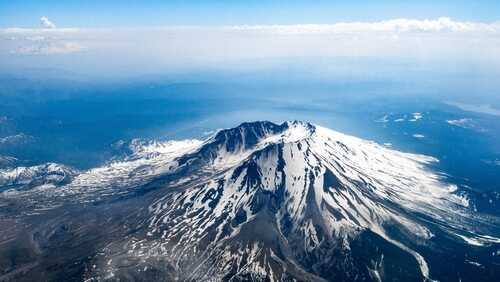
Mount Rainier sits at the top of that watch list because its ice‑covered slopes have produced giant mudflows before, long before anyone worried about carbon credits or diversity trainings in city hall. Today, hundreds of thousands live and work on those old deposits in communities like Orting and Puyallup. If another large lahar forms, it could rip through neighborhoods, industrial zones, and freight hubs in a matter of hours, overwhelming siren systems and evacuation routes that local governments still struggle to fund and coordinate.
Offshore Axial Seamount: Real Science, Skewed Headlines
Off the Oregon coast, Axial Seamount has become a media favorite, with headlines blaring that the “most active volcano in the Pacific Northwest” is “about to blow.” The reality is more mundane but politically revealing. This underwater volcano is wired with seafloor instruments that let scientists watch magma slowly build and release. It has erupted several times in recent decades, mostly rearranging lava on the deep seafloor with no direct danger to people onshore, despite sensational coverage.
Researchers now think Axial could erupt again around 2026, following a familiar pattern of slow inflation and small earthquakes. What matters for readers is not an apocalyptic tsunami—it is the way big outlets hype distant offshore activity while barely explaining the serious but less flashy threats closer to Seattle and Portland. That distortion fits a broader pattern: alarmism that drives clicks, not sober preparation that protects working families or respects taxpayers already battered by inflation and energy costs.
Cascades Volcanoes and the Cost of Misplaced Priorities
Along the Cascade Range, from Mount St. Helens to Mount Hood and beyond, scientists track low‑level unrest, gas, and ground deformation as part of a long game of risk reduction. Their work shows that the next damaging eruption in the lower 48 is more likely to look like 1980 St. Helens—a deadly but localized disaster with massive regional fallout—than a world‑ending blast. That kind of event could shut ports, foul water supplies, and knock out power to millions, stressing supply chains already weakened by years of policy mistakes.
Despite those clear maps and warnings, decades of planning decisions—often driven by growth at any cost, climate symbolism, and federal spending tilted toward pet projects—left schools, warehouses, and housing tracts planted squarely in hazard zones. When lahars or ash finally hit, it will not be the consultants and activists who pay the highest price. It will be truck drivers, small manufacturers, and families who assumed their leaders were investing in sirens, evacuation bridges, and hardened infrastructure instead of chasing the next global summit photo‑op.
Accountability, Federal Priorities, and Conservative Solutions
For conservatives, the Cascades story is not a call to fear; it is a case study in priorities. Federal scientists and local emergency managers are doing quiet, serious work, but they cannot fix years of misallocated spending from Washington, D.C. while budgets were steered toward overseas climate pledges, bloated bureaucracies, and open‑border programs. Rebuilding credible volcano readiness means backing core functions—monitoring, resilient highways, energy reliability—rather than gold‑plating agencies that lecture citizens yet leave them exposed.
Another atmospheric river, this one a Pineapple Express extending from the tropics near Hawaii, is slamming into the Pacific Northwest, bringing a significant flood and landslide threat.
Many mountain areas have already received over 20 inches of rain so far this December, with… pic.twitter.com/pOygmAMpLF
— Colin McCarthy (@US_Stormwatch) December 15, 2025
Under President Trump’s renewed focus on national strength, energy dominance, and border security, the contrast with the previous administration is stark. A government that can secure the border, get pipelines built, and cut wasteful red tape can also insist that blue‑state leaders harden ports, rail lines, and power grids against foreseeable volcanic shocks. That approach respects the Constitution’s limited‑government design while demanding competence in the few things Washington must do well: defend the nation, safeguard critical infrastructure, and tell citizens the unvarnished truth about real risks—not just the ones that fit the narrative of the day.
Sources:
Underwater volcano off Oregon coast predicted to erupt in 2025
Axial Seamount volcano off Oregon coast could erupt in coming years
An underwater volcano in the PNW is getting ready to blow
The most active volcano in the Pacific Northwest is probably about to blow (maybe)
USGS update on Mount Rainier earthquake swarm, July 2025