
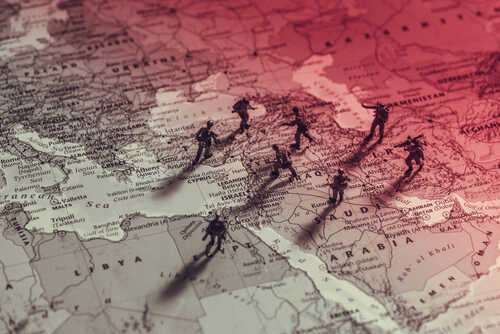
Israeli fighter jets have struck military tanks in southern Syria as fierce battles erupt between Druze militias and Bedouin tribes, leaving dozens dead—and the world on edge over what comes next in this powder keg region.
At a Glance
- Israeli airstrikes have hit Syrian tanks near Sweida, responding to escalating sectarian violence close to its border.
- Clashes between local Druze militias and Bedouin tribes have killed at least 37 and wounded nearly 100.
- The violence is a direct result of the power vacuum created by the fall of the Assad regime in December 2024.
- Regional powers are being drawn into a local conflict rooted in decades-old grievances over land, resources, and power.
A Syrian Tinderbox Ignites
The recent Israeli airstrikes in southern Syria are a symptom of a much deeper problem: the collapse of the Syrian state has unleashed a violent, long-simmering conflict between the region’s Druze and Bedouin communities. While the world focused on the fall of Bashar al-Assad, a power vacuum emerged, and local grievances have now exploded into open warfare.
The fighting, which has left dozens dead in the Sweida province, was sparked by kidnappings and disputes over smuggling routes. It is a brutal, local conflict that now threatens to pull in regional superpowers.
The Factions: The Druze and the Bedouin
To understand the chaos, one must understand the players. Southern Syria is the historic homeland of the Druze, a resilient and independent religious minority. For years, they maintained a delicate balance with the Assad regime to protect their autonomy. They now find themselves defending their communities from rival factions.
Their primary opponents are local Sunni Bedouin tribes, who have their own deep roots in the region and are now seeking to expand their influence and control over territory and lucrative trade routes in the post-Assad era. Syria’s new transitional government has been powerless to stop the fighting and has even been accused of taking sides.
A Regional Powder Keg
With Syria’s new government unable to impose order, local militias have become the law. The result is a cycle of revenge killings and escalating violence that threatens the stability of the entire region. Israel, which shares a border with the area and has deep ties to the Druze community, has made it clear it will not tolerate hostile forces on its doorstep.
Exclusive: The New Syrian Government: Ten Key Questions Answered
Nearly three months after the fall of Bashar al-Assad’s regime, President Ahmad al-Sharaa announced the formation of Syria’s first transitional government, a milestone that raises pressing questions about the… pic.twitter.com/VKEYIF1j94
— Ibrahim Hamidi ابراهيم حميدي (@ibrahimhamidi) March 29, 2025
The Israeli strikes were a direct message to all factions that the conflict in southern Syria will not be contained. For anyone who thought the end of the Assad regime would bring peace, this is a grim reality check: the war in Syria is not over; it has simply entered a new and perhaps even more dangerous phase.