
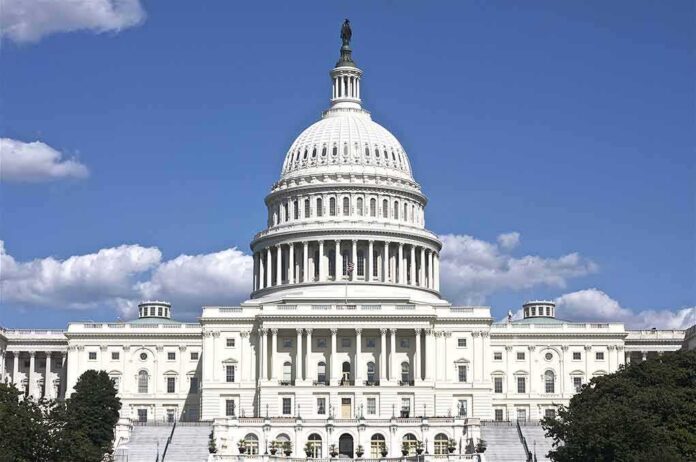
House Freedom Caucus members are pressing Congress to leave town for 10 days so President Trump can lawfully fill key vacancies without Senate stonewalling.
Story Snapshot
- Freedom Caucus urges an immediate 10-day recess to enable recess appointments.
- The Constitution gives presidents power to fill vacancies during a Senate recess.
- Congress has used brief “pro forma” sessions to block recess appointments.
- The Supreme Court set limits but recognized 10 days as the key threshold guide.
What The Freedom Caucus Wants And Why It Matters
House Freedom Caucus members are calling for an immediate 10-day recess. Their goal is clear. They want President Trump to use the Constitution’s recess-appointment power to stand up critical leadership and push past Senate delays. The Constitution lets the President fill vacancies that arise during a Senate recess, with those temporary terms lasting until the end of the next session. A 10-day break is the practical benchmark where past presidents have acted during intrasession recesses, according to congressional analysts.
Supporters argue agencies need firm direction now. They point to stalled confirmations, slow-walked votes, and the risk to border enforcement, energy policy, and national security. They see a recess as a lawful tool, not a loophole. This is not new. Presidents have used recess appointments for generations during real breaks. Congressional research shows the practice has typically occurred with recesses of about 10 days or more when the Senate is not meeting for business.
How Pro Forma Sessions Have Blocked Presidents Before
Senate leaders have used short “pro forma” meetings to say the Senate is still in session, sometimes every few days. These sessions often last minutes and involve no votes. Their purpose is to prevent a formal recess and, with it, recess appointments. The Congressional Research Service explains that these meetings have been scheduled specifically to preclude recess appointments by keeping any break under the threshold. That is why the Freedom Caucus demand focuses on a full 10-day recess, not scattered gap days.
The clash is not theoretical. In 2012, President Obama tried to appoint officials while the Senate was holding pro forma sessions. The Supreme Court later ruled those appointments invalid. The Court held that the Senate is in session when it says it is, as long as it retains the capacity to do business under its rules. That decision affirmed that brief pro forma meetings can block recess appointments when they keep the break short. It also framed 10 days as a meaningful guidepost.
The Legal Lines: What A 10-Day Recess Allows, And What It Does Not
Constitutional text gives the President a real, but limited, power during a recess: fill vacancies that happen during the Senate’s recess, with commissions ending at the close of the next session. Analysts note that presidents have usually made intrasession recess appointments in breaks of 10 days or more. That means a clean 10-day recess would open a lawful window for action. But the Senate has no legal duty to create that recess. Its leaders control the calendar and can keep pro forma sessions going.
Even with a full recess, not every vacancy qualifies. The timing of each vacancy, the kind of office, and the exact recess dates matter. Those details decide whether a given appointment is on solid ground under the Constitution and related laws. The Freedom Caucus has not publicly listed specific posts or nominees tied to this push. Without those names and dates, outside observers cannot assess each slot. Still, the core rule stands: real recess, real power; fake recess, no power.
What This Fight Means For Policy And For Separation Of Powers
This fight is about more than procedure. It decides who sets the pace for border security, energy permits, regulation cuts, and law enforcement. When confirmations stall, agencies drift, and bureaucrats fill the gap. Voters elected President Trump to change course. A lawful 10-day recess would let him install qualified leaders now, while the Senate continues its advice-and-consent role once it returns. That balance is what the Constitution designed, within clear limits.
The Supreme Court drew the boundary a decade ago. The Senate can block recess appointments by keeping itself technically in session, even with brief pro forma meetings, if it can conduct business. But if Congress agrees to a genuine 10-day recess, presidential authority to make temporary appointments is at its peak. The Freedom Caucus message is simple: stop the games, schedule a real recess, and let the elected executive get the team in place to serve the country now.
Sources:
congress.gov, constitution.congress.gov