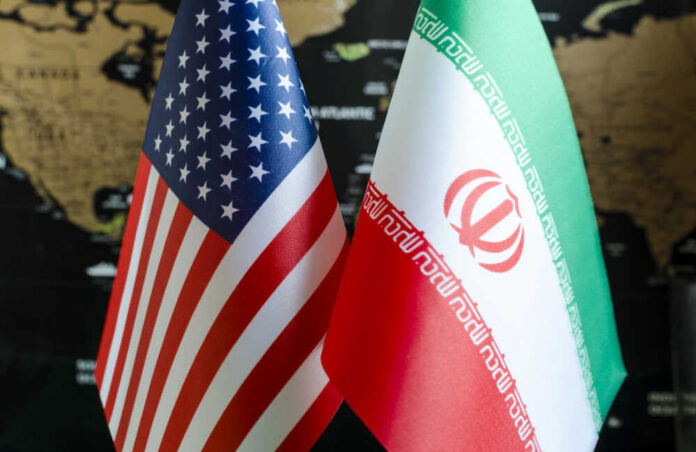
Iran claimed it shut down the Strait of Hormuz — but U.S. military data showed ships were still moving, and American negotiators were already in Switzerland pushing for a nuclear deal.
Story Snapshot
- Iran claimed it closed the Strait of Hormuz on Saturday, June 20, blaming Israel’s attacks in Lebanon — but Vice President JD Vance said there was no evidence of any closure.
- U.S. Central Command reported that commercial ship traffic in the strait actually increased on June 20, directly contradicting Iran’s claim.
- Talks opened Sunday at the Bürgenstock resort in Switzerland, with Qatar and Pakistan serving as mediators — but Iran said the one-day session would focus only on the deal’s terms, not nuclear issues.
- The 60-day memorandum of understanding signed by President Trump and Iranian President Masoud Pezeshkian sets a deadline for nuclear talks, though the deal allows for an extension.
Iran’s Closure Claim Meets U.S. Pushback
Iran’s military command announced Saturday that it had closed the Strait of Hormuz, calling it retaliation for what Tehran described as a breach of the recently signed memorandum of understanding. Iran’s foreign ministry tied the move to Israel’s continued military operations in Lebanon. But Vice President Vance pushed back hard. Speaking on Fox News, he said there was zero evidence Iran had actually closed the strait.
U.S. Central Command backed Vance up with facts. The command posted on social media that commercial ship traffic through the Strait of Hormuz increased on June 20, the same day Iran claimed the closure. U.S. forces remained in the area, the command said, to “ensure all aspects of the agreement with Iran are adhered to, obeyed, and in full force and effect.” President Trump also declared no tolls would be charged in the strait during the 60-day negotiation period.[14]
What the Memorandum of Understanding Actually Says
Trump and Iranian President Pezeshkian signed a 14-point memorandum of understanding earlier in the week. Under the deal, Iran agreed to reopen the strait and stop charging tolls for 60 days. The U.S. agreed to lift its naval blockade of Iranian ports and waive oil sanctions, letting Tehran sell crude again. The deal also starts a 60-day clock for nuclear talks, with a possible extension if needed.[6]
The strait carries roughly one-fifth of the world’s oil and gas supplies, so even the threat of closure sends energy markets into a panic.[2] During the conflict, commercial traffic through the strait dropped more than 90 percent, causing fuel shortages and rationing in parts of Asia. Iran had been selectively letting some ships through — including those willing to pay a steep toll — while blocking others.[18] The memorandum was meant to end that chaos.
Switzerland Talks Begin — But Nuclear Issues Left for Later
Despite the tensions, both sides showed up in Switzerland. Qatar confirmed the first high-level meeting of U.S., Iranian, Qatari, and Pakistani representatives opened Sunday at the Bürgenstock resort. Pakistani Prime Minister Shehbaz Sharif also arrived to take part in technical discussions.[10] The talks had originally been set for Friday, but Iran canceled after fighting flared in Lebanon, and the session was pushed to Sunday.
https://twitter.com/abuelaofanarchy/status/2068380978418966776
Iran’s foreign ministry made clear the Sunday session had a narrow focus. Spokesman Esmail Baghaei said the talks would last one day and cover only the memorandum’s implementation — not the bigger nuclear questions. Iran insisted the U.S. must first deliver a ceasefire in Lebanon before substantive nuclear talks can begin.[8] The U.S. goal for the Switzerland talks, according to Israel’s Channel 12, was to get Iran to allow International Atomic Energy Agency inspectors back into its nuclear sites for the first time since a conflict in June 2025. In exchange, the U.S. was prepared to unfreeze several billion dollars in Iranian assets held in Qatar.[10]
Hard Nuclear Questions Still Loom
The memorandum is a starting point, not a finish line. Washington has demanded tough terms in past rounds of talks — including shutting down Iran’s main nuclear facilities at Fordow, Natanz, and Isfahan, and transferring all enriched uranium to the United States. Iran has flatly rejected sending its uranium abroad and insists on full sanctions relief.[7] Those gaps haven’t closed. Experts have warned the core divide between Washington and Tehran remains wide, and the risk of the deal falling apart is real.
Trump’s team deserves credit for getting Iran to the table and pushing hard on the nuclear file. But Iran’s repeated use of the strait as a pressure lever — threatening closure, then showing up for talks anyway — shows Tehran is still playing games. The 60-day window is tight, the issues are enormous, and Iran has a long history of stalling. Americans should watch this closely. A bad deal on Iran’s nuclear program would be far more dangerous than no deal at all.[11]
Sources:
[2] Web – US and Iran to talk Sunday in Switzerland as Tehran says it …
[6] Web – Iran-US deal under strain after Swiss talks postponed
[7] Web – Hormuz Updates: Traffic in Strait Shows Recovery
[8] Web – Iran-US Geneva talks show diplomacy keeps door ajar, but key …
[10] Web – U.S. and Iran to Rekindle Talks in Switzerland: A Diplomatic Chess …
[11] Web – Explainer: How far can U.S.-Iran talks in Switzerland go?
[14] YouTube – Iran and the U.S. in Geneva 2026: 3 Possible Outcomes That Affect You
[18] Web – 5 things to know about tentative US-Iran ceasefire deal – The Hill