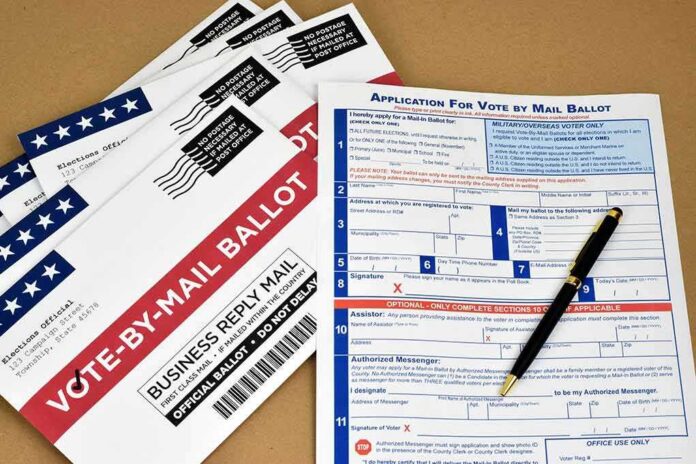
Los Angeles County election officials acknowledged they cannot independently verify a voter’s citizenship before mail ballots are counted, raising urgent questions about ballot integrity in a swing-heavy state.
Story Snapshot
- The Justice Department flagged over 20,000 suspected noncitizen registrants and asked California to hold related ballots.
- Federal officials delivered a thumb drive with names and data to Los Angeles County on October 13, 2026.
- Los Angeles County said it lacks an independent way to confirm citizenship beyond a registrant’s attestation.
- Prosecutors announced 28 criminal cases tied to unlawful registration or voting in California.
Federal Lawsuit Seeks Ballot Segregation Pending Verification
The United States Department of Justice filed suit on October 15, 2026, asking a federal court to require California to segregate ballots from more than 20,000 suspected noncitizen registrants until citizenship can be confirmed. Acting Deputy Attorney General Trent McCotter’s request sought a temporary hold, not cancellation, of those ballots. The filing argued that counting should wait until eligibility is verified. The approach aimed to protect legal votes while preventing potentially illegal votes from entering certified totals.
Two days earlier, federal officials delivered a password-protected thumb drive to the Los Angeles County Registrar-Recorder. Reports said the drive contained names, birth dates, and addresses of suspected noncitizens tied to the request. The delivery signaled an operational push, not just rhetoric. The Justice Department wanted ballots linked to those names set aside. That would allow time to check citizenship status before any tally that could not be undone once counted.
County Says It Cannot Independently Verify Citizenship
Los Angeles County Registrar-Recorder Dean Logan said his office cannot withhold or refuse to count ballots based only on unverified claims. He added that removals must rely on verifiable information, not unconfirmed data matches. Logan said the federal list was not limited to Los Angeles County, complicating compliance. He also said the Department of Justice did not provide the underlying evidence or methodology for designating the listed people as likely noncitizens, limiting the county’s ability to act.
California officials also pointed to a prior inflated number in public debate, saying earlier federal estimates of about 190,000 potential noncitizens were unsubstantiated. Secretary of State Shirley Weber said state law already limits registration to citizens and directs removal of anyone found ineligible. These statements frame the clash as a process and evidence fight. They also show the state’s resistance to acting on lists it views as unproven or mismatched to county authority.
Criminal Cases Spotlight Real Risks While Scale Remains Disputed
Federal prosecutors announced 28 defendants in California accused of illegal registration, false citizenship claims, or unlawful voting, underscoring that such crimes occur and can be charged when evidence supports them. One reported case involved a lawful permanent resident accused of registering as a citizen and voting in multiple elections. These cases back the claim that noncitizen voting risks are real. They do not, by themselves, prove the size of the 20,000-person list or the scope statewide.
NEW: Los Angeles County election officials told a federal court they have no independent way to verify voters’ citizenship beyond voter attestations. https://t.co/IZIbfUJNlS
— Matthew Seedorff (@MattSeedorff) October 20, 2026
The dispute lands weeks before voting deadlines and drives a high-stakes choice: prevent ineligible votes or risk discarding eligible ones. The Justice Department wants a pause to verify status before counting. Los Angeles County and state leaders reject holding ballots based on what they call unverified data. Voters deserve both integrity and access. A short, targeted hold to confirm citizenship protects lawful voters without erasing anyone’s ballot if they are, in fact, eligible.
What Comes Next: Verification, Transparency, and Accountability
Courts will decide whether to order temporary segregation and what verification standards apply. The cleanest path is evidence-first: share the specific list with auditable proofs, then confirm each person’s status through federal immigration and State Department records. That approach would reveal true matches, false positives, and recent naturalizations. It would also document whether listed registrants actually returned ballots and whether any such ballots would affect certified results.
Why This Matters to Voters
Every unlawful vote cancels a lawful one. Every false match can harm a lawful voter. Precision is the answer. A brief, court-supervised verification window can protect both sides. The Justice Department’s segregation request aims to hold ballots while facts are checked. California officials demand solid proof before they act. Both claims can be met by rapid, documented checks and full transparency. That is how trust is earned and how the Constitution’s promise of equal voting power is kept.
Sources:
twitchy.com, dailynews.com, usatoday.com, latimes.com, ctpublic.org