
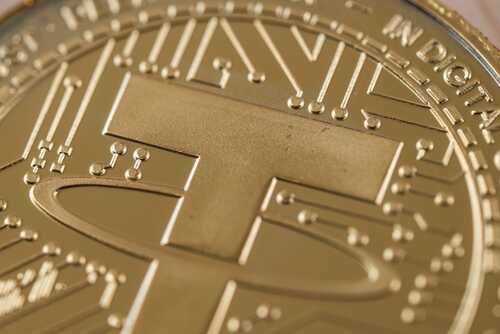
Tether’s new “Made in America” stablecoin is racing into the U.S. market under federal rules—raising a big question for everyday Americans: does this strengthen financial freedom, or quietly expand government-style digital money?
Story Snapshot
- Tether launched USA₮ (USAT) on January 27, 2026, a U.S.-focused, dollar-pegged stablecoin designed to comply with the GENIUS Act federal framework.
- USAT is issued through Anchorage Digital Bank, a federally chartered bank, with Cantor Fitzgerald named as the reserve custodian.
- Initial availability rolled out on major platforms including Bybit, Crypto.com, Kraken, OKX, and Moonpay, with Bitfinex planning a listing.
- USAT is separate from Tether’s global USDT and is positioned for U.S. institutions rather than replacing USDT worldwide.
What Tether Launched—and Why It Matters for the U.S.
Tether’s USA₮ (ticker: USAT) officially went live January 27, 2026 as a dollar-backed stablecoin aimed at the U.S. market. Unlike USDT, which grew globally while drawing scrutiny over offshore structure, USAT is built around U.S. regulatory compliance under the GENIUS Act framework. Tether’s pitch is straightforward: give institutions a “digital dollar” product they can use without stepping outside federal rules.
USAT’s design also signals how the market is changing under clearer federal guardrails. Tether’s leadership framed the launch as a step toward U.S. payment infrastructure, and the company is leaning heavily on the phrase “federally regulated” to reassure banks, funds, and payment firms that they can touch stablecoins without the compliance gray zones that dominated the Biden-era policy environment. The initial rollout focused on liquidity and access through large exchanges and payment rails.
How USAT Is Structured: Anchorage Issuance, Cantor Custody, Ethereum Start
USAT is issued by Anchorage Digital Bank, N.A., a federally chartered institution, giving the product a different profile than Tether’s legacy offshore token. Cantor Fitzgerald is identified as the reserve custodian, a critical detail for institutions that demand clarity around who holds what and where. Reports indicate USAT launched on Ethereum first and showed an initial supply above 10 million tokens, supporting early trading and transfers on a familiar network.
Distribution matters as much as the legal wrapper. USAT debuted with listings or access routes through Bybit, Crypto.com, Kraken, OKX, and Moonpay, with additional availability expected through Bitfinex. That exchange-first strategy mirrors how stablecoins typically scale—deep liquidity first, then broader integrations. At the same time, some reporting noted USAT was not yet visible on Tether’s public transparency page at launch, a detail worth tracking for verification-minded users.
The GENIUS Act Compliance Angle—and the Political Context
The defining claim around USAT is compliance with the GENIUS Act’s federal rules for payment stablecoins. After years where regulators and progressive lawmakers pushed heavier-handed approaches to financial surveillance and de-banking pressure, the stablecoin fight shifted toward formal frameworks that let lawful innovation operate domestically. In that environment, Tether’s move looks like a calculated pivot: take the brand’s global dominance and build a U.S.-specific track that satisfies Washington’s rulebook.
Tether had telegraphed this direction well before the 2026 launch. Coverage points to planning in 2024, including a delayed timeline to align with evolving regulation and a more crypto-friendly posture in Washington. Bo Hines, identified as CEO for the USA₮ effort and previously tied to a White House crypto role, has emphasized institutional-grade stability and transparency. The combined message is that USAT is meant to be “safe enough” for large U.S. financial players.
What This Means for Competition, the Dollar, and Everyday Freedom
In market terms, USAT is positioned to challenge Circle’s USDC for the institutional “compliant stablecoin” lane. That competition could benefit users through better liquidity, tighter spreads, and more payment integrations, especially if U.S. firms prefer assets structured under federal rules. Supporters also argue regulated dollar-stablecoins reinforce dollar relevance in global digital commerce—an important strategic goal as rival systems try to reduce dependence on U.S. currency.
Still, Americans have a legitimate reason to watch the fine print: “regulated digital dollars” can slide into something that feels like a government-shaped money system if rules become overly restrictive or politicized. Some social media commentary even raises “proto-CBDC” concerns, though the available research here describes USAT as a private stablecoin issued through a chartered bank rather than a Federal Reserve CBDC. The practical safeguard is transparency, clear legal limits, and competition—so no single gatekeeper can throttle lawful transactions.
Proto-CBDC? Tether Launches USAT, A Federally Regulated, Dollar-Backed Stablecoin For The US Market https://t.co/WWdCJz8dhh
— Steve Williams (@HISteveWilliams) January 27, 2026
The next concrete questions are measurable, not ideological: whether Tether expands USAT beyond Ethereum, whether reserve and transparency disclosures meet institutional expectations, and how quickly major U.S. payment and trading venues integrate it. For conservative voters burned by years of inflation, bureaucratic overreach, and politically driven enforcement, the best outcome is simple: a stablecoin market that is lawful, competitive, and limited by clear rules—without drifting into centralized control that undermines financial independence.
Sources:
Crypto giant Tether pushes into the U.S. with USAT stablecoin to challenge Circle
Tether launches USAT stablecoin for US market via Anchorage
USDT issuer Tether launches GENIUS Act-compliant USAT stablecoin
Tether launches dollar stablecoin for U.S.
Tether Launches USAT, A Federally Regulated, Dollar-Backed Stablecoin For The US Market
Tether launches federally regulated stablecoin USAT in the US
Tether launches regulated USAT stablecoin