
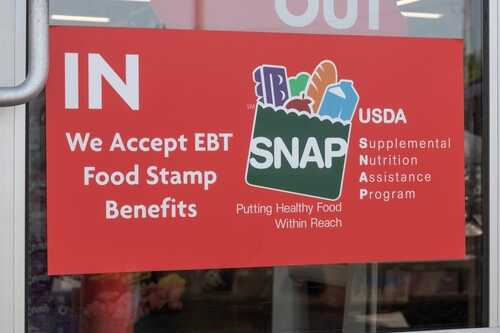
Trump’s SNAP Law: Hidden Traps Unveiled
Millions of Americans on food stamps are about to collide with a hard February deadline that tests whether welfare policy can still demand work without trapping families in bureaucracy.
Story Snapshot
- Expanded SNAP work requirements tied to President Trump’s July 2025 law ramp up across states, with major enforcement beginning Feb. 1, 2026 in places like Illinois and Ohio.
- The rule broadens enforcement to older adults ages 55–64 and to some parents whose youngest child is 14 or older, using an 80-hours-per-month standard.
- Noncompliance can trigger benefit loss after three months within a three-year period, with eligibility restored after meeting compliance again for a set period.
- States are implementing on different timelines, with waivers still possible in qualifying high-unemployment areas—creating uneven outcomes depending on where a person lives.
What Changes on Feb. 1—and Who Gets Caught by the Expansion
Illinois and Ohio are among the states scheduled to begin enforcing expanded SNAP work requirements on Feb. 1, 2026, following the Trump-backed megabill signed in July 2025. The change widens the pool of recipients subject to the “able-bodied” time limit: older adults up to age 64 and certain parents whose youngest child is no longer under 14. The baseline standard remains roughly 80 hours per month through work, training, or approved volunteering.
Previous rules focused more narrowly on adults ages 18–54 without dependents, and pandemic-era waivers softened enforcement in many places. Under the current framework, the compliance clock matters as much as the hours: recipients who do not document qualifying activity can lose benefits after three months of noncompliance within a three-year window. Federal guidance also allows recipients to regain eligibility after returning to compliance, but the process depends heavily on state administration.
🚨Starting TODAY: New SNAP rules hit Illinois hard. Up to 400,000 people could lose food assistance this spring if they don't meet work requirements. 2 million rely on these benefits—don't get caught off guard. Details #SNAP #Illinois pic.twitter.com/pXvoAa7gPX
— Rustbelt Free Press (@EDunham23590) February 1, 2026
Why State Timelines Matter: A Patchwork of Enforcement and Waivers
States are not flipping the switch all at once. Texas began earlier, and some recipients there have already exhausted their three months, while other states started in late 2025 and are only now approaching the first major wave of potential cutoffs. Reports also describe Alaska, Colorado, Georgia, and Hawaii as facing near-term risk of losses as compliance periods mature. New York’s rollout has been described as uneven as well, with some county-level starts earlier than the broader statewide timeline.
Waivers remain a key pressure point, because they determine whether high-unemployment areas can temporarily suspend or soften the time limit. Some states have pursued exemptions into 2027 for certain regions, while other states are moving faster and warning residents to prepare documentation. The result is a system where two households with similar circumstances can face drastically different outcomes depending on state and county policy choices, and on how effectively local offices notify recipients.
The Compliance Mechanics: Work, Training, Volunteering—and Paperwork
Federal SNAP rules define compliance through specific channels: paid work, job training programs, or qualifying volunteer hours that meet the monthly threshold. For many recipients, the biggest hurdle is not the concept of work itself but proving it on time, repeatedly, in the format the local agency demands. Local notices in Ohio, for example, have emphasized weekly-hour equivalents and the need to show proof by set deadlines to avoid benefit loss in the spring.
Guides for recipients have stressed practical steps: watch for letters, texts, and calls from state agencies; confirm whether a person is in a covered group; and submit documentation early. Those details matter because the penalty is not simply a temporary reduction—failure to meet requirements for the defined period can cut off benefits, and the pathway back requires affirmative steps to reestablish compliance. If administrative backlogs develop, eligible people could still face interruptions.
Budget Discipline vs. Real-World Barriers: What the Evidence Supports
The political argument behind work requirements is straightforward: taxpayers should not be asked to fund able-bodied dependency, and government programs should encourage work and self-sufficiency where possible. That logic resonates with voters who watched years of federal overspending, inflation, and “everything-is-free” rhetoric out of Washington. Budget analysts have projected a substantial reduction in monthly SNAP participation over time under the new law, implying real savings and a smaller caseload.
At the same time, the sources also flag real-world barriers that can complicate compliance, especially for older adults and people with unstable housing, limited transportation, or inconsistent access to documentation tools. Because the expansion reaches ages 55–64 and more parents, the policy’s success will hinge on whether states pair enforcement with workable training and employment pathways rather than turning SNAP into a paperwork trap. The evidence in the reporting supports both realities: potential workforce alignment and potential benefit disruption.
Sources:
New SNAP work requirements take effect in multiple states: What to know
New federal law tightens SNAP work requirements beginning March 2026
SNAP work requirements full guide
New SNAP work requirements February 2026
SNAP benefits in 2026: What older adults should expect from work requirements
New SNAP work requirements set to go into effect on Feb. 1