A deadly clash between an ICE agent and a Minneapolis protester is exposing how years of sanctuary politics and anti-enforcement rhetoric have made America less safe and more divided.
Story Snapshot
- An ICE agent fatally shot activist Renee Nicole Good after she allegedly tried to ram him with her vehicle during an immigration operation in Minneapolis.
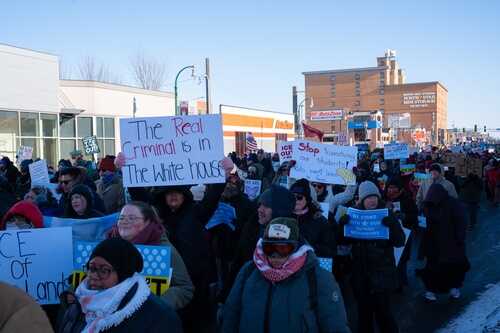
- The confrontation unfolded in a self-styled protest setting, shaped by years of “abolish ICE” activism and sanctuary city posturing.
- Local and national Democrats rushed to condemn the agent and dispute self-defense claims before any investigation concluded.
- The case highlights how sanctuary policies push federal enforcement into the streets, increasing danger for agents, protesters, and bystanders.
How a Minneapolis Protest Turned Deadly
In early January 2026, 37-year-old activist Renee Nicole Good positioned her Honda Pilot to block federal immigration authorities during an ICE operation in Minneapolis, while her wife filmed the confrontation as a form of protest. According to Libby Emmons’ account, agents repeatedly ordered Good to comply as one officer stood in front of the SUV and another gripped the driver’s door handle. Instead of de-escalating, Good allegedly reversed, then suddenly accelerated toward the agent in front of her vehicle.
As Good reportedly gunned the SUV forward, the ICE agent in her path fired his weapon through the windshield while trying to move out of the way, striking Good and causing the vehicle to surge ahead into parked cars. She was later found slumped over the wheel as emergency responders arrived, and she was pronounced dead, leaving behind a six-year-old son whose father had already died. Her wife, distraught at the scene, blamed herself for urging Good to join the protest confrontation.
Sanctuary Policies and the Road to Confrontation
Minneapolis’ status as a sanctuary city is central to how this tragedy unfolded, because local rules limit cooperation with federal immigration authorities and prevent direct transfers of illegal immigrant offenders from jails to ICE custody. Those political choices force ICE to conduct more at-large arrests in residential neighborhoods and on city streets, where emotions run hotter and activists are likelier to stage blockades, film confrontations, and treat routine enforcement as a televised political event.
Instead of removing criminal noncitizens quietly from secure jail facilities, agents must now locate them in the community, often surrounded by cameras, agitators, and politicians eager to score points against federal enforcement. That environment encourages risky tactics such as physically blocking vehicles or crowding agents, raising the chance that any miscalculation—by protesters or officers—can turn deadly in seconds. This is precisely the scenario Emmons argues sanctuary policies invite, making communities less stable and law enforcement encounters far more volatile.
Instant Narratives, Political Theater, and Due Process
Within hours of the shooting, the political class moved faster than the investigators, locking in partisan storylines long before facts could be fully reviewed. Some Trump administration voices reportedly described Good as a domestic terrorist, focusing on the alleged attempt to ram a federal officer with a vehicle. Prominent Democrats, including Minnesota and Minneapolis officials, immediately portrayed the ICE agent as a killer and rejected any self-defense claim, even though investigative agencies had barely begun examining evidence or video.
Minnesota’s governor publicly encouraged protests as a “patriotic duty” while simultaneously warning against turning the case into another George Floyd-style conflagration, a contradiction that underscored how political leaders are trying to manage optics more than facts. Minneapolis’ mayor went further, telling federal agents to leave the city and asserting the shooting was not self-defense while the scene was still fresh. Members of Congress amplified accusations of murder and demands for prosecution, demonstrating how quickly ideology can outrun due process when the target is federal immigration enforcement.
Immigration Enforcement, Public Safety, and Conservative Concerns
For conservatives who value law and order, this case captures a wider pattern that has been building for years: left-leaning jurisdictions limit cooperation with ICE, then condemn federal officers when predictable conflicts surface in the streets. Emmons ties the Good shooting to other incidents where sanctuary decisions allegedly allowed offenders to slip through the cracks, later reappearing in serious criminal cases. The central concern is not abstract ideology; it is public safety and the constitutional duty to enforce duly enacted immigration laws consistently.
LIBBY EMMONS: A leftist woman tried to run over an ICE agent in Minneapolis, and now everything is worsehttps://t.co/OSBbLzyrvk
— Human Events (@HumanEvents) January 8, 2026
At the same time, conservatives can reasonably insist that every use of deadly force by any officer—local or federal—deserves a thorough, evidence-based investigation, free from mob pressure or political intimidation. The unresolved investigative status in this case means conclusions about criminal liability or exoneration must wait on formal findings. However, the broader lesson is already clear: policies that undermine immigration enforcement while glorifying confrontational activism create exactly the kind of combustible environment that endangers agents, residents, and the basic rule of law.
Sources:
United States Court of Appeals for the Fourth Circuit – Listen to Oral Arguments