
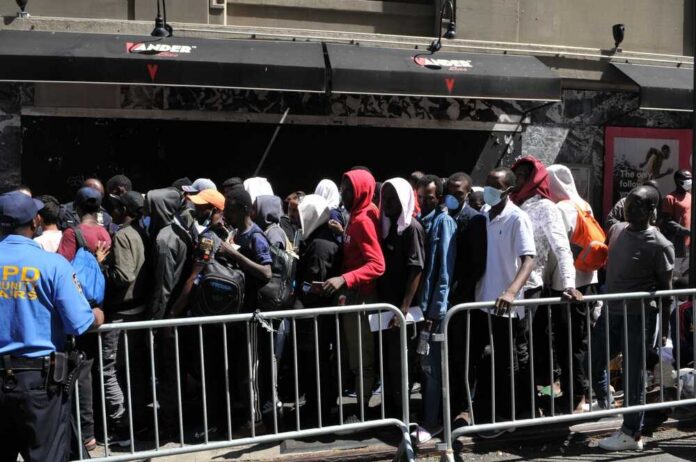
Trump’s White House is quietly swapping “mass deportations” for a “criminal-only” message—while the machinery of removals keeps accelerating behind the scenes.
Quick Take
- The administration has shifted public rhetoric from “mass deportations” to targeting “criminal illegal aliens,” following backlash tied to Minneapolis-area operations.
- Reports indicate enforcement continues at scale, including hundreds of removal flights in February, even as messaging becomes less confrontational.
- Fast-track legal changes—like shorter appeal windows and expanded dismissal authority—raise due process concerns that will matter to anyone who cares about constitutional limits.
- Courts have pushed back in at least one Minnesota-related operation, underscoring that immigration enforcement is increasingly being litigated as a civil-liberties question.
Minneapolis Backlash Triggers a Rhetoric Reset, Not a Policy Retreat
President Trump’s team is recalibrating how it sells immigration enforcement after public blowback tied to Minneapolis-area operations, including what was described as “Operation Metro Surge.” Instead of leading with “mass deportations,” the White House has emphasized removals of “criminal illegal aliens,” a message the administration argues is both more precise and more politically sustainable. Reporting indicates the change is aimed at optics and voter persuasion, not a slowdown of enforcement activity.
Border Czar Tom Homan’s February announcement illustrated that nuance: a reduction of 700 federal agents in Minnesota was paired with keeping roughly 2,000 agents in place for continued operations. At the same time, the administration has highlighted “record-low” border crossings and framed interior enforcement as a public-safety and quality-of-life issue. The result is a split-screen reality—softer words for the public, coupled with ongoing capacity for large-scale enforcement.
“Shadow” Enforcement and the Push to Move Faster Through the System
One of the clearest trends is a move toward enforcement that is less visible but still expansive. Reporting described deportation efforts “growing in the shadows,” including 183 removal flights to 31 countries in February. That approach reduces the spectacle that triggers viral backlash, while preserving the operational tempo supporters demanded during the campaign. For Americans exhausted by chaos—at the border and at home—the key question is whether quieter enforcement also means less accountability.
Procedural changes are central to that accountability question. A DOJ interim final rule reportedly shortened appeal windows to 10 days and introduced summary dismissals, while other actions expanded detention and accelerated case processing. The administration has also taken steps affecting humanitarian categories, including the termination of Temporary Protected Status for Yemen and a “detain-and-inspect” posture for certain refugee-related processing. Even many voters who favor strong borders may balk if speed becomes a substitute for fair process.
Courts, Constitutional Guardrails, and Why Due Process Still Matters
A federal judge’s injunction against a Minnesota-related operation described as “Operation PARRIS” signaled that the judiciary remains a meaningful check—at least in specific cases—when enforcement tactics raise constitutional problems. Conservative voters generally support law-and-order immigration policy, but they also tend to distrust concentrated government power when it operates without clear limits. When agencies are incentivized to move cases rapidly, it becomes harder for courts, attorneys, and families to verify facts and challenge mistakes.
Advocacy organizations argue the second-term playbook is “weaponizing the system” by defaulting toward detention and shrinking practical avenues for appeal. Those groups are not neutral referees, but their claims point to tangible policy changes that can be evaluated on the merits: shortened timelines, expanded dismissal tools, and administrative restructuring that reduces oversight capacity. If enforcement is justified as protecting Americans, the administration will need to show it can do that while respecting the same constitutional principles it campaigns on.
Politics and Priorities Collide as the Country Juggles Multiple Crises
The political context matters because 2026 is not a normal year. With the U.S. at war with Iran and the MAGA coalition divided over foreign entanglements and questions about Israel, domestic promises carry extra weight—especially Trump’s pledge to avoid new wars. Immigration is now being managed amid broader public frustration over high costs and distrust of institutions. In that climate, the White House appears focused on reducing images of sweeping raids while continuing removals at scale.
New trend emerges after Trump pumps the brakes on mass deportation strategy https://t.co/aKC7cRon3O The Trump administration is winding down its Minneapolis operation and replacing the head of Homeland Security, but critics still claim that the administration is pushing for mas…
— situation-briefing (@situbriefing) March 24, 2026
For conservative readers, the bottom line is not whether immigration enforcement should happen—it should, and Congress has failed for decades to keep the system credible. The real issue is whether the administration’s new “criminal-only” framing matches reality, and whether the drive for speed undermines constitutional guardrails. If deportations are expanding while transparency shrinks, the public will be asked to trust executive power more, not less—and that’s a hard sell to voters who still believe the Constitution is supposed to restrain government.
Sources:
Trump administration’s mass deportation operations: update February 2026
Weaponizing the system: one year of Trump’s attacks on due process
Trump Administration “Mass Deportation” Playbook
Deportations have a different look after Minneapolis — White House changes rhetoric on immigration
Mass deportations are improving Americans’ quality of life
Trump 2.0 immigration: the first year