
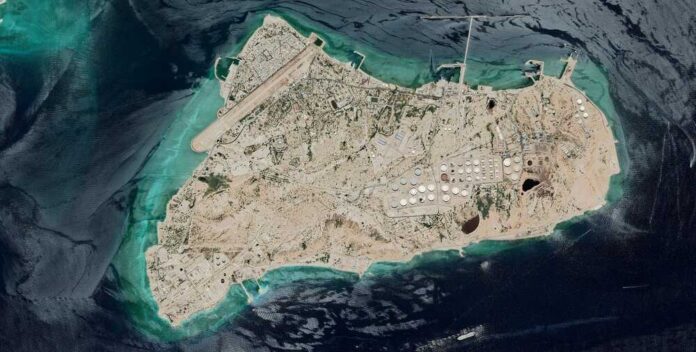
The Trump administration is reportedly considering seizing Iran’s Kharg Island—a move that could quickly strangle Tehran’s economy but trap American troops in a deadly quagmire just 20 miles from hostile mainland forces, risking precisely the endless war Trump promised to avoid.
Story Snapshot
- Kharg Island controls 90% of Iran’s oil exports, generating nearly $1 billion annually to fund the regime and militias
- US Marines and USS Tripoli deployed for potential amphibious assault following March 13 airstrikes on military sites
- Experts warn seizing the island is tactically easy but holding it 20-30 km offshore invites sustained Iranian missile and drone attacks
- Operation risks turning energy leverage into a costly occupation that escalates regional war and spikes global oil prices
The Economic Choke Point Trump Is Eyeing
Kharg Island sits barely 20 miles off Iran’s coast in the Persian Gulf, processing up to 6.7 million barrels of oil daily through facilities capable of loading 10 supertankers simultaneously. This 20-square-kilometer landmass funnels 90% of Iran’s oil exports—revenue that bankrolls the Revolutionary Guards, proxy militias across the Middle East, and the regime’s survival. Following the March 13 US airstrikes that hit over 90 military targets on Kharg while deliberately sparing oil infrastructure, reports emerged that the Trump administration is weighing a Marine expeditionary force seizure to cut off Tehran’s financial lifeline and force compliance on reopening the Strait of Hormuz.
Why Capture Looks Easy But Holding Becomes Hell
American naval and air superiority would make the initial seizure of Kharg relatively straightforward—isolate the island, overwhelm degraded defenses, and establish control within days. Yet the island’s proximity to the Iranian mainland transforms occupation into a nightmare scenario. Iran can launch sustained barrages of missiles, drones, and small-boat swarms from coastal bases just 20-30 kilometers away, turning American forces into sitting targets. Unlike offshore carrier strikes, ground troops holding Kharg would require constant resupply, air defense, and reinforcements against an enemy firing from home soil, escalating the conflict from precision airstrikes into a protracted ground war.
The Quagmire Trump Supporters Didn’t Sign Up For
This is exactly the type of regime-change entanglement that frustrated Trump’s base in 2024 and 2025. Voters backed a president who vowed to end endless wars, not initiate new occupations that drain American blood and treasure while enriching defense contractors. Seizing Kharg may cripple Iran’s economy short-term, but experts from Long War Journal to JP Morgan warn it could become “a trap of America’s own making”—locking forces into a vulnerable position that invites Iranian cost-infliction, destabilizes global energy markets with spiking oil prices, and risks broader regional retaliation from Tehran’s allies. The strategic question isn’t whether we can take the island; it’s whether holding it justifies transforming a targeted air campaign into an open-ended ground commitment.
Energy Markets and Constitutional Concerns at Stake
Beyond military risks, occupying Kharg raises fundamental questions about war powers and constitutional limits. Congress has not formally authorized a ground invasion of Iranian territory, yet deploying Marines for indefinite occupation would constitute precisely that—executive overreach that conservatives traditionally oppose when it circumvents legislative checks. Economically, shutting down 90% of Iran’s exports tightens global oil supply chains already strained by Strait of Hormuz disruptions, hiking fuel costs for American families already battered by inflation. China, a major buyer of Iranian crude, would scramble for alternatives, reshuffling energy alliances in unpredictable ways. The administration faces a choice: leverage Kharg through blockade and airpower, or occupy it and own the consequences of another Middle Eastern occupation that defies the America First mandate.
As of late March 2026, the USS Tripoli and Marine assets remain positioned in the Gulf while Kharg continues operations under Iranian control, with no confirmed seizure orders issued. The debate within Trump’s circle reportedly pits hawks advocating economic strangulation against advisors warning of mission creep. For a conservative base weary of globalist wars and broken promises, the Kharg temptation tests whether this administration will resist the siren call of easy victories that morph into generational commitments. The island may be 20 miles offshore, but the political and strategic distance from Trump’s 2024 pledges could prove far wider if American boots hit that sand.
Sources:
Kharg Island: Strategic Role in Gulf War, Oil Exports, and Regional Security – India Today
Opinion: The Strategic Importance of Kharg Island – The Jerusalem Post
Kharg Island: Iran’s Oil Export Hub and War Risks – TRT World
US Airstrikes Target Kharg Island Military Sites – Arab News
Middle East War: The Strategic Value of Kharg Island – Policy Magazine
Analysis: Why Seizing Iran’s Kharg Island Could Be a Trap of America’s Own Making – Long War Journal