
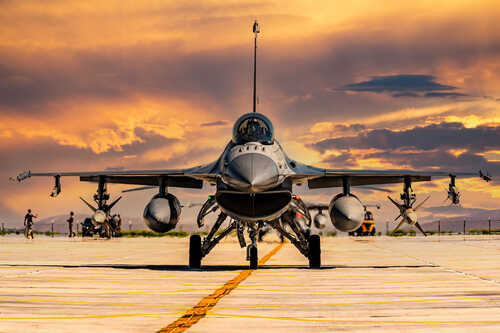
The Air Force developed an enhanced F-16 variant with double the weapons payload and 65% greater range, yet bureaucratic priorities and institutional inertia led to maintaining the more expensive F-15 instead—a decision that raises serious questions about whether Pentagon procurement serves warfighters or entrenched interests.
Story Snapshot
- Enhanced F-16 variant demonstrated superior weapons capacity and range over standard models, yet was passed over
- Air Force chose to maintain dual F-15 and F-16 fleets despite F-16’s proven superiority in maneuverability and range at combat speeds
- Decision prioritized specialized roles and future stealth programs over consolidating on a more capable, cost-effective platform
- Pentagon’s pivot toward stealth technology and multi-billion dollar programs like F-22 and F-35 drove strategic choices beyond objective performance metrics
The Uncomfortable Truth About Fighter Performance
When the Air Force selected the F-16 in 1976, military leaders faced an awkward reality: the lightweight F-16 could outmaneuver and outrange the F-15 in actual combat conditions at Mach 1.2 or below—precisely where real air battles occur. The F-16 featured revolutionary maneuverability, transient performance, acceleration, and climb capabilities at subsonic and transonic speeds. Rather than consolidate on the superior performer, the Air Force resolved this capability overlap by designating the F-16 a “swing fighter” for both air-to-air and air-to-ground missions while preserving the F-15’s dedicated air superiority role.
The Air Force Built a Better F-16 Fighter. It Could Carry Twice the Weapons and Fly 65% Farther. Then It Picked the F-15 Insteadhttps://t.co/1l2jZRL9d3
— 19FortyFive (@19_forty_five) April 11, 2026
Advanced Variants Overlooked for Institutional Priorities
The F-16 underwent significant modernization producing variants with modular mission computers featuring faster data processing, advanced identification systems enabling beyond-visual-range weapons delivery exceeding radar limits, and improved radar with increased range and multi-target engagement capability. An F/A-16 variant incorporated digital terrain-mapping, GPS integration, and Automatic Target Handoff System for direct digital data exchange with ground units. Despite these technological leaps demonstrating the platform’s adaptability and cost-effectiveness, Air Force leadership maintained parallel F-15 and F-16 fleets with duplicative maintenance, training, and logistics requirements rather than consolidating on an enhanced single platform.
Stealth Doctrine Trumps Proven Capability
Air Force officials emphasized stealth capabilities as the primary enabler for future fighter effectiveness, with Air Combat Command officials stating the Joint Strike Fighter improved known deficiencies in lethality, survivability, and supportability, noting stealth offers surprise where the F-16 falls short. The Air Force assessed new surface-to-air missiles could engage targets from 75 feet to 45,000 feet with twice the maneuverability of previous systems, potentially knocking down 40 to 50 aircraft of the same vintage as most U.S. fighters. According to Air Force analysis, an F-22 could safely traverse five times as much hostile territory as an F-15, with advantages growing to eight times at high altitude in supercruise.
Strategic Vision or Contractor Welfare Program
The Air Force’s long-term vision consolidated its fighter fleet to just two types: the F-22 replacing the F-15 as the dedicated air dominance fighter, and the F-35 Joint Strike Fighter replacing the multirole F-16 and A-10. This consolidation strategy reflected broader procurement priorities beyond individual aircraft performance metrics, prioritizing multi-billion dollar next-generation programs over proven, upgradeable platforms. The two-Major Theater War strategy relied on deploying F-22s against the toughest adversary while supplementing them with newer F-15s and late-model F-16s for secondary threats—an approach valuing specialized capabilities and expensive new programs over consolidated, cost-effective solutions that could have delivered superior results.
The Air Force Built a Better F-16 Fighter. It Could Carry Twice the Weapons and Fly 65% Farther. Then It Picked the F-15 Insteadhttps://t.co/h6VfyVOfmm
— Harry J. Kazianis (@GrecianFormula) April 11, 2026
The decision to maintain both F-16 and F-15 fleets rather than consolidating on an enhanced F-16 variant created unnecessary complexity while preserving contractor revenue streams and institutional fiefdoms. For Americans frustrated with government waste and bureaucratic dysfunction, this episode illustrates how Pentagon procurement often serves entrenched interests rather than delivering maximum capability per taxpayer dollar. The F-16’s proven adaptability and superior combat performance at realistic engagement speeds should have driven consolidation, but institutional momentum toward expensive stealth programs and dual-fleet structures prevailed—a pattern that continues draining defense budgets while America faces growing threats from adversaries who prioritize results over process.
Sources:
Air and Space Forces Magazine – Fighter Aircraft Strategy
Federation of American Scientists – F-16 Fighting Falcon Technical Specifications