A Trump Cabinet secretary’s shifting story about Jeffrey Epstein is giving Washington a fresh test of whether powerful men are ever truly held to the same standard as everyone else.
Quick Take
- Commerce Secretary Howard Lutnick told House Oversight investigators he stayed in contact with Jeffrey Epstein far longer than he previously claimed.
- Lutnick acknowledged post-conviction interactions, including a 2011 meeting and a 2012 visit to Epstein’s private island with his family.
- Democrats on the committee described Lutnick as evasive and dishonest, while at least one Republican said he “wasn’t 100 percent truthful.”
- No criminal wrongdoing by Lutnick has been alleged, but the credibility issue could complicate oversight and weaken public trust.
Closed-Door Interview Puts Lutnick’s Timeline Under a Microscope
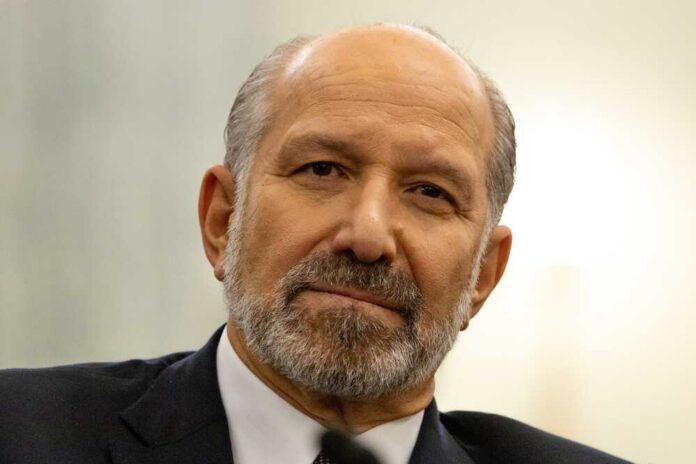
Commerce Secretary Howard Lutnick sat for a transcribed, closed-door interview with the House Oversight Committee on May 6, 2026, focused on his relationship with convicted sex trafficker Jeffrey Epstein. Investigators said Lutnick admitted his contact with Epstein extended well beyond what he previously described publicly. The central dispute is not a new criminal allegation, but whether Lutnick repeatedly misrepresented the timeline, raising questions about candor from a senior official in a GOP-controlled federal government.
Lutnick’s prior public posture, according to committee accounts and media reporting, emphasized that he distanced himself after a disturbing early encounter. In a 2025 interview, he claimed he broke with Epstein in 2005. Later, in a February 2026 Senate hearing, he conceded he visited Epstein’s island in 2012. The May 2026 interview added further detail, including other meetings and communications that conflict with the earlier “cutoff” narrative and deepen the credibility problem.
What Lutnick Now Acknowledges: Post-Conviction Contact and an Island Visit
According to sources familiar with the interview, Lutnick confirmed a 2005 meeting in which he and his wife toured Epstein’s Manhattan home and saw a massage table—an experience Lutnick says led them to distance themselves. But he also acknowledged later contact: a 2011 meeting about renovations at Epstein’s home and a 2012 trip to Epstein’s private island in the U.S. Virgin Islands, where he arrived with his wife, children, and nannies for lunch.
Committee Democrats said Lutnick could not adequately explain why the 2012 island visit happened, describing his decision as inexplicable given Epstein’s reputation and, importantly, his 2008 conviction in Florida for soliciting prostitution from an underage girl. Lutnick reportedly portrayed the interactions as limited and inconsequential, and he maintained he never witnessed Epstein engaged in inappropriate conduct with young women. Still, the inability to give a clear reason for the trip is a core factual gap.
Oversight vs. Partisanship: A Familiar Washington Dynamic
House Oversight is controlled by Democrats, and they have pursued the inquiry as a test of honesty and transparency. Democratic members publicly characterized Lutnick’s demeanor as evasive and dishonest, and one pressed him directly on why his story changed. Republicans on the panel have been less aggressive overall, but at least one GOP member acknowledged Lutnick “wasn’t 100 percent truthful” in earlier descriptions. That cross-party admission matters because it narrows the debate to verifiable inconsistency.
The Unanswered Question: Did Lutnick Coordinate With the White House?
Another notable development from the closed-door session is Lutnick’s refusal to answer questions about whether he spoke with President Trump ahead of testimony. Separately, a Democratic member said Lutnick acknowledged conferring with the administration about the Epstein matter. Those details do not prove improper conduct, but they sharpen the oversight issue: when a Cabinet officer is under scrutiny, coordination can be routine, yet refusal to answer invites more suspicion and prolongs the story’s political half-life.
Why This Matters to Voters Who Think the “Elites” Get a Different Rulebook
Lutnick has not been accused of criminal wrongdoing in the material reported so far, and the investigation appears aimed at credibility and transparency rather than prosecution. Even so, the episode lands in a public environment where both conservatives and liberals increasingly believe the government protects the well-connected. For conservatives who prioritize accountable leadership and limited, trustworthy government, the practical standard is simple: officials must tell the truth the first time, especially when the subject is Epstein.
Lutnick admits prolonged ties to Epstein in closed-door interview… https://t.co/UqBwZi6bEr
— SATANYAHU (@Outli3rThe) May 6, 2026
The committee’s work is ongoing, and Lutnick remains Commerce Secretary. Investigators are expected to review the transcript, and further public questioning remains possible. For the administration, the near-term challenge is to keep Commerce Department priorities from getting swamped by credibility headlines. For Congress, the test is whether oversight stays focused on documented facts—who met whom, when, and what was said—rather than turning into theater that deepens cynicism without delivering clarity.
Sources:
Lutnick admits to having prolonged ties to Epstein in closed-door interview
Howard Lutnick forced to face Jeffrey Epstein ties at House Oversight hearing