If a president can even be perceived as using visa power to punish private speech, every American should worry about where politics ends and government muscle begins.
Quick Take
- Reports claim The Rolling Stones fear potential U.S. visa trouble after alleged private criticism of Melania Trump’s documentary, but no official action has been confirmed.
- The dispute blends two separate issues: music licensing control held by ABKCO and the federal government’s broad discretion over artist visas.
- Key details in the newest reports rely on unnamed insiders, making the “revenge” narrative difficult to verify.
- Conservatives face a familiar dilemma: uphold lawful immigration enforcement while rejecting political retaliation that looks like executive overreach.
What’s actually being alleged—and what is confirmed
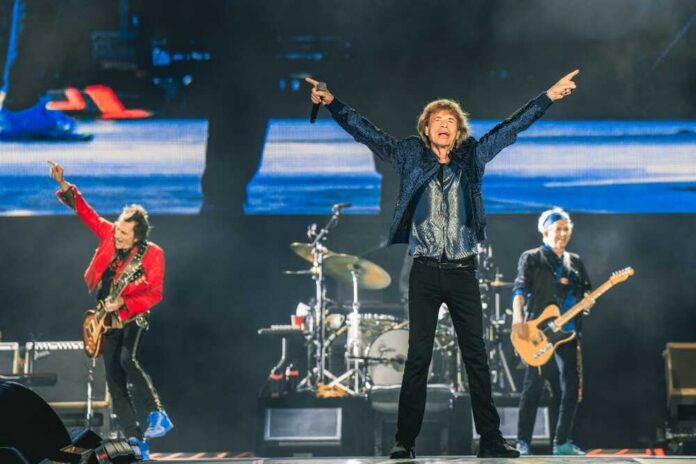
Multiple outlets report a “growing belief” inside The Rolling Stones’ circle that the Trump administration could target the band’s ability to tour in the U.S. by pressuring or influencing artist visa decisions. The reporting centers on claims the band privately criticized the Melania Trump documentary Melania, which uses the Stones’ song “Gimme Shelter.” As of the latest reports, no visa applications, denials, or revocations have been publicly documented.
What is confirmed in the underlying timeline is more limited and easier to verify: the Stones have a long-running dispute with Donald Trump over political use of their music, dating to 2016 and resurfacing again in 2020. What is not confirmed is the key emotional driver of the newest headlines—whether the band’s alleged private criticism of the film triggered any actual government response, or whether this remains tabloid-level speculation without documentation.
How music licensing complicates the narrative
The documentary’s use of “Gimme Shelter” matters because it exposes a gap between what fans assume and how music rights often work. Reporting indicates ABKCO controls key Rolling Stones catalog rights and can authorize certain sync licenses without the band’s direct sign-off. That means the song appearing in a Melania Trump-related project does not automatically prove the band endorsed it—or even approved it. Band representatives have pointed to that separation in past coverage of the licensing issue.
That distinction is important because it undercuts simplistic political framing. If a third-party rights holder can license the track, the band’s real leverage shifts from “approval” to public messaging and legal positioning, which is where prior cease-and-desist conflicts over campaign rally music fit. The newer allegation—visa retaliation—moves the fight from private licensing disputes into the realm of federal power, which is exactly why the story is drawing attention well beyond entertainment media.
What the federal government can do on artist visas
Artist touring typically relies on O-1 and related classifications, and the executive branch has wide discretion in visa adjudication. Reporting in this case points to criminal history as a potential pressure point, referencing decades-old arrests involving Mick Jagger and Keith Richards in the UK in 1967, and Keith Richards and Ron Wood in Arkansas in 1975. Some outlets also note the State Department has denied or revoked entry in other cases involving drug convictions or related records.
None of that, by itself, proves improper conduct. The U.S. has every right to enforce immigration law, and conservatives have argued for years that entry is a privilege, not an entitlement—especially for foreign nationals with criminal records. The constitutional concern arises if enforcement is selectively tightened to punish speech or settle a political score. The current reports do not provide documentation of such an order, directive, or formal visa action.
Why anonymous-source reporting leaves big gaps
The most explosive elements of the story hinge on unnamed “insiders” describing fear, a “sinister turn,” and a belief that the president may retaliate. That type of sourcing may capture real anxiety inside a celebrity operation, but it is not the same as evidence that the government is moving paperwork, issuing internal guidance, or preparing denials. The available reporting also does not include a public statement from President Trump or a confirmed State Department position tied to the Stones.
For readers who are tired of media narratives built on vibes instead of verifiable actions, that limitation matters. The same standard conservatives demand when federal agencies are accused of targeting parents at school board meetings or gun owners through regulatory creep should also apply here: show the directive, show the decision, show the record. Without that, the story remains a mix of established history (the music feud) and unverified escalation (visa retaliation).
The conservative balancing test: enforcement yes, retaliation no
This episode lands at an awkward moment for many Trump voters: the base is divided on foreign entanglements and increasingly skeptical of reflexive establishment priorities, while also insisting that Washington follow the Constitution and avoid weaponizing government. If the administration enforces immigration law consistently, that is one thing. If it uses that same discretion to punish private criticism, that is another—and it would hand ammunition to the same bureaucratic overreach conservatives have fought for years.
For now, the public facts point to a familiar pattern: a long-running cultural feud colliding with the reality that the executive branch holds real power over entry into the United States. Until a concrete visa action is reported—an application, denial, revocation, or official statement—the responsible conclusion is that the “ban” storyline is not yet proven. The bigger takeaway is the precedent Americans should reject: speech should not be policed by visa leverage.
Sources:
Trump could ‘revoke’ British rockers’ US visa after Melania criticism
Donald Trump reportedly considering targeting Rolling Stones’ US visas over Melania movie feud
Donald Trump reportedly considering targeting the Rolling Stones’ US visas over Melania movie feud
Rolling Stones’ Donald Trump feud takes ‘sinister turn’