
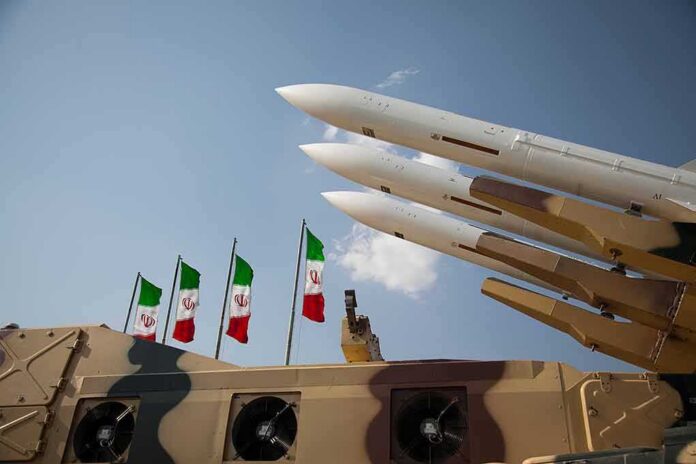
New satellite images show Iran hardening nuclear sites and warning it could hit U.S. forces and Gulf targets if struck again.
Story Highlights
- Satellite analysis shows new earthworks and concrete reinforcements at Iranian nuclear sites.
- Iran’s army says border units are on high readiness across all fronts, including the Makran coast.
- Reports say Tehran warned of retaliation that could reach U.S. warships and Saudi oil facilities.
- Experts say the fortifications complicate raids but do not prove they can stop U.S. airpower.
Satellite Evidence Points to Tougher Iranian Nuclear Defenses
Reuters, citing commercial imagery and expert review, reported Iran is repairing and fortifying sensitive nuclear and military sites after past strikes. Analysts at the Institute for Science and International Security said backfilled tunnel mouths and new concrete structures appear aimed at blunting air attacks and slowing ground teams. The work includes added concrete and soil that can dampen blasts and complicate special operations raids. The pictures show activity, not intent, but the pattern tracks with classic “survive the first strike” planning.
The same institute assessed that partially buried entrances at key complexes could hinder rapid vehicle access and require heavy equipment to clear, raising the bar for any quick raid. That matters for U.S. planners and allies who prize speed and surprise. Earthworks and reinforced aprons do not make sites bombproof. They do buy time, add friction, and force attackers to spend more assets. This is basic defense in depth, and it raises regional risk if a new round of strikes begins.
Tehran Signals It Will Retaliate Across the Region
Citing The Wall Street Journal, mainstream outlets reported Iran warned regional officials that new U.S. strikes could trigger hits on U.S. forces, warships, and Gulf infrastructure, including Saudi oil facilities. These warnings, conveyed through channels in the region, aim to deter by raising the cost of action. The message fits Iran’s playbook: threaten wider pain to keep attacks limited. The reports rest on unnamed sources, so details remain thin, but the risk calculus for U.S. assets is clear.
Jordan News summarized an on‑the‑record statement from Iran’s army ground forces leadership. He said most units are deployed along the country’s borders and operating at a very high level of readiness, with emphasis on the Makran coast and other frontiers. That posture complements hardening at nuclear sites. It also telegraphs resolve to neighbors and to Washington. Such deployments consume resources and raise chances for misread moves, but they aim to deter strikes by showing Iran is braced for spillover fights.
What This Means for U.S. Forces, Energy Security, and Deterrence
CNBC reported that U.S. and partners are weighing next steps as Iran digs in and signals it could widen any clash. For Americans, the stakes are concrete. Attacks on Gulf oil and shipping hit fuel prices at home. Strikes on U.S. forces test our deterrence and invite more proxy fire. The administration must back clear red lines with credible force, while keeping focus on American security first. Precision pressure beats open‑ended wars that drain wallets and risk our troops.
Sustained Deterrence and Maximum Pressure 2.0: A Conservative Framework for Nuclear Denial and Strategic Containment of the Islamic Republic of Iran
Wednesday, October 14, 2026
Dr. Joel P. Rutkowski
Policy PaperExecutive Summary
Iran is fortifying nuclear-related sites… pic.twitter.com/GiERXQPwmS
— Dr. Joel P. Rutkowski- President (@RutkowskiDr) October 13, 2026
The Jerusalem Post noted a key limit in the public record: earth berms and reinforced pads are visible, but their true stopping power is unknown from imagery alone. That uncertainty cuts both ways. Iran wants us to think sites can ride out blows. U.S. planners will assume they cannot. The prudent course is to keep options ready, protect our bases and ships, and tighten energy shields. Hardening U.S. cyber, ports, and undersea cables also matters if Tehran targets regional infrastructure.
How Conservatives Should Read the Signals
Facts on the ground are plain: Iran is hardening targets, moving troops to borders, and warning of broad retaliation if hit. The case relies on satellite images, expert assessments, and reporting from major outlets; some warnings use unnamed sources, so we should be careful about specific claims. The core reality still stands. Any strike cycle can escalate fast and touch oil, shipping, and U.S. personnel. Strong defense, clear rules of engagement, and focused missions serve American interests best.
Sources:
i24news.tv, cnbc.com, jordannews.jo, samaa.tv