
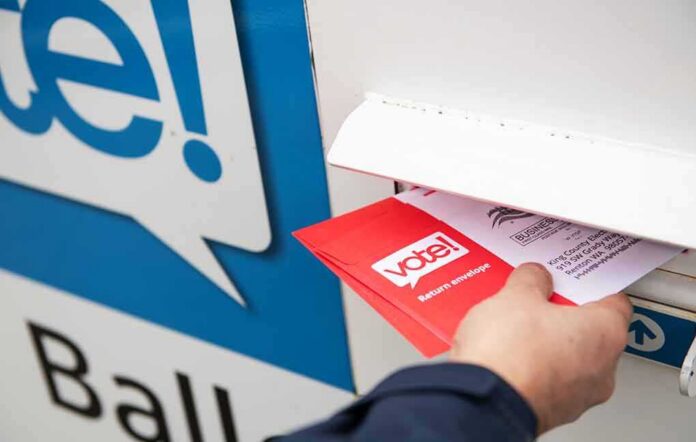
Late-counted ballots lifted Karen Bass and Nithya Raman while Spencer Pratt slipped, setting up a runoff that sidelines many Pratt voters.
Story Highlights
- Polls showed a volatile race with many undecided voters before ballots were cast.
- Election updates showed Nithya Raman steadily overtaking Spencer Pratt as more mail ballots were processed.
- Final primary results placed Karen Bass first, Raman second, and Pratt third, ending Pratt’s bid.
- Analysts point to late-arriving ballots favoring left-wing candidates under California’s extended mail deadline rules.
Polling Pointed To A Shifting, Undecided Electorate
Emerson College and other surveys found that large shares of Los Angeles voters were undecided weeks before the primary. One report placed undecided voters at about half the electorate, with Karen Bass ahead and Spencer Pratt gaining attention but still trailing the front-runners. A separate UCLA Luskin poll put undecided voters at forty percent, again signaling a late break ahead of Election Day. An ABC7 highlight of a University of California–Berkeley poll showed Bass at twenty-six percent, Raman at twenty-five, and Pratt at twenty-two.
These snapshots framed a race where many voters waited to decide. That matters in mail-heavy systems where return timing shapes the count. When many voters choose late, early returns can mislead. The data suggested a narrow three-way split at the top. The range of findings cautioned against reading any single poll as destiny. But together they set the table for what happened once ballots arrived in waves and officials posted updates over several days.
Late Ballots Drove Raman Past Pratt In Updates
After Election Day, Los Angeles released results in batches as more mail ballots were verified and counted. News outlets tracked each update and found a steady trend. Nithya Raman closed Spencer Pratt’s edge in successive releases, then moved ahead as the count continued. The Associated Press later reported Raman widening her advantage to nearly twenty-two thousand votes over Pratt as additional mail ballots were tallied. These updates showed Pratt slipping to third while Bass maintained a clear lead.
Analyses linked the shift to the timing of returned ballots. California accepts ballots postmarked by Election Day, which means many votes arrive afterward and get counted later. Commentators explained that these late ballots tended to be younger and more liberal in this cycle, which aligned with the gains seen for Bass and Raman over time. The New York Times precinct analysis also described later updates that appeared more favorable to Democrats compared with earlier, in-person style returns.
Final Tally: Bass First, Raman Second, Pratt Eliminated
Certified-style tallies from major outlets showed the final order: Karen Bass first at roughly thirty-four percent, Nithya Raman second near twenty-nine percent, and Spencer Pratt third near twenty-six percent. That finish ended Pratt’s path to the November runoff under California’s top-two rule. The same figures confirm what the updates signaled: late-counted ballots padded Bass’s margin and carried Raman past Pratt. For conservatives watching City Hall, the result keeps Los Angeles on a leftward track for the runoff.
For readers focused on law and order, homelessness, and cost of living, the lesson is practical. Mail timelines and turnout patterns can determine momentum in urban elections. When many voters decide late, activists and unions can mobilize ballots that land after Election Day and still count. That is legal under state rules and common in California. But it also means early leads can fade if your voters do not return ballots on time or in equal numbers.
What Pratt’s Voters Could Mean In November
With Pratt out, his supporters become the next prize. Pre-election polls showed that many voters were movable and frustrated with status quo policies on crime and homelessness. Some reports suggested churn between candidates late in the race, including movement among undecided voters. The final count shows consolidation around Bass and Raman, not Pratt. That raises a key question: do disaffected voters sit out, split, or back the candidate who offers a clearest break on public safety and accountability?
Mail Rules And The Map Ahead
California’s rule that accepts ballots postmarked by Election Day but received later shaped the count, again. Commentators stressed that a slow count does not imply wrongdoing; it reflects the mail calendar and processing steps. The critical insight for conservatives is tactical, not conspiratorial: organization and ballot return timing decide outcomes in jurisdictions built around mass mail voting. If you want different results, you must compete within those rules and win the turnout war.
Sources:
nypost.com, jcipr.com, latimes.com, calmatters.org, pbs.org, abc7.com, nbcnews.com, results.lavote.gov