
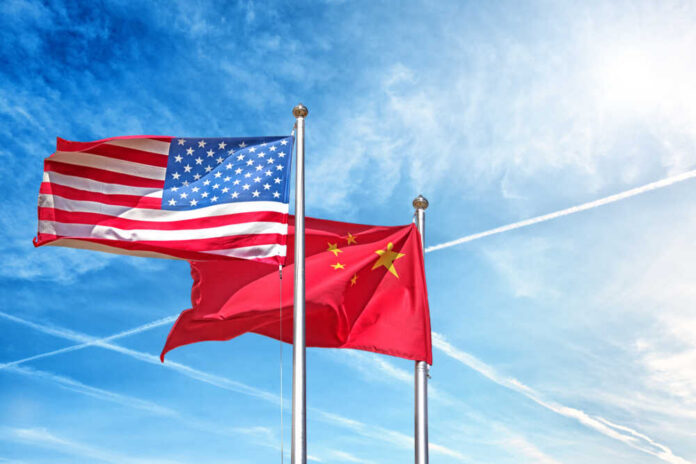
Xi is heading into this week’s Trump summit betting that China’s grip on rare earths—and America’s internal divisions—will force Washington to blink first.
Story Snapshot
- President Trump will travel to Beijing May 14–15 for his first presidential state visit to China since 2017, with Taiwan, trade, and Iran looming over the agenda.
- Chinese officials are signaling Taiwan is the “biggest risk” in the relationship and are pressing for U.S. policy adjustments as a condition for cooperation.
- Beijing believes it holds leverage through critical minerals and rare earth export controls that can disrupt U.S. industry and defense supply chains.
- The White House is emphasizing leader-to-leader dealmaking, while Beijing is trying to box the talks into predictable, tightly managed outcomes.
Beijing Hosts a High-Stakes Summit on Home Turf
President Donald Trump is scheduled to arrive in Beijing on May 14 for a two-day state visit with Chinese leader Xi Jinping, a meeting framed by both sides as a bid for “stability” even as tensions run hot. The trip follows a Trump-Xi conversation in Busan in late 2025 and a summit originally slated for March that was delayed after U.S.-Israeli strikes on Iran. Beijing’s goal appears straightforward: control the stage, narrow the deliverables, and avoid surprises.
Chinese officials, however, have also made clear what they want from a summit that is heavy on ceremony but light on trust. Public messaging has emphasized cooperation and people-to-people exchanges, yet the sharper signals point toward Taiwan as the core issue. That matters because Beijing is not simply seeking warm optics; it is pressing for policy movement. The gap between diplomatic language and strategic demands is exactly where U.S. negotiators can get cornered if talks become too leader-centric.
Taiwan Is the Pressure Point—and the Test of U.S. Commitments
Chinese Foreign Minister Wang Yi has described Taiwan as the “biggest risk” in U.S.-China relations and warned U.S. officials that adjustments could be the “price of cooperation.” In parallel, reporting indicates the U.S. has delayed a major arms package to Taiwan, and Trump has publicly acknowledged discussing arms sales with Xi. No formal U.S. policy change has been announced, but the sequencing raises a basic question: whether Beijing believes it can extract practical restraint without Washington ever admitting it.
For Americans who are already wary of elite foreign-policy games, Taiwan is a credibility test, not a talking point. Arms sales and deterrence are not abstractions; they affect whether the Indo-Pacific stays stable or slides toward crisis. If the summit produces ambiguous language that markets applaud but allies fear, the U.S. could pay later in higher defense costs and greater risk of confrontation. The research available so far does not show any finalized deal, only escalating pressure and careful pre-summit signaling.
Rare Earth Leverage Collides With America’s Industrial Reality
Xi is approaching this meeting from what Chinese officials portray as a position of strength, and rare earths sit near the center of that posture. China’s dominance in critical minerals and the use of export controls on rare earth minerals and magnets have been described as a “break glass” tool—an option Beijing can deploy when trade fights escalate. The Trump administration has expanded its toolkit beyond tariffs to include export controls, port fees, visa restrictions, and sanctions, but minerals are harder to replace quickly.
This is where daily-pocketbook politics meets national security. Critical minerals feed advanced manufacturing, energy systems, and defense production, meaning supply disruption can ripple into prices and readiness. Conservatives who remember years of globalist supply-chain dependence see an obvious lesson: a country cannot outsource strategic inputs and still call itself sovereign. Liberals skeptical of corporate power may reach a similar conclusion for different reasons—no voter wants an economy where distant bureaucracies can shut off key components overnight.
Iran, Energy Risk, and the “Unpredictability” Problem
The summit is also shadowed by the ongoing Iran conflict, which helped push the meeting from March to May. The Strait of Hormuz—and the prospect of closure or reopening—hangs over global energy markets, and both governments have incentives to avoid a shock that would spike prices. China’s relationship with Iran adds complexity: Beijing wants stability but also wants leverage over Washington’s crisis management. That makes Iran less a side issue than a bargaining chip hovering over every other agenda item.
Chinese officials have expressed concern about Trump’s spontaneity and unconventional style, while the U.S. side is leaning into personal diplomacy. Both can be true at the same time: unpredictability can create negotiating leverage, but it can also create unforced errors if commitments are made faster than the bureaucracy can verify. With more Trump-Xi meetings expected later in 2026—APEC and the G20 among them—this summit may set the pattern for whether the relationship is managed through institutions or personalities.
What to Watch: Deliverables, Not Pageantry
Americans should focus less on banquet optics and more on measurable outcomes: any explicit or implicit shift on Taiwan, any trade framework that looks like a temporary “symbolic win,” and any signals on critical minerals that reveal how hard Beijing is willing to squeeze. Markets may cheer a calm readout, but voters are right to ask whether calm is bought by concessions that surface later as higher costs or weaker deterrence. The current reporting suggests both sides want stability—yet both are preparing leverage.
One limitation in the available research is that it describes intentions, leverage, and pre-summit signaling more than it details signed agreements. That means the public may not learn the summit’s true results immediately, especially if the two sides issue carefully curated readouts. In a political climate where many citizens—right and left—feel governed by self-protecting elites, the best safeguard is transparency: clear terms, verifiable steps, and congressional oversight that treats national interest as more important than short-term headlines.
Sources:
Trump-Xi summit comes at high stakes as Taiwan, island democracy China claims as own
China, Trump, Xi meeting: trade deal, Iran war, midterm elections
Foreign Ministry of the People’s Republic of China: readout on Trump-Xi meeting (Oct. 30, 2025)
At the Trump-Xi Summit, China Will Have the Upper Hand
What happened when Trump met Xi
President Donald Trump participates in a bilateral meeting with Chinese President Xi Jinping