Obama’s new Chicago presidential center is drawing fire for requiring proof of U.S. citizenship to attend its own grand-opening giveaway—an eyebrow-raising standard in a country still arguing about what “secure borders” even means.
Quick Take
- The Obama Presidential Center is scheduled to open June 18, 2026, in Chicago’s Jackson Park.
- A grand-opening ticket giveaway reportedly requires U.S. citizenship or lawful permanent residency to enter.
- Critics say the rule highlights a political double standard amid broader fights over immigration policy and voting rules.
- The project’s costs rose sharply from early estimates, and delays pushed the opening past its original 2021 target.
A citizenship requirement becomes the headline before the opening day
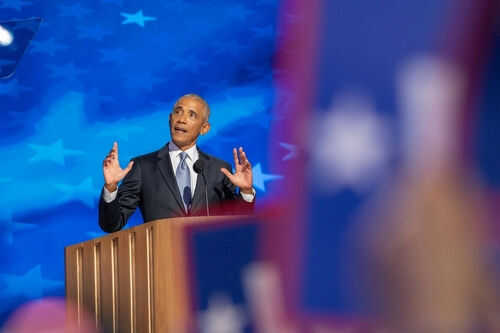
The Obama Presidential Center’s planned June 18, 2026 grand opening is already sparking controversy, not because of a new exhibit or landmark speech, but because of the event’s reported eligibility rules. The ticket giveaway is described as requiring proof of U.S. citizenship or lawful permanent residency to gain entry. For many conservative readers, the immediate question isn’t about museum logistics—it’s why “show your papers” is acceptable here, but treated as taboo in other public debates.
The reported rules also include a travel stipend of up to $1,500 for winners who live 100 miles or more away, a detail that has added fuel to the argument that this is a tightly controlled, high-profile rollout rather than an open community celebration. Critics have seized on the contrast between strict entry requirements for this private event and years of progressive messaging that downplayed enforcement, documentation, and legal status in broader immigration discussions.
What’s verified—and what still isn’t explained publicly
Several core facts are straightforward: the center is scheduled to open on June 18, 2026; a citizenship or lawful-resident requirement has been reported for the grand-opening giveaway; and the campus includes a 225-foot concrete tower that has attracted significant commentary. What remains unclear in the available reporting is the Obama Foundation’s official rationale for the eligibility rule, beyond the practical reality that events can set terms for entry. Without that explanation, the political narrative is being filled in by partisans on both sides.
Republican critics highlighted the requirement as evidence of elite rules that differ from what Democrats often demand for public policy—particularly debates around voter identification and immigration enforcement. Conservative commentators amplified the question many grassroots voters ask: why should standards be stricter for admission to a ceremonial opening than for core civic systems like elections. While that critique is political, it is rooted in the reported rule itself, which is specific, document-based, and framed as a gatekeeping condition.
Costs, delays, and the local backlash on Chicago’s South Side
The controversy is landing on top of existing tensions around the project’s footprint. Reporting tied to the center’s development described escalating costs, rising from an early estimate of about $330 million to roughly $830 million by 2021, along with delays that pushed back an initial 2021 opening plan. For taxpayers and families already wary of government-style cost overruns, the numbers read like a familiar story: ambitious projects expand, timelines slip, and the public is left arguing over who benefits.
Local concerns have also centered on neighborhood change and displacement pressures. Chicago South Side residents have been quoted criticizing the tower’s visual impact and describing disruption to the park landscape, while broader complaints have included cultural “erasure” and gentrification fears. Those community-level worries matter because they cut across party lines: working people tend to notice when prestigious developments raise rents and shift a neighborhood’s character, even if the stated purpose is investment and revitalization.
The bigger political lesson for 2026: standards aren’t neutral anymore
The reason this story travels well beyond Chicago is that it touches a national nerve: Americans are no longer debating whether standards exist, but who they’re applied to and when. In the Trump second term, many MAGA voters are already wrestling with whether leaders will actually deliver consistent, America-first governance—on borders, on budgets, and on foreign entanglements. This controversy doesn’t answer those bigger questions, but it shows how quickly trust collapses when one set of rules is celebrated for elites and condemned for everyone else.
For conservatives focused on constitutional order and equal treatment under the law, the practical takeaway is simple. Private organizations can set entry requirements, but public-facing political movements can’t easily explain why documentation is “common sense” in one context and portrayed as offensive in another. Until the Obama Foundation explains the policy plainly, the public will keep arguing over motives—and the opening risks becoming less about presidential history and more about the credibility gap in America’s immigration and identity debates.
Sources:
https://www.zerohedge.com/political/obamas-tower-doom-harder-get-america-itself