
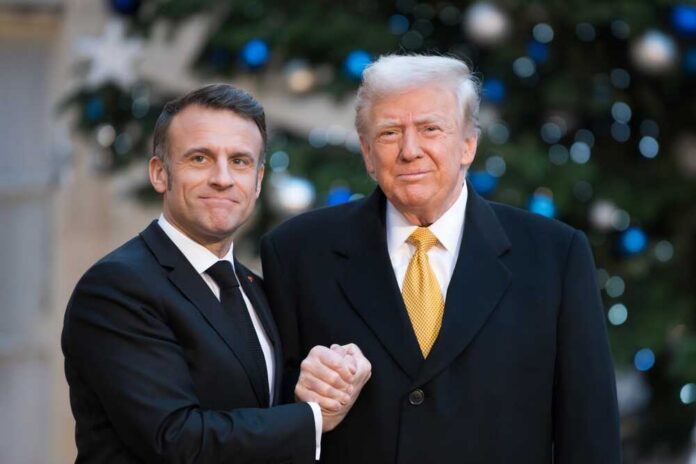
President Trump’s mockery of French President Emmanuel Macron and his wife Brigitte during a White House Easter lunch has sparked a diplomatic firestorm, raising serious questions about whether our administration’s approach to key alliances serves American interests or undermines them.
Story Snapshot
- Trump mocked Macron and his wife Brigitte at private White House Easter lunch, referencing footage of her shoving her husband
- Macron publicly rebuked Trump, calling remarks “not up to standard” and “neither elegant”
- Video of Trump’s comments briefly appeared online before removal, fueling French outrage
- Incident strains U.S.-France relations and NATO cohesion at critical moment in transatlantic diplomacy
White House Easter Lunch Turns Diplomatic Incident
President Trump made mocking comments about Emmanuel Macron and his wife Brigitte during a private White House Easter lunch in Washington. Trump reportedly referenced footage showing Brigitte shoving her husband, turning what should have been a diplomatic engagement into a personal attack. Video of the remarks briefly surfaced online before being removed, amplifying what might have remained behind closed doors. The incident represents another chapter in the contentious relationship between Trump and Macron, mixing personal barbs with high-stakes international diplomacy during discussions on NATO and global security issues.
Macron Responds with Measured Rebuke
French President Macron issued a public criticism of Trump’s comments, describing them as “not up to standard” and “neither elegant.” Macron refused to elaborate further, stating the remarks did not merit additional response. His calculated restraint positions him as the statesman in the exchange while defending his wife’s dignity and French national honor. The response contrasts sharply with Trump’s informal mockery, highlighting fundamentally different approaches to diplomatic engagement. French lawmakers and the public expressed outrage at what they viewed as disrespectful treatment of their First Lady and president during an official state function.
Pattern of Personal Attacks Raises Concerns
This incident fits a troubling pattern where Trump has previously mocked Macron’s height and leadership style publicly. The relationship has alternated between displays of alliance, such as the 2018 Bastille Day celebrations, and rivalry over NATO spending disputes and trade frictions. Trump’s reference to Brigitte Macron personalizes ongoing U.S.-France strains in ways that risk overshadowing substantive policy discussions. While Trump’s supporters appreciate his bold, unfiltered style as authenticity, many MAGA conservatives question whether personal attacks on allied leaders serve American strategic interests or simply create unnecessary friction with partners we need for security and economic cooperation.
Impact on American Interests and Alliances
The mockery strains transatlantic diplomacy at a moment when NATO cohesion matters for American security. Short-term implications include heightened media scrutiny on U.S.-France bilateral talks and potential chilling effects on cooperation. Long-term consequences may reinforce narratives that damage alliance resilience amid global tensions. French diplomatic circles and lawmakers amplify backlash that complicates negotiations on trade and defense issues. For conservatives frustrated with endless wars and broken promises about keeping America out of new conflicts, this incident raises legitimate questions: Does antagonizing key allies strengthen America’s position or weaken it? The administration’s approach to France tests whether Trump’s bold persona advances concrete American interests or creates diplomatic obstacles that ultimately cost taxpayers and compromise national security.
Trump supporters who backed America First policies expected strength through smart diplomacy, not personal feuds with leaders whose cooperation we need. The incident amplifies debates about gender and personal attacks in politics while distracting from substantive policy discussions on NATO burden-sharing and trade imbalances. Whether this serves conservative values of strategic leadership or represents unnecessary drama that undermines American credibility remains a question dividing Trump’s base. The administration now owns the consequences of this diplomatic approach, and voters watching expect results that strengthen America’s position, not weaken partnerships critical to prosperity and security.