Trump’s bold Executive Order 14160 challenges birthright citizenship abuses, but faces fierce liberal opposition that could undermine American sovereignty and reward illegal immigration.
Story Snapshot
- Executive Order 14160 denies automatic citizenship to children of undocumented immigrants and temporary visitors, targeting “anchor babies” and birth tourism.
- Roots in 14th Amendment’s “jurisdiction” clause, interpreted narrowly by originalists to exclude those not fully under U.S. authority.
- Potential to save billions in welfare costs while curbing chain migration that strains resources and erodes citizenship value.
- Active litigation looms as advocacy groups decry the move as unconstitutional, polarizing the immigration debate ahead of 2026 midterms.
Executive Order Targets Citizenship Exploitation
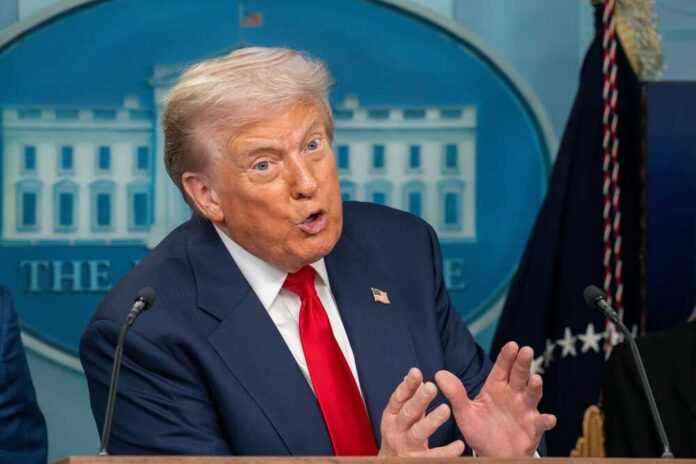
President Trump issued Executive Order 14160 in 2025 to deny U.S. citizenship to children born in America to undocumented immigrants or temporary visa holders like students and workers. The order asserts the 14th Amendment’s phrase “subject to the jurisdiction thereof” excludes those with unlawful or transient presence. This directly addresses birth tourism, where non-citizens enter solely to secure citizenship for their offspring, estimated at 300 cases daily by 2015 GAO data. Conservatives view this as essential to protect citizenship integrity from exploitation that incentivizes illegal border crossings. The policy aligns with America First principles by prioritizing citizens’ resources over foreign entitlements.
Historical Roots in the 14th Amendment
The 14th Amendment, ratified in 1868, aimed to grant citizenship to freed slaves after overturning Dred Scott v. Sandford. Its Citizenship Clause states all persons born in the U.S. and subject to its jurisdiction are citizens. The Supreme Court’s 1898 United States v. Wong Kim Ark decision extended this to children of legal non-citizen immigrants but excluded diplomats and invading forces. Critics argue modern interpretations stretch “jurisdiction” too far, enabling chain migration where citizen children later sponsor parents. Federal law in 8 U.S.C. §1401 codifies broad birthright, yet Trump’s order tests executive limits without needing a constitutional amendment. This historical pivot fuels debates on original intent versus expansive judicial rulings.
Key Stakeholders and Power Dynamics
Trump’s administration drives the reform with high executive authority, motivated by immigration control and preserving citizenship value. The Supreme Court holds ultimate say, having broadly interpreted the clause historically. Congress, through stalled bills like the 2025 Birthright Citizenship Act, influences via legislation, echoing 1866 framers like Sen. Jacob Howard who affirmed jus soli for immigrants. Left-leaning groups such as the Brennan Center and NAACP LDF challenge the order as unconstitutional, defending universal birthright. Immigrant communities face deportation risks and family separations. These dynamics pit executive action against judicial and advocacy pushback, highlighting tensions in limited government versus open borders agendas.
Originalist scholar Samarth Desai at SCOTUSblog argues on March 6, 2026, that exceptions like diplomats define the rule, excluding birth tourists under a “soil and flag” principle. White House proclamations narrow jurisdiction to full U.S. authority, rejecting temporary or unlawful stays.
Impacts and Ongoing Developments
Short-term effects include legal challenges creating chaos for ~300,000 annual births to non-citizens, delaying passports and hospital processes while undocumented families fear deportations. Long-term, upholding the order could end anchor baby incentives, reduce chain migration, and cut debated billions in welfare costs, though litigation expenses exceed $100 million. States like California and Texas, hubs of birth tourism, face administrative backlogs. Politically, it energizes 2026 midterms by exposing globalist overreach. No final court ruling exists as of early 2026; enforcement details remain unconfirmed amid expected Supreme Court review. This reform promises fiscal relief but risks stateless children if broadly applied.
Sources:
A brief history of citizenship and the 14th Amendment to the US Constitution
Birthright Citizenship Under the U.S. Constitution – Brennan Center
Know Your Rights: Birthright Citizenship – NAACP LDF
Birthright citizenship: The exceptions provide the rule – SCOTUSblog
8 U.S. Code § 1401 – Nationals and citizens of United States at birth
Protecting The Meaning And Value Of American Citizenship – White House
14th Amendment Citizenship Clause Annotation