
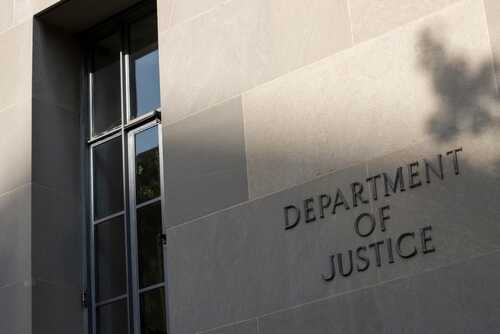
For the first time, federal prosecutors have brought terrorism-related charges against individuals described by the Department of Justice as being linked to an Antifa-affiliated group, following a violent attack on a Texas ICE facility.
Story Snapshot
- Federal prosecutors indict two alleged Antifa members for terrorism after a July 4th attack on a Texas ICE detention center.
- Attack involved gunfire, explosives, and resulted in the injury of a police officer, marking a dangerous escalation in anti-ICE protest tactics.
- This case follows President Trump’s executive order designating Antifa as a terrorist organization, setting new legal precedent.
- Law enforcement and conservative leaders warn that unchecked radicalism now meets unprecedented legal pushback.
First Terrorism Charges Against Alleged Antifa Members: What Happened in Texas
On July 4, 2025, masked and armed individuals attacked the Prairieland Immigration and Customs Enforcement (ICE) detention center in Alvarado, Texas. The attackers, whom the DOJ described as part of a self-identified “Antifa cell,” vandalized property and exchanged gunfire with responding officers, injuring one. Federal law enforcement quickly responded, arresting multiple suspects and charging them initially with attempted murder. Officials said the incident marked one of the most serious acts of violence directed at a federal immigration facility in recent years, occurring amid heightened political tension over border policy.
By October 16, 2025, a federal grand jury indicted Autumn Hill and Zachary Evetts on sweeping terrorism-related charges, including providing material support to terrorists and attempting to murder federal officers. The following day, the Department of Justice publicly announced these as the first-ever terrorism charges against alleged Antifa members in the United States. The indictment characterized Antifa as a “militant enterprise” with ideological aims to oppose government authority. While the Trump administration has labeled the movement a domestic threat, it has not been formally designated a terrorist organization under federal law. Officials confirmed that this unprecedented case marked a new era in the federal response to far-left violence.
Motivations, Political Context, and Power Dynamics
Court documents and FBI statements indicate the suspects expressed anti-ICE and anti-government views. Experts on extremist movements, including J.M. Berger of the International Centre for Counter-Terrorism, notes that Antifa is a loosely organized network without centralized leadership, often defined by opposition to perceived fascism rather than a single ideology. The Department of Justice and law enforcement agencies, empowered by new anti-terrorism directives, sought to send a clear message: attacks on federal facilities, especially those defending U.S. borders and immigration law, will meet the full force of federal prosecution. President Donald Trump and Attorney General Pam Bondi highlighted the case as justification for stronger enforcement against domestic extremism, according to remarks reported by Reuters and The Hill. This historic prosecution reflects a broader shift, with federal authorities now wielding expanded power to pursue and deter violent leftist radicalism.
This legal and political shift occurs amid a backdrop of ongoing national debate over immigration enforcement, ICE operations, and the role of protest movements in American society. Antifa, lacking central organization but operating as an umbrella for far-left agitators, has long been a flashpoint for controversy. While previous Antifa-linked violence resulted in arrests, never before had terrorism charges been brought against alleged members, even as attacks on ICE facilities—such as the 2019 Tacoma incident—made headlines. The new administration’s policy moves, including the formal terrorist designation, have escalated the stakes and clarified the federal government’s willingness to act decisively.
Implications for Law Enforcement, Civil Liberties, and American Society
The Texas ICE facility attack and subsequent terrorism charges establish a significant legal precedent, potentially broadening the scope of domestic terrorism prosecutions. Federal officials argue such measures are necessary to deter violent attacks on key institutions and uphold the rule of law. Law enforcement and ICE personnel, especially those stationed at detention centers, now face new security protocols and legal backing. However, the move has also intensified political polarization, as civil liberties advocates and some legal experts warn against conflating protest movements with organized terrorism. Critics raise concerns about First Amendment implications and the risks of criminalizing dissent, especially given Antifa’s decentralized nature.
Short-term, the prosecution may deter similar attacks, but it could also escalate tensions between activist groups and law enforcement. The broader impact includes increased security spending for federal facilities, heightened legal scrutiny of protest activities, and sharper debate over the proper limits of government power. As the country navigates these developments, the Trump administration’s response will likely serve as a model—or a warning—depending on one’s perspective on constitutional rights, civil order, and the protection of American values.
Expert and Official Perspectives on the Historic Charges
Legal scholars and security analysts agree on the unprecedented nature of the case. Supporters of the charges, including many in law enforcement and government, argue that a tough, clear response is essential to protect American institutions and uphold the law. They contend that federal facilities, especially those connected to border enforcement, must not become targets for political violence. Critics, meanwhile, caution that overbroad use of terrorism statutes risks eroding civil liberties and blurring the line between protest and terrorism—particularly when applied to loosely affiliated movements like Antifa. Nonetheless, the Trump administration’s actions enjoy strong support among those who prioritize constitutional order, public safety, and traditional American values.
First Terrorism Charges Brought Against Alleged Antifa Members in Texas ICE Attack; Antifa Loons Hit with First Terror Charges for ICE Attack Part of Cell Armed with 50 Guns: Feds … Read more here https://t.co/rWQzlGo9PO
— RIGHT SPEAK (@RightSpeaknet) October 19, 2025
As this case proceeds, it will be closely watched by legal experts, policymakers, and ordinary Americans concerned about the balance between security and liberty. Regardless of the outcome, the prosecution of Antifa-linked suspects for terrorism sends a powerful signal: attacks on law enforcement and the Constitution will not be tolerated, and the government is prepared to use every tool at its disposal to defend the nation against radical threats.
Sources: