After 50 days of a DHS-only shutdown, the White House just stepped around Congress to get paychecks moving—raising fresh questions about who really controls the power of the purse.
Quick Take
- President Trump signed a presidential memo/order on April 4, 2026, to ensure pay for DHS employees who have worked without pay during the shutdown.
- More than 35,000 DHS workers—including Coast Guard, FEMA, and cybersecurity staff—were affected, with some unpaid since mid-February.
- TSA workers received a separate, earlier pay action after airport delays and absenteeism spiked during the impasse.
- The shutdown remains tied to a funding fight in Congress over immigration enforcement, even as pay relief moves forward.
- Reporting indicates uncertainty about the legal funding mechanism, underscoring broader constitutional tensions over appropriations.
Trump Signs Order as DHS Shutdown Hits Day 50
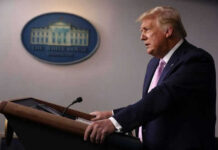
President Donald Trump signed a presidential memorandum/executive action on April 4, 2026, directing that Department of Homeland Security employees impacted by the partial shutdown receive paychecks, after the impasse stretched to roughly 50 days. Reports describe the action as covering non-law-enforcement DHS personnel who continued working without pay. The affected agencies include the U.S. Coast Guard, FEMA, and cybersecurity-related offices, with total workers cited at more than 35,000.
Trump’s public messaging framed the move as immediate relief for families strained by weeks without pay, while Congress remained deadlocked. Coverage also notes the shutdown’s unusual shape: it largely hits DHS functions outside immigration enforcement, while other components had different funding treatment. The administration’s decision to act unilaterally delivered short-term certainty to households, but it did not end the shutdown itself or resolve the underlying appropriations dispute.
What Caused the Shutdown: Immigration Enforcement Funding Standoff
Congressional negotiations centered on how to fund DHS, with the most contentious point involving immigration enforcement budgets. Reporting described House Democrats resisting or delaying funding tied to immigration enforcement priorities, while Senate Republicans advanced a deal that would fund much of DHS but exclude ICE and parts of CBP. That approach did not clear the House, keeping the lapse in appropriations in place for large parts of the department.
Some DHS components were treated differently because of prior legislation. Reports say ICE and CBP pay continued under an earlier law referenced as the “One Big Beautiful Bill,” while other DHS entities were left in limbo. That split created a political and operational paradox: the agencies most visible to everyday Americans—airport security, disaster response readiness, and certain cybersecurity functions—faced workforce strain even as the broader immigration enforcement fight dominated the Capitol Hill debate.
TSA Precedent: Earlier Pay Action Followed Airport Delays
The Trump administration’s move for all DHS workers followed an earlier, more targeted action for TSA employees. Reporting indicates that TSA staffing issues and absenteeism worsened as the shutdown dragged on, contributing to airport delays and public pressure. The White House previously used funds connected to a prior tax bill to cover TSA backpay for several weeks, and that step became the practical precedent for the broader DHS pay directive.
That sequence matters because it shows how operational disruption, not just political messaging, can force a workaround in a shutdown. Air travelers experiencing longer lines and delays created a visible symptom of federal dysfunction. The administration’s pay steps aim to stabilize daily operations, but they also highlight a hard truth for voters who are tired of chaos: Washington can keep arguing while essential services keep running on the backs of workers asked to do the job without timely pay.
Constitutional Tension: Relief for Workers, but Questions on Authority
Multiple reports raised uncertainty about the legal basis for paying broad categories of DHS personnel during a funding lapse, especially when the mechanism for the money is not clearly explained in public summaries. The Constitution assigns appropriations power to Congress, and shutdowns happen precisely because lawmakers do not pass funding on time. When the executive branch uses memoranda or other tools to move pay anyway, it can reduce pressure on Congress to do its job.
For conservative voters who demand both competent governance and constitutional boundaries, that creates an uncomfortable tradeoff. The immediate priority is obvious: families should not be collateral damage in a political fight, and national security functions should not wobble because politicians cannot agree. At the same time, normalizing executive workarounds risks shifting budget power away from elected legislators, even when the underlying goal—getting pay to workers—is broadly popular.
Sources:
Trump Moves to Restore Pay for DHS Workers Amid Prolonged Shutdown
Trump Says He’ll Sign Order to Pay All DHS Employees as Shutdown Continues
Trump Says He’ll Pay All DHS Workers After House Again Fails to End Shutdown