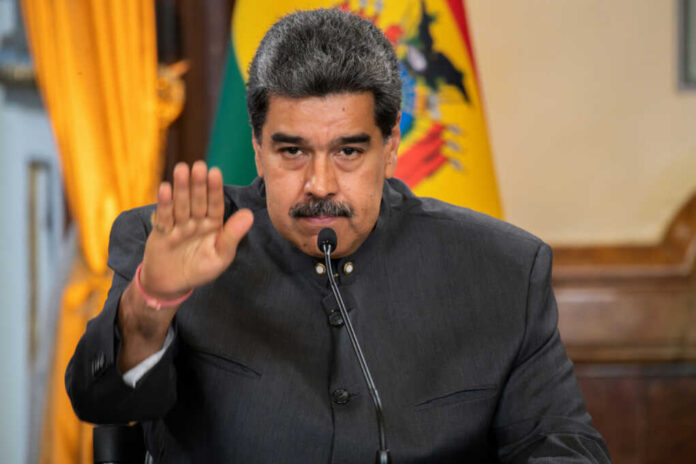
President Trump’s late 2025 military operation to capture Venezuelan dictator Nicolás Maduro and seize oil assets has sparked fierce debate among MAGA supporters who voted to end regime change wars, not expand them into our own hemisphere.
Story Snapshot
- U.S. special forces seized Maduro in December 2025 raid, transporting him to New York on drug trafficking charges while naval blockade strangled Venezuela
- Trump invoked “Trump Corollary” to Monroe Doctrine justifying strikes that killed over 100 civilians and seizure of oil tankers as reclaiming “stolen assets”
- MAGA base divided as administration escalates Western Hemisphere interventionism despite campaign promises to avoid new wars and focus on America First
- Venezuela’s world-leading oil reserves now under U.S. control while energy costs remain high for Americans struggling with inflation
Trump Revives Monroe Doctrine for Hemisphere Dominance
The Trump administration formally embedded the “Trump Corollary” into the National Security Strategy in 2025, reviving the 1823 Monroe Doctrine that warned European powers against colonizing the Americas. Trump rebranded it as the “Don-roe Doctrine” to reverse what he characterized as Obama’s symbolic abandonment of U.S. hemispheric preeminence. The revised doctrine prioritizes Western Hemisphere security against drug cartels like Tren de Aragua and regimes accused of enabling narcotics trafficking. This represents a fundamental shift from Trump’s 2016 campaign rhetoric opposing foreign interventions and nation-building exercises that drained American blood and treasure.
Military Escalation Culminates in Presidential Capture
U.S. military operations against Venezuela escalated dramatically through fall 2025. On September 2, strikes destroyed a Venezuelan vessel off the coast, initiating over 20 attacks on alleged drug boats in Latin American waters. The largest U.S. naval armada in South American history assembled offshore by December. Trump designated Maduro’s regime a foreign terrorist organization on December 16 via social media, citing oil theft, terrorism, and drug smuggling. Six days later, he publicly suggested Maduro step down. In late December, helicopter-borne special forces raided Caracas, capturing Maduro and wife Cilia Flores for transport to New York. Simultaneously, the U.S. seized oil tankers and imposed a naval blockade.
Promised Asset Recovery Raises Constitutional Concerns
Trump justified the operation by vowing escalation “until they return all of the Oil, Land, and other Assets” allegedly stolen by the Maduro regime. Venezuela possesses the world’s largest proven oil reserves, restricted from U.S. markets since 2005 sanctions. The administration frames tanker seizures and blockade as asset recovery rather than conquest. However, this rationale troubles constitutional conservatives who question whether a president can unilaterally wage war to seize foreign resources without congressional authorization. Senators including Rand Paul introduced war powers resolutions on December 3 challenging the legality of military action absent a declaration of war, echoing concerns about executive overreach that animated the Tea Party movement.
Civilian Casualties and Starvation Tactics Undermine Moral Authority
Military strikes on vessels in international waters killed well over 100 civilians, many aboard boats labeled as drug-running operations without due process or verification. The naval blockade imposed collective punishment on Venezuelan civilians already suffering economic collapse and blackouts under Maduro’s mismanagement. These tactics mirror strategies critics condemned during Bush-era interventions in Iraq. While Maduro unquestionably runs a brutal dictatorship linked to narco-trafficking, the methods employed raise questions about proportionality and adherence to just war principles that conservatives traditionally championed. The operation’s brutality provides propaganda fodder for anti-American forces globally while Americans at home still face $4 gas despite promises that energy dominance would lower costs.
MAGA Base Confronts Regime Change Contradiction
Trump’s 2016 and 2020 campaigns explicitly rejected regime change operations, contrasting his approach with Bush and Obama interventions that destabilized the Middle East and North Africa. His supporters, aged 40 and older, voted to prioritize American interests over global policing. Yet the Venezuela operation resurrects precisely the interventionist playbook they rejected, complete with democracy promotion rhetoric and nation-building oversight during the “transitional” phase. Fox News panels celebrated the Monroe Doctrine revival as protecting the homeland from drugs, but grassroots MAGA voices increasingly question why American sons risk dying to secure oil reserves for corporate interests when domestic energy production could meet national needs without foreign entanglements.
The New Monroe Doctrine: Dictator Down!https://t.co/keNCheOdY9
— PJ Media (@PJMedia_com) March 28, 2026
The operation echoes historical precedents including the 1989 Panama invasion to capture Manuel Noriega and Operation Condor’s 1970s-1980s repression across South America, both later criticized for enabling human rights abuses. Trump supporters who opposed endless wars in Iran and Syria now face cognitive dissonance as their president expands military operations closer to home. Venezuela’s strategic oil reserves attracted corporate lobbying for sanctions relief since 2005, raising questions about whose interests this intervention truly serves. As the U.S. assumes transitional oversight of Venezuela while battling Iran simultaneously, the promised America First foreign policy increasingly resembles the globalist interventionism voters thought they had defeated in 2016.
Sources:
Venezuela coup: Trump’s ‘jungle law’ in Latin America – openDemocracy
Trump administration seizes Venezuelan President Maduro – World Socialist Web Site
Trump tears up Obama-era Latin American policy with renewal of Monroe Doctrine – Fox News
The Neo-Monroe Doctrine: Post-Maduro Venezuela and a New Age of American Interventionism – PIVOT