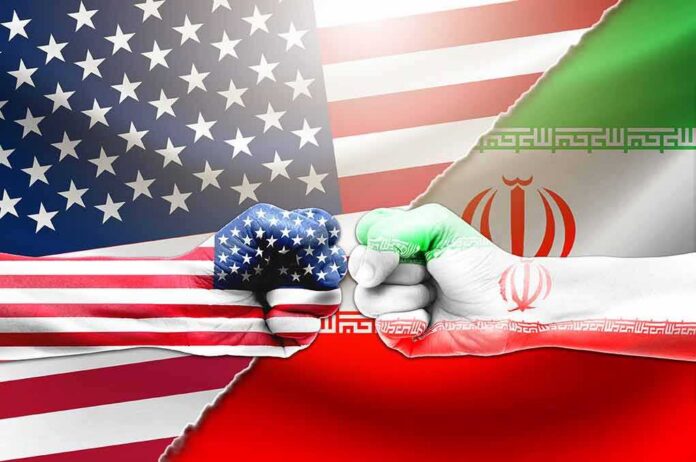
When a president halts a massive attack plan at the last moment, it is rarely a change of heart; it is a calculated move to trade imminent firepower for bargaining leverage, while keeping the gun visibly on the table.
Key Points
- President Trump twice postponed large-scale strikes on Iran’s power and energy infrastructure, publicly tying the pauses to “serious negotiations” and appeals from Gulf partners.
- The administration framed the delay as a strategic pause: diplomacy first, but with U.S. forces kept ready for rapid escalation if talks fail.
- Regional pressure—from Gulf states worried about economic fallout and Pakistan brokering Hormuz-related ceasefires—was central to Trump’s decision to hold back.
- Military and economic realities also shaped the pause: target sets were largely exhausted, missile-defense stocks were under strain, and oil markets were reacting sharply.
What Trump Actually Halted
The first thing to understand is the scale and nature of the operation that Trump put on hold. By his own account and by consistent reporting across major outlets, the United States was preparing a significant strike on Iranian targets, focused in particular on power plants and energy infrastructure critical to Iran’s ability to wage war and threaten shipping in the Strait of Hormuz. Trump described it as “a very significant attack tomorrow,” scheduled for a specific day, with operational planning advanced enough that military commanders were effectively waiting for a final “go” order.
On multiple occasions in the spring and summer campaign, he announced that these strikes were being postponed, not canceled. In one widely covered Truth Social message, he told the military “we will NOT be conducting the scheduled attack on Iran tomorrow,” emphasizing that the decision was linked to unfolding diplomatic talks and regional appeals. In public remarks at the White House, he underscored that U.S. forces remained “all set to start” if needed, and that the pause might be “for a short time” even if he hoped it might become indefinite. This is the essence of a strategic halt: the machinery of war stays in place, but the trigger is deliberately not pulled—for now.
Diplomacy First: How the Administration Framed the Pause
Trump’s stated rationale for delaying the attack was unambiguous: “serious negotiations” were underway, and key leaders in the region believed a deal was close. In message after message, he credited the intervention of Qatar, Saudi Arabia, and the United Arab Emirates, saying they had asked him to “hold off” for “two or three days” because they thought they were “getting very close to making a deal.” Major outlets—from the Wall Street Journal to Al Jazeera and the BBC—carried the same core narrative: Gulf leaders urged the United States to pause planned strikes to give diplomacy space.
Trump publicly cast the talks as aiming at a broad resolution of the conflict and, crucially, at preventing Iran from acquiring nuclear weapons. He told reporters that allies in the Middle East were “very close to finalizing a deal” that would stop Iran’s nuclear program, and that such an agreement would be “very acceptable to the United States and to all countries in the Middle East and beyond.” In parallel, U.S. ambassadors and envoys amplified the same message. Mike Waltz, speaking as U.S. ambassador to the U.N., said the president was “giving talks some space,” pausing attacks for several nights to let negotiations develop. Special envoys involved in the Hormuz discussions described the situation as a “pivot point” for a potential deal, even as they warned Iran not to “miscalculate again.”
This is textbook crisis diplomacy messaging: present the delay as a gesture of restraint and a chance for peace, while insisting that military resolve has not weakened and options remain “locked and loaded.” In that sense, the administration’s position was internally consistent and aligned with decades of U.S. signaling practice in high-stakes standoffs.
Regional Pressure and the Gulf States’ Role
The pause was not only about U.S.–Iran channels; it was also about the politics and economics of the wider Gulf. Trump repeatedly said the request to delay came directly from the Emir of Qatar, the Saudi crown prince, and the UAE leadership. Regional reporting and diplomatic leaks back this up in structure if not always in detail: Gulf governments were deeply concerned that another wave of strikes and Iranian retaliation would further damage their economies, their critical infrastructure, and the stability of the oil market.
Iran’s closure and partial reopening of the Strait of Hormuz—a narrow chokepoint through which roughly a fifth of the world’s seaborne oil and gas passes—had already produced what one economist called “hundreds of billions in economic blowback.” Crude prices surged above $100 per barrel after hostilities resumed, amplifying domestic pressure in the United States and alarm among import-dependent allies. Against that backdrop, Gulf states had an obvious incentive to press Washington to trade time for talks. They could not afford an open-ended bombing campaign that would invite more missile and drone attacks on their own territory and energy infrastructure.
Pakistan’s emergence as a mediator reinforced this regional dimension. Pakistani leaders helped broker a two-week ceasefire linked to Iran’s agreement to reopen the Strait of Hormuz, and their officials shuttled between Tehran and Washington as back-channel facilitators. When Trump announced a two-week halt to bombing “provided that the Islamic Republic of Iran consents to the COMPLETE, IMMEDIATE, and SAFE REOPENING of the Strait of Hormuz,” he explicitly cited Pakistani urging. In other words, the decision to pause was embedded in a regional diplomatic architecture that went beyond Washington and Tehran.
The Military Logic: Diminishing Returns and Stockpile Strain
Behind the diplomatic story lies a harder military calculus. According to detailed reporting on U.S. Central Command’s internal assessments, by the time Trump considered a new intensification of strikes, American forces had already destroyed or neutralized roughly 80 percent of the planned target set in Iran’s maritime and missile infrastructure around the Strait of Hormuz. Admiral Brad Cooper, CENTCOM chief, reportedly told the White House that continuing the same pattern of daily bombing made little sense: the remaining 20 percent of targets would require a much larger campaign and deeper escalation, not just “more of the same.”
At the same time, senior advisers raised concerns about the depletion of missile-defense interceptors—Patriot and related systems—needed to protect U.S. bases, ships, and allied infrastructure from Iranian retaliation. Each additional day of bombing increased the risk that U.S. forces and partners would face incoming missiles and drones with shrinking defensive stockpiles. Publicly, Trump denied that ammunition constraints were driving his decision. Privately, according to multiple outlets, those constraints were part of the discussion about whether further strikes would strengthen or weaken the U.S. position.
When a campaign has already achieved most of its operational objectives, and further gains require both escalation and increased risk to your own forces, pausing is not an admission of defeat; it is recognition that the marginal benefit of additional bombing has fallen below its marginal cost. That appears to have been the military logic informing Trump’s willingness to halt, even as he insisted that war plans could be resumed at any time.
Managing Domestic Politics and Global Markets
Crisis decisions are never purely military. Trump was acutely aware that Americans were watching gasoline prices and economic indicators in real time. Analysts who followed the administration’s internal debates note that the war’s impact on energy markets and domestic polling weighed heavily on his calculus. A prolonged conflict around Hormuz threatened not just abstract “global stability” but the pocketbooks of U.S. voters and the trajectory of the broader economy.
In that environment, a temporary halt offered multiple domestic benefits. It allowed the White House to claim credit for restraint—“If I can save war by waiting a couple of days, or I can save people being killed by waiting a couple of days, I think it’s a great thing to do,” Trump told one network—while still blaming Iran if talks failed.[CBS transcript via user] It also bought time to explore whether Tehran could be induced to reopen the Strait and cap or roll back its nuclear advances without committing the United States to a full-scale ground or regime-change war, options that many experts warned carried high risks and unclear endgames.
For markets, even a conditional pause matters. A clear signal that bombing would stop for a defined period, tied to specific diplomatic benchmarks, is enough to temper the worst expectations of immediate escalation. That, in turn, can stabilize prices and reassure nervous investors, even if underlying tensions remain unresolved.
The Iran Side: Denials, Leverage, and “Sea Denial”
If the U.S. story emphasizes serious negotiations, the Iranian narrative has been more skeptical. Iranian officials, including parliamentary figures and the foreign minister, repeatedly denied that formal talks were underway, describing U.S. claims of “productive discussions” as “fake news” or mere message-passing through intermediaries. From Tehran’s perspective, acknowledging negotiations might signal weakness at a moment when its strategy of sea denial—using mines, missiles, and naval forces to threaten or restrict traffic through Hormuz—had already extracted significant economic leverage.
Analysts note that Iran’s position strengthened during the conflict. Despite suffering substantial damage to its military assets, it demonstrated an ability to disrupt global shipping and impose costs on the United States and its allies without matching U.S. airpower. Critics in Washington argued that the pause allowed Iran to consolidate that leverage and deepen its control over Hormuz, for instance by establishing a government entity to collect tolls and embedding navy-coordinated vessels in key lanes.[PBS transcript via user] From that angle, Trump’s halt looked less like magnanimous restraint and more like a forced recognition that continued bombing would not compel Tehran to surrender its core regional strategy.
Still, Iran responded pragmatically to at least some of the pause-linked conditions. Iranian sources told Reuters they would halt their own retaliatory attacks as long as the United States maintained its bombing pause, tying their behavior explicitly to the new equilibrium. That reciprocal de-escalation—missiles and bombs quiet on both sides—illustrates how a conditional halt can freeze a battlefield long enough for diplomats to probe whether a more durable arrangement is possible.
Strategic Pause as a Tool of Statecraft
Taken together, the evidence points to a familiar but important pattern: in modern crisis diplomacy, halting a planned attack is not simply “backing down.” It is a conscious use of time as a bargaining resource. Trump’s decision fits squarely within that tradition. Publicly, he tied the delay to near-term diplomatic prospects and appeals from valued allies. Privately, his advisers weighed target exhaustion, missile-defense stocks, and economic risks. Regionally, mediators and Gulf leaders pressed hard to stop a war that was damaging their own interests.
Whether this kind of strategic pause yields lasting peace depends on what follows: the content of any deal, the enforcement mechanisms, and the willingness of both sides to adjust their behavior. In this case, Iran continued to deny formal talks even as intermediaries shuttled proposals, and Israeli leaders pushed for more thorough dismantling of Iran’s nuclear materials than a limited agreement would likely deliver.[CBS transcript via user] Those unresolved tensions mean the pause was a waypoint, not an endpoint.
But the underlying logic endures. When a president halts a massive attack plan, the key question is not whether he “blinked.” It is whether he successfully converted imminent military power into diplomatic leverage without losing the ability to strike later. In the spring and summer Iran episodes, Trump clearly attempted exactly that—and the pause itself became a central instrument of his strategy.
Summary of the more important Middle Eastern events of the past ~12 hours (roughly from the night of August 1 to the morning of August 2, 2026)
The main developments centered on the ongoing Iran war, with additional events in Gaza and Lebanon.
Trump’s announcement on suspending…
— Zoltan D (@Zoltan__D) August 2, 2026
Sources:
townhall.com, reuters.com, aljazeera.com, cnbc.com, axios.com, finance.yahoo.com, wsj.com, bbc.com, cnn.com, theatlantic.com, uk.finance.yahoo.com, foxnews.com, facebook.com, youtube.com, abc.net.au, npr.org, thehill.com, sg.finance.yahoo.com